This article contains advertising. Our booking links are routed through a partner that adds commission tracking automatically, so if you book through one we earn a commission from the provider, at no extra cost to you. It never affects what we recommend. Affiliate disclosure
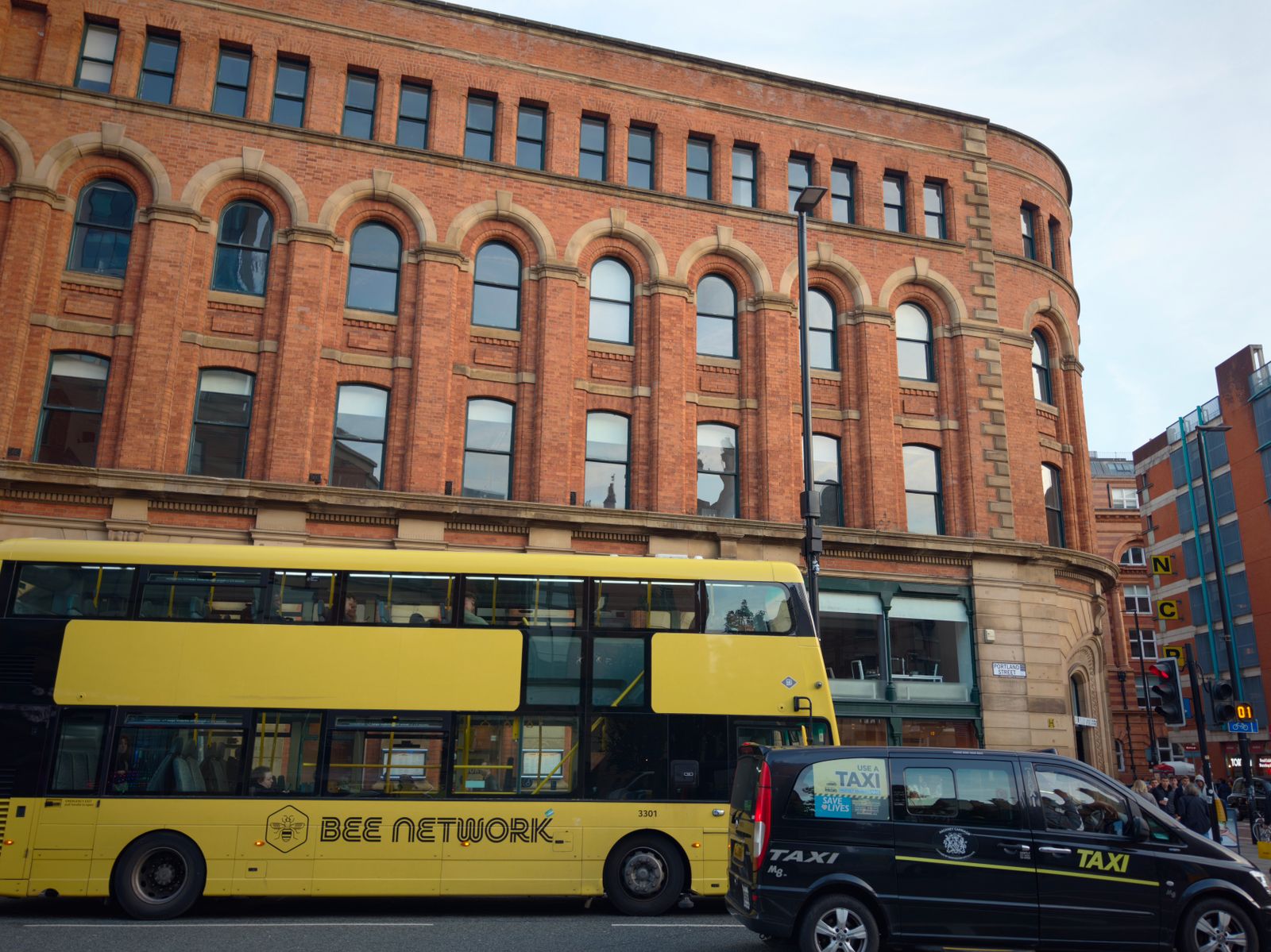
Manchester’s bus network was transformed in 2023 when Greater Manchester became the first English city outside London to bring buses back under public control. The result is the Bee Network — a single, yellow-liveried bus system where every route, every operator and every fare follows the same rules. This 2026 guide explains the most useful Manchester bus routes for visitors, the £2 single-fare Hopper cap, how to pay with contactless, where to find night buses, and which routes are best for reaching the Curry Mile, Didsbury, Salford Quays, the airport, and the surrounding towns. It also covers the upcoming rail integration that brings the first commuter lines into the Bee Network in December 2026.
What Is the Bee Network?
The Bee Network is Greater Manchester’s integrated public transport brand. It currently covers all 8,000+ daily bus services across the conurbation, the Metrolink tram network, and is gradually rolling out to commuter rail lines and the Bee Bike cycle hire scheme. Buses are franchised — meaning Transport for Greater Manchester (TfGM) sets routes, fares and standards, and the city’s mayor (Andy Burnham) sets the policy, while private operators run the buses under contract. The big practical upside for visitors: every Manchester bus accepts the same tickets, the same contactless tap, and follows the same fare cap.
Franchising completed in January 2025, with the last tranche of routes transferring from private operators (mainly First Bus and Diamond North West) into the franchise. Today, five operators run buses under Bee Network contracts: Stagecoach Manchester, Go North West, Diamond North West, First Greater Manchester, and Metroline Manchester. From a passenger’s point of view this is invisible — every bus is the same yellow, accepts the same fare card, and uses the same app — but it does affect which depot handles complaints (your booking confirmation will tell you the operator).

Manchester Bus Fares in 2026
Manchester bus fares are some of the lowest of any major UK city thanks to the Bee Network’s flat-fare structure. The £2 single bus fare has been frozen for 2026 — while the national bus cap (in unfranchised areas) has risen to £3, Greater Manchester maintained its £2/£1 single.
| Ticket | Price (2026) | Notes |
|---|---|---|
| Single Hopper (adult) | £2.00 | 60-min transfer window on contactless |
| Single Hopper (child 5-15) | £1.00 | Under-5s free; under-16s free Sat/Sun |
| Daily Bus Cap (contactless) | £5.00 | Automatic with same card tap |
| 1-Day Bee Bus ticket (app/onboard) | £5.00 adult / £2.50 child | Unlimited Bee Network bus |
| 1-Day Bee AnyBus | £5.00 adult | Extends beyond GM boundary |
| 1-Day Family (off-peak) | £9.00 | 2 adults + 3 children u16; after 09:30 Mon-Fri / all weekend |
| Weekly Bee Bus | £20.00 adult / £10.00 child | 7 days unlimited |
| 28-day Bee Bus | £80.00 adult / £40.00 child | Best for month-long visits |
| Annual Bee Bus | £800.00 adult | NEW: saves up to £240 vs monthly |
| Combined Bus + Tram day cap | £9.50 anytime / £7.80 off-peak | Contactless only |
| Combined Bus + Tram weekly cap | £41.00 | Contactless only |
| Night Bus Single | £2.00 | Same fare 24/7 |
The £2 Hopper Single — and How It Differs from a Plain Single
The “Hopper” element of the £2 fare is the bit most guides miss: pay with contactless or in the Bee Network app, and a second bus within 60 minutes is free. Tap the same card on the next bus and the system charges £0 for the second leg. The Hopper does NOT apply to cash fares — pay £2 cash and you’ll pay another £2 if you change bus. The Hopper works across all five operators, so a first-leg Stagecoach plus a second-leg First Bus still counts as one journey.
Contactless Caps Explained
If you tap on with contactless or a mobile wallet, the Bee Network’s fare engine automatically charges you the cheapest combination of singles, day caps, or weekly caps. A bus-only contactless cap is £5 per day or £21 per week. Add tram and the combined cap rises to £9.50 anytime / £7.80 off-peak per day, or £41 per week. Crucially, all caps require the same card or device every time — switching between physical card and Apple Pay halfway through a day usually breaks the cap.
Tap-and-Go Cards Accepted
Visa, Mastercard, Maestro and V-Pay all work. Apple Pay, Google Pay, Samsung Pay, Garmin Pay, Fitbit Pay, and Apple Watch all work. American Express is not accepted — Amex users should pay cash or buy mobile tickets in the Bee Network app. Buses only require one tap (on boarding); unlike trams, there’s no tap-out. You’ll see “Card Accepted” on the driver’s reader if your tap succeeded.
Most Useful Manchester Bus Routes for Visitors
The Bee Network runs more than 100 daily bus routes, but these are the headline ones you’ll most likely want as a visitor:
Route 43 — Manchester Airport ↔ Piccadilly Gardens (24 hours)
One of the most useful Manchester bus routes for visitors. The 43 runs 24/7, every 10-20 minutes during the day and every 30-60 minutes overnight. It links Manchester Airport with the city centre via Wythenshawe, Northenden, West Didsbury, Fallowfield, Rusholme (the Curry Mile), Manchester Royal Infirmary, and Oxford Road. Brilliant for late-arriving travellers and for cheap nights out on the Curry Mile.
Routes 142 / 143 — City Centre ↔ West Didsbury ↔ East Didsbury
The classic university corridor. Both routes are frequent and run via Rusholme, making them another option for the Curry Mile and the universities. They terminate at East Didsbury, useful for visitors staying at Didsbury Village Airbnbs.
Routes 86 / 85 — Piccadilly Gardens ↔ Chorlton
The fastest way to reach Chorlton-cum-Hardy’s foodie streets and independent bars without changing. The 86 runs every 7-10 minutes during the day, with the 85 covering Sundays and quieter evenings.
Route 50 — Piccadilly Gardens ↔ Salford Quays via MediaCityUK
For visitors who’d rather skip the tram, the 50 runs from the city centre to MediaCityUK and on towards Trafford General Hospital. Slower than the tram, but useful for hotels along the route.
Routes 192 / 197 — Piccadilly Gardens ↔ Stockport
The 192 is one of the busiest bus corridors in Europe, running every 3-5 minutes from Piccadilly Gardens to Stockport via Levenshulme. Combined, the 192, 43 and 143 carry around 10% of all Greater Manchester bus journeys.
Routes 100 / 101 — Piccadilly Gardens ↔ The Trafford Centre
A direct alternative to the tram for getting to the Trafford Centre, with services every 10-15 minutes. The bus drops you right at the main entrance.
Route V1 — Leigh-Salford-Manchester Vantage (24 hours)
The V1 is a busway service that runs along a dedicated guided busway between Leigh and Manchester via Salford. It became permanent 24-hour from late 2024 and is the fastest way to get out to Leigh or back from late nights in the centre.
Route 36 — Bolton ↔ Manchester (24 hours)
The second new 24-hour service. Useful for visitors staying in Bolton or for those heading to/from late-night events.
Night Buses in Manchester
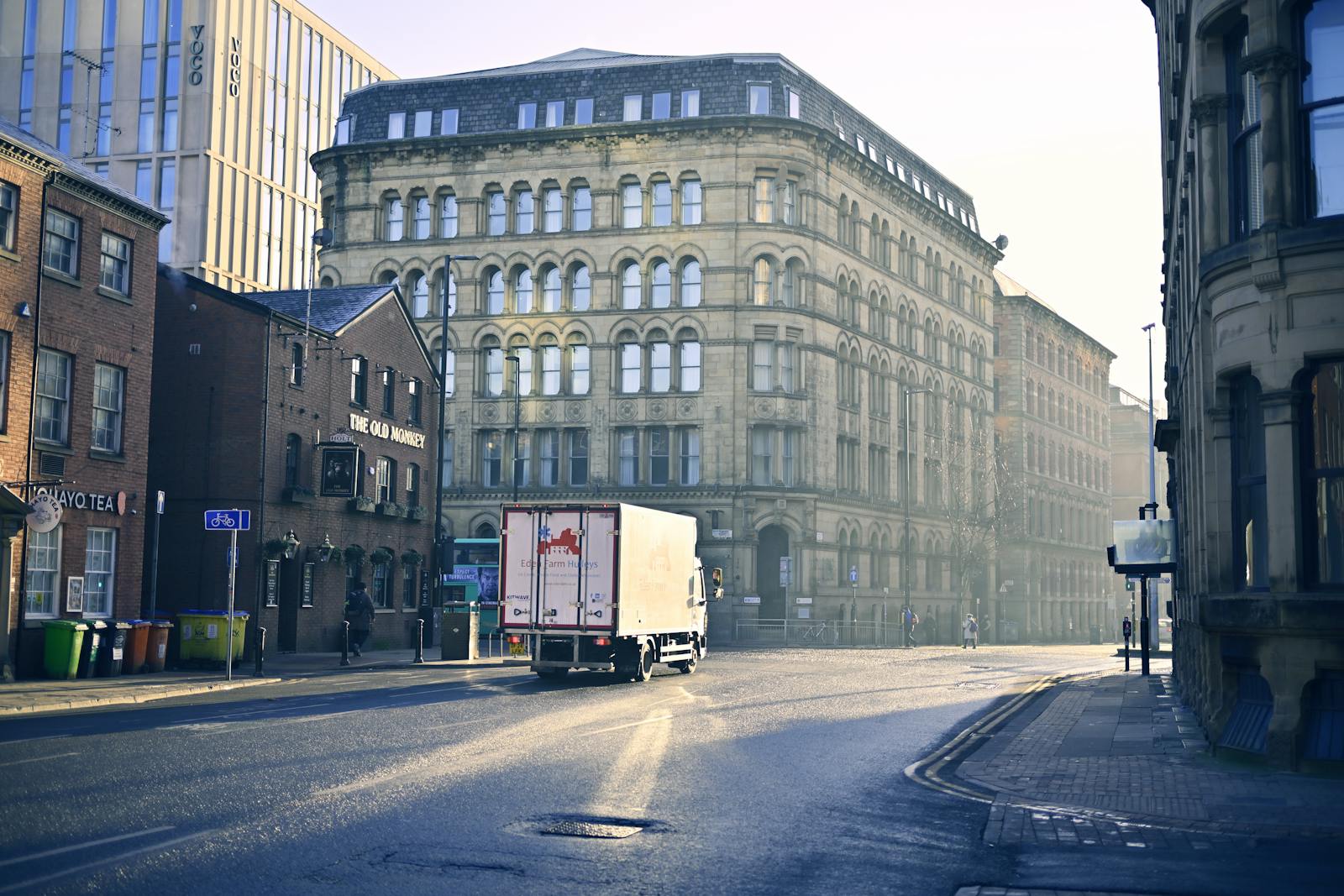
Manchester runs a small but growing network of night buses, all at the standard £2 single fare. Key 24-hour routes in 2026:
- 43: Piccadilly Gardens ↔ Manchester Airport (24/7)
- V1: Leigh ↔ Manchester via Salford (24/7)
- 36: Bolton ↔ Manchester (24/7)
- 192: Piccadilly ↔ Stockport (24/7)
- 17: Manchester ↔ Middleton ↔ Rochdale (all-night Thu/Fri/Sat)
- 135: Manchester ↔ Whitefield ↔ Bury (all-night Thu/Fri/Sat)
- 86: Piccadilly ↔ Chorlton (Fri/Sat nights through to morning)
- 142/143: Piccadilly ↔ Didsbury (Fri/Sat nights through to morning)
- 231: Piccadilly ↔ Salford (Fri/Sat nights)
Andy Burnham’s March 2026 expansion package guarantees a Bee Network night-bus service to every Greater Manchester borough by the end of 2026/27, alongside 50 new electric buses and 36 wider service changes. Always check the Bee Network app for live night-bus times — frequency drops to every 30-60 minutes after 23:30.
Free City-Centre Bus (Routes 1 & 2)
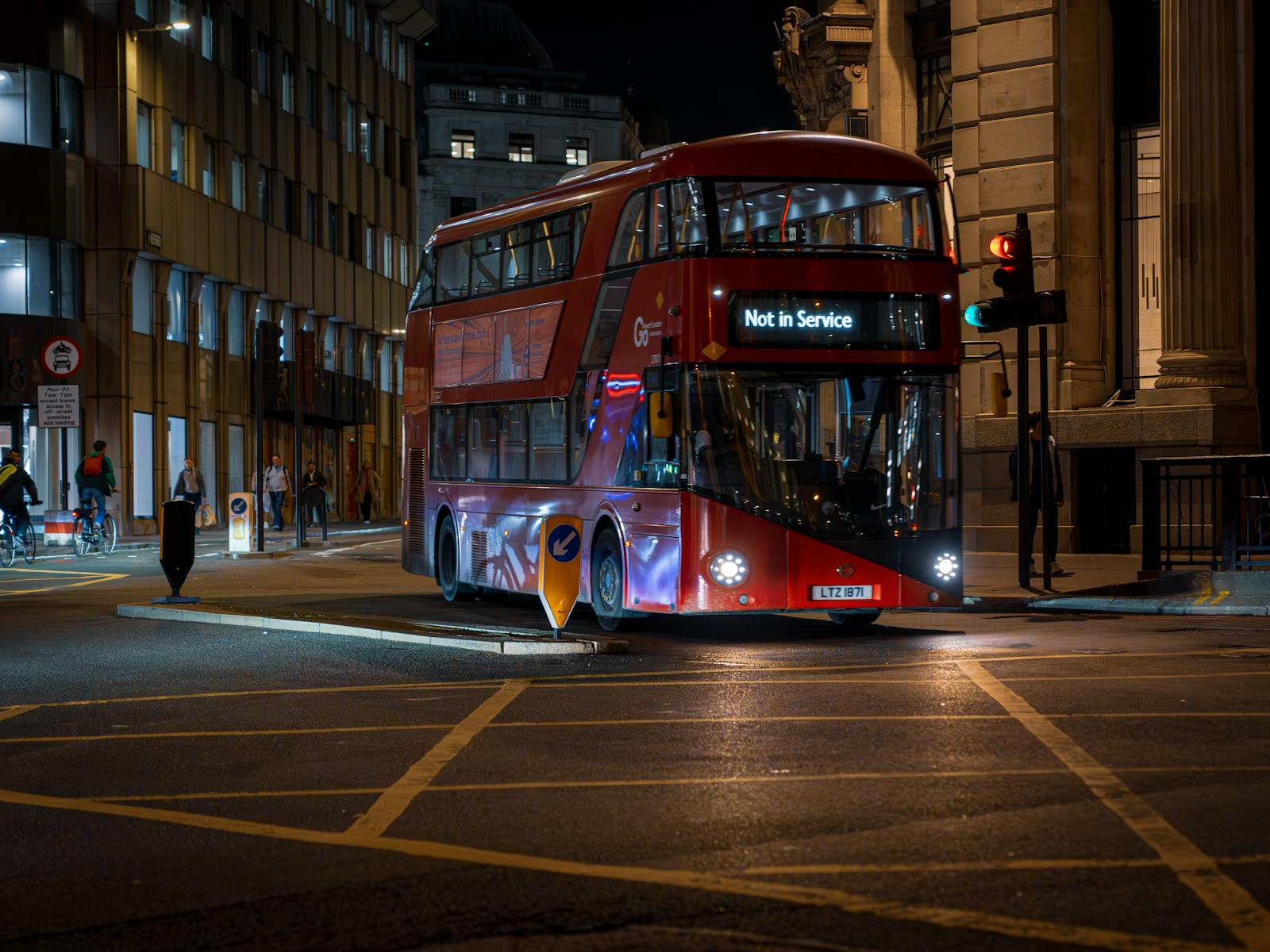
Manchester runs two genuinely free bus routes around the central core — yes, free, no tap, just get on and off. They’re a brilliant tool for tired feet and a sneakily good way to short-hop between transport hubs.
- Route 1: Piccadilly Station → Piccadilly Gardens → Mosley Street → King Street → Deansgate Station → and return. Every ~10 minutes Mon-Sat until 10pm, ~12 minutes Sundays.
- Route 2: Piccadilly Gardens → Shudehill → Victoria Station → Cathedral → NOMA → Piccadilly Gardens. Every ~10 minutes Mon-Sat until 10pm.
The routes connect Manchester’s three main rail stations and pass most major shopping destinations — Arndale, King Street, Deansgate, and the Cathedral Gates area. Perfect for “walk one way, free bus back” itineraries when you’ve over-walked.
Where to Catch the Bus in Manchester City Centre
Most Manchester bus routes start or terminate at one of four main interchanges:
- Piccadilly Gardens: The main hub for routes south (Didsbury, Stockport, Airport) and east.
- Shudehill Interchange: Northbound routes (Bury, Rochdale, Heaton Park) plus Bee Network customer service.
- Manchester Coach Station (Chorlton Street): National Express and long-distance coaches.
- Cathedral / NOMA stops: Trafford Centre and Salford services.
How to Spot a Bee Network Bus Stop
Bee Network bus stops have a distinctive yellow flag with a black bee logo and the route number band. Older Stagecoach or First-branded signage is being gradually replaced; some outer-suburb stops still show legacy operator branding in mid-2026, but the Bee Network app’s stop-finder works for every stop regardless. Each stop has a unique 6-digit code printed on the post — text it to 61066 for live arrivals (standard SMS rate), or scan the QR code for the app version.
Bee Network Rail Integration: What Changes in December 2026
From 13 December 2026, the first two commuter rail lines join the Bee Network: the Glossop line and the Stalybridge line, covering 17 stations across Greater Manchester. From that date, you’ll be able to tap-in and tap-out at these stations with contactless, with the same weekly cap as bus and tram. A pre-pay multi-modal Bee Network ticket valid across bus, tram and rail also launches the same day.
The rollout continues through 2027/28: 8 lines and 64 stations by January 2028, and all 96 Greater Manchester rail stations by 2030. For visitors, this is a game-changer for day-tripping out to Glossop (Peak District gateway), Stalybridge, Marple, Hadfield, and beyond. Until then, those stations still use standard National Rail tickets.
The Bee Network App and Other Useful Apps
Download the official Bee Network app (iOS / Android) for live arrivals, journey planning across bus, tram and rail, mobile tickets, and disruption alerts. The app also shows the location of every Manchester bus on a map in real time, which is invaluable on quieter routes and during evening hours.
Worth installing alongside:
- Bee Network — official tickets + live tracking
- Citymapper — multimodal journey planning, often quicker for route options
- Bustimes.org — open-data fallback if the official app is down
- Google Maps — generally accurate transit times, less good for live disruption
Manchester Free Bus & Old Metroshuttle FAQs
Until 2018, Manchester had three free Metroshuttle bus routes. They were retired and replaced with the two new free Routes 1 and 2 covered above. Older guidebooks may still reference the Metroshuttle by name — the service is the same idea (free city-centre circulars), just under a new brand.
Tips for Riding Buses in Manchester
- Hail your bus: Stick your arm out as the bus approaches; drivers don’t stop automatically.
- Ring the bell early: Press the red ‘STOP’ button one stop before yours.
- Pay with contactless: Faster than cash and triggers the daily cap and Hopper free transfer.
- Cash works too: Have exact change for £2 singles — drivers can struggle with larger notes.
- Mobile tickets: Buy in the Bee Network app and show the QR code as you board.
- Free for under-16s on weekends: Under-16s ride free on Saturdays and Sundays on bus and tram.
- One Hopper window: Tap once, change buses within 60 min, second leg is free — only with contactless.
- Avoid Amex: American Express isn’t accepted on the contactless reader.
- Quiet at evenings: Less frequent service after 21:00 on suburban routes; check the app.
Accessibility on Manchester Buses
All Bee Network buses are low-floor with kneeling suspension, dedicated wheelchair spaces (maximum wheelchair footprint 70 cm × 120 cm), audio-visual stop announcements, hearing loops, and trained drivers. Newer vehicles have two wheelchair spaces. Assistance dogs are welcome. Pushchairs and prams may be asked to fold if a wheelchair user needs the space. The Bee Network app shows live accessibility information for each stop and any out-of-service ramps.
Cycle Carriage Rules
Bee Network buses allow folding bikes only — and they must be covered. Full-size non-folding bikes are not permitted. Most visitors find the Bee Bike cycle hire scheme (£1.50 unlock + £0.10/min) a better fit than trying to combine bus and bike.
Frequently Asked Questions
How much is a single Manchester bus fare?
£2.00 adult or £1.00 child (5-15) on any Bee Network bus journey, regardless of distance, in 2026. Pay with contactless and a second bus within 60 minutes is free under the Hopper rule.
Is the £2 bus fare still in place in Manchester?
Yes. Greater Manchester’s £2 single fare cap is frozen for 2026 even though the national cap (in unfranchised areas) rose to £3.
Do Manchester buses take cash?
Yes, all Bee Network buses accept cash (exact change preferred). Contactless is faster, triggers automatic daily caps, and unlocks the 60-minute Hopper free transfer.
Is there a 24-hour bus in Manchester?
Yes. Route 43 between Manchester Airport and Piccadilly Gardens runs 24/7, as do the V1 (Leigh-Manchester), 36 (Bolton-Manchester), and 192 (Stockport-Manchester). Routes 17, 135, 86, 142, and 143 add all-night service on Thursday-Saturday.
Is there a free bus in Manchester city centre?
Yes. Free routes 1 and 2 circulate the city centre Mon-Sat until 10pm and on Sundays. They connect Piccadilly, Victoria, Deansgate stations, and the Cathedral Gates and Spinningfields areas.
Can I use my Oyster card on a Manchester bus?
No — Oyster is London-only. Use UK contactless debit/credit, mobile pay, cash, or the Bee Network app.
What’s the daily fare cap on Manchester buses?
£5.00 for adults with contactless tap-on. Add tram to make it £8.20 AnyBus + Tram day pass, or £9.50 anytime / £7.80 off-peak with the combined contactless cap.
Are dogs allowed on Bee Network buses?
Assistance dogs are welcome on every bus. Other dogs are at the driver’s discretion and should be kept on a lead. There is no extra fare.
How do I get from Manchester Airport to the city centre by bus?
Take Bee Network route 43 from the Ground Transport Interchange between Terminals 1 and 3. £2 single, 55-70 min journey time, 24/7 service.
More Manchester Transport Guides
For a complete picture, pair this bus guide with our Manchester Metrolink tram guide and our airport-to-city-centre transfer guide. The Manchester transport passes guide helps you choose the right ticket. If you’d rather skip transport entirely, check our walking guide to Manchester.