
This article contains advertising. Our booking links are routed through a partner that adds commission tracking automatically, so if you book through one we earn a commission from the provider, at no extra cost to you. It never affects what we recommend. Affiliate disclosure
The Manchester Christmas markets locations are the single most confusing thing about the biggest festive event in the north of England. This is not one market with a gate and a map board. It is ten separate sites strung across the city centre, each with its own character, its own crowd and its own reason to bother — and no signage worth the name connecting them. This page is the map in words: every site, what is actually at it, how far apart they are, and the walking order that gets you round all ten in a single afternoon without doubling back.
If you want the wider picture — history, what to eat, where to stay, how the markets fit into a Manchester Christmas — start with our complete Manchester Christmas markets guide. This page is purely about geography.
The Ten Sites at a Glance
Manchester City Council has run the markets across ten city-centre zones in recent years, with more than 274 stalls between them. Two of the sites are destinations in their own right; several are a handful of huts you will walk past on the way to something else. Knowing which is which is the whole game.
| Site | Character | Rough size | Worth a special trip? |
|---|---|---|---|
| Albert Square | The flagship — bars, fairground, big wheel, the Town Hall behind it | Large | Yes |
| Cathedral Gardens | Family site, next to the ice rink | Large | Yes, with children |
| Piccadilly Gardens (the Winter Gardens) | Covered bar and food area, live music | Large | Yes, in bad weather |
| St Ann’s Square | Craft and gift stalls plus a live stage | Medium | Yes |
| Exchange Square | Food-led, between Selfridges and the Corn Exchange | Medium | In passing |
| New Cathedral Street | A ribbon of stalls linking Exchange Square to St Ann’s | Small | In passing |
| Exchange Street | The connector between St Ann’s Square and Exchange Square | Small | In passing |
| King Street | Smarter, quieter, gift-heavy | Small | Worth the detour |
| Market Street | Stalls down the main shopping drag | Small | Only because you cross it |
| Corn Exchange surrounds | Stalls around the building, restaurants inside | Small | In passing |
The honest summary: four of the ten sites are worth planning around. The other six are corridors. If you have two hours rather than five, do Albert Square, St Ann’s Square, Exchange Square and Cathedral Gardens and you will have seen everything the markets actually offer.
Dates and Opening Times
The markets run from early November to just before Christmas, with two sites carrying on into the new year. For 2026 the expected pattern is Friday 6 November to Tuesday 22 December across most zones, with Albert Square and Cathedral Gardens staying open to Sunday 3 January 2027. In 2025 the equivalent dates were 7 November to 22 December, with the same two sites running to 4 January.
Council dates are usually confirmed in late summer and occasionally shift by a day, so check manchester.gov.uk/christmas before you book a train or a hotel around a specific date.
| Stall type | Opens | Closes |
|---|---|---|
| Craft and gift stalls | 10:00 | 20:00 |
| Food and drink stalls | 11:00 | 21:00 |
| Albert Square & Cathedral Gardens, Christmas Eve onwards | 10:00 | 17:00 |
Two practical consequences of those hours. First, if you arrive at ten in the morning you will have an hour of shopping before anything hot is served — pleasant, but plan a coffee into it. Second, the food stalls stop serving at nine, not eleven, so the markets are an afternoon and early-evening event rather than a night out. What happens after nine is that several thousand people move into the pubs and bars around Deansgate and the Northern Quarter at once.
Site by Site
Albert Square — the flagship

This is the one on the postcards, and after several years exiled to Piccadilly Gardens during the Town Hall restoration it is properly back. Albert Square carries the big bars, the two-storey chalets, a festive fairground and, from 2025, a giant Ferris wheel. It has the highest concentration of drinking in the whole event and by extension the densest crowd, particularly between about four and eight on a Saturday.
What it is good for: the atmosphere, the drinking, the photographs with the Town Hall lit up behind the stalls. What it is not good for: buying anything, browsing, or moving at any speed with a pushchair. If one site is going to make you understand why people travel here for this, it is this one — and if one site is going to make you swear never to come back on a December Saturday, it is also this one.
Cathedral Gardens — the family site
Cathedral Gardens sits between the Cathedral, Chetham’s and the National Football Museum, and it is the market that has been designed around families. Skate Manchester’s ice rink is here, which anchors the whole site, and the surrounding stalls lean towards food you can eat standing up and gifts that are not artisanal cheese.

It is also one of the two sites that stays open into January, which makes it the answer for anyone visiting Manchester between Christmas and New Year and wondering whether they have missed everything. Book ice rink slots in advance; walk-up availability on a December weekend is close to nil. Our guide to Manchester with kids covers what else is within five minutes of here.
Piccadilly Gardens — the Winter Gardens
The Piccadilly Gardens site is branded the Winter Gardens, and it is the covered one. That single fact makes it more useful than its stall count suggests: when it is raining sideways in the second week of December, and in Manchester it will be, this is where the event still functions. Expect a large covered bar, hot food, seating and live music.
It is also the closest site to Piccadilly station and the Metrolink interchange, which makes it the natural first or last stop for anyone arriving by train. It is not the prettiest of the sites and nobody would call it charming, but it is the one that reliably works.
St Ann’s Square — the one for actual shopping
If you came to buy things rather than to drink things, St Ann’s Square is the site to spend your time in. The stalls here lean craft and gift — jewellery, ceramics, prints, wooden toys, the better end of the food producers — and the square’s shape means it is browsable in a way Albert Square simply is not. There is a live stage with a different line-up every day, which gives the site a genuine atmosphere without the crush.
It is bounded by the Royal Exchange and King Street, both handsome, and it is the single most pleasant place in the markets to stand still for ten minutes.
Exchange Square — food between the shops
Exchange Square is the wide space between Selfridges, the Corn Exchange and the Arndale, and its market is food-led — bratwurst, raclette, churros, mulled wine. It is busy because it is a thoroughfare rather than because it is a destination, and it is where you will end up eating if you are shopping in the Arndale and get hungry. Good, unremarkable, and impossible to avoid.
New Cathedral Street and Exchange Street
These two are corridors rather than markets, and it helps to think of them that way. New Cathedral Street runs from Exchange Square down past Harvey Nichols towards St Ann’s Square; Exchange Street connects St Ann’s Square to Exchange Square from the other side. Both carry a line of stalls, both are pleasant to walk down, and neither justifies a detour. Their function is to make the walk between the three big central sites feel continuous, and at that they succeed.
King Street — the quiet one
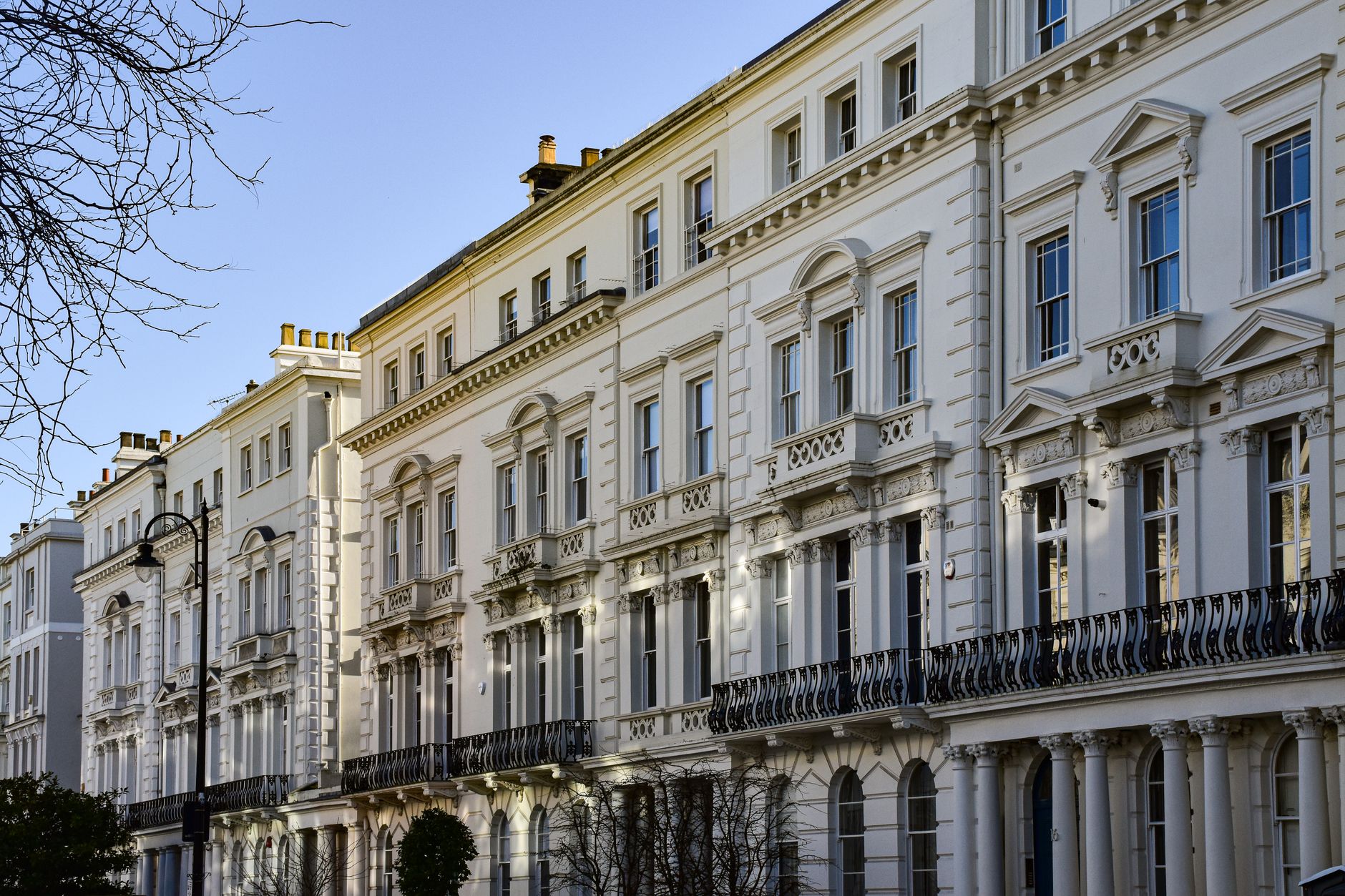
King Street is Manchester’s smart shopping street, and its market matches: fewer stalls, better-made things, more space to stand. It is consistently the least crowded of the sites and the one visitors most often walk straight past, because it is one block off the direct line between St Ann’s Square and Albert Square. Make the detour. Ten minutes here at four o’clock on a Saturday will feel like a different city from Albert Square at the same moment. Our King Street shopping guide covers what is behind the stalls.
Market Street and the Corn Exchange
Market Street is the pedestrianised main shopping drag, and the stalls along it are there to catch the enormous footfall between the Arndale and Piccadilly Gardens. It is the least atmospheric part of the markets by a distance — you are shopping in a wind tunnel — but you will walk through it whether you plan to or not.
The Corn Exchange stalls ring a Grade II listed building now full of restaurants. The practical value here is not the stalls, it is that you can go inside, sit down and eat a proper meal when everyone in your group has had enough of standing up in the cold. That is worth knowing at about half past four.
The Walking Route: All Ten in One Afternoon
There is no official route and no marked trail, which is the main reason first-time visitors end up crossing the same square three times. This order works, runs roughly a mile and a half in total, and builds from quiet to loud so you finish where the atmosphere is.
- Piccadilly Gardens (Winter Gardens) — start here if you arrive by train or tram. Coffee, get your bearings. 15 minutes.
- Market Street — walk it westwards. You are passing through, not stopping. 5 minutes.
- Exchange Square — first food stop. 20 minutes.
- Corn Exchange — a loop around the building, and the fallback if anyone needs to sit down. 10 minutes.
- Cathedral Gardens — two minutes north. Ice rink, family stalls. 30 minutes, or an hour with children.
- New Cathedral Street — back south past Harvey Nichols. 5 minutes.
- St Ann’s Square — the shopping stop. Give it proper time. 40 minutes.
- Exchange Street — the short connector. 5 minutes.
- King Street — the detour that is worth it. 20 minutes.
- Albert Square — finish here, in the dark, with a drink. As long as you like.
Allow three hours at a brisk pace and five if you are eating, drinking and buying. Reverse the order if you are staying near Albert Square and want to end at the station.
Getting There, and Getting Home
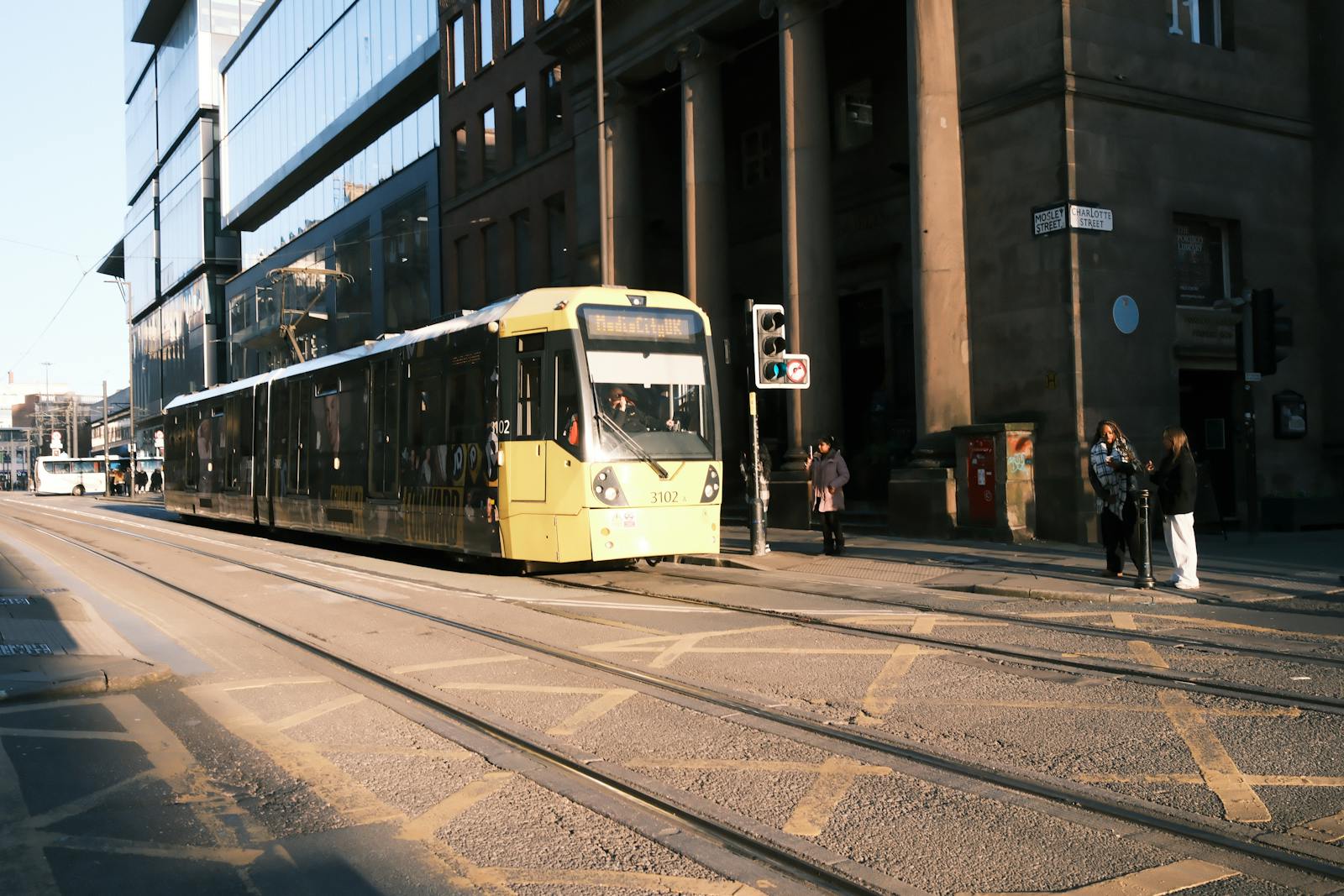
Every site sits inside the free-bus and tram zone of the city centre, and none of them has parking worth attempting. The three Metrolink stops that matter are St Peter’s Square (two minutes from Albert Square), Exchange Square (in the middle of that site) and Market Street (for Market Street and the Arndale). Piccadilly Gardens serves the Winter Gardens site and the mainline station.
- By tram — the sensible option. Contactless caps apply, and on a December Saturday the trams back out to Altrincham, Bury and Ashton are the busiest of the year between 18:00 and 20:00. Our Metrolink guide has the fares and the zones.
- By train — Victoria puts you two minutes from Cathedral Gardens; Piccadilly puts you two minutes from the Winter Gardens. Both are better than driving.
- By car — do not. City-centre car parks fill by mid-morning on market Saturdays and charge accordingly. If you must, use a Metrolink park and ride out of town and tram in. Driving and parking in Manchester has the detail.
- Getting home — the food stalls close at 21:00 and several thousand people leave at once. Either go at 20:30 or settle in somewhere until 22:00; the half hour in between is the worst of the evening.
When to Go
| When | What it is like |
|---|---|
| Weekday mornings, November | Genuinely quiet. Stalls fully stocked, staff will talk to you. The best time to buy. |
| Weekday evenings | Busy but moving. The lights are on and you can still get to a bar. |
| Saturday afternoon, December | The crush. Albert Square becomes shuffling rather than walking. |
| Sunday | Busy, but the crowd is families rather than office parties. Earlier close-down feel. |
| The last week before Christmas | Chaotic, and several stalls start selling out of the good stuff. |
| 27 December – 3 January | Only Albert Square and Cathedral Gardens, 10:00–17:00. Quiet, small, and a nice surprise. |
The single best slot in the whole seven weeks is a Tuesday or Wednesday afternoon in the second half of November: dark by four, fully open, and perhaps a third of the Saturday crowd. If you have any flexibility at all, use it there.
Food, Drink and the Mug
Every stall serving hot drinks charges a refundable deposit on the mug — a few pounds, returned when you hand it back. The mug design changes every year and a fair number of people simply keep them, which is the intention. Take cash for stalls if you like, though card is now near-universal.
Prices at the markets are event prices: expect £5–£7 for mulled wine or a bratwurst, £8–£12 for a substantial hot dish. That is roughly double a normal Manchester street food price, and it is worth being honest that the food is not the reason to come. If eating well matters more than eating festively, Manchester’s permanent street food markets — Mackie Mayor, Escape to Freight Island — are five minutes away, cheaper and better.
What Is Not Worth It
- Doing all ten sites in a Saturday in December. The corridors add walking, not experience. Pick the four that matter.
- Arriving after four on a Saturday hoping to eat. Every seat in every covered area is taken by then, and the queues at Albert Square run to twenty minutes.
- Driving in. Genuinely, do not.
- Treating the markets as a whole evening. Everything shuts at nine. Plan what happens afterwards — a proper pub ten minutes away beats a third mulled wine in the cold.
- Buying the same mass-produced items you saw at the last four sites. A minority of stalls are genuinely independent makers, and they are concentrated at St Ann’s Square and King Street.
Frequently Asked Questions
How many Manchester Christmas markets are there?
Ten city-centre sites in recent years, with more than 274 stalls between them: Albert Square, Cathedral Gardens, Piccadilly Gardens, St Ann’s Square, Exchange Square, New Cathedral Street, Exchange Street, King Street, Market Street and the Corn Exchange surrounds.
Is there a map of the Manchester Christmas markets?
The council publishes one each year at manchester.gov.uk/christmas, and printed copies appear at the larger sites. In practice the ten locations sit in a rough line from Piccadilly Gardens in the east to Albert Square in the south-west, about a mile and a half end to end, and the walking route above covers them in order.
Which Manchester Christmas market is the best?
Albert Square for atmosphere and drinking, St Ann’s Square for actually buying things, Cathedral Gardens with children, and the Winter Gardens at Piccadilly when it is raining. Those four are the event; the rest are connective tissue.
When do the Manchester Christmas markets open in 2026?
The expected run is Friday 6 November to Tuesday 22 December 2026, with Albert Square and Cathedral Gardens continuing to Sunday 3 January 2027. Confirm against the council’s own page before booking travel.
Are the Manchester Christmas markets free?
Yes. There is no admission charge at any site. You pay for what you eat, drink and buy, plus the refundable mug deposit, and separately for the ice rink and the fairground rides.
Can you visit the markets after Christmas?
Only Albert Square and Cathedral Gardens, and only from 10:00 to 17:00, up to the first weekend of January. The other eight sites close on 22 December.
How long do you need for the Manchester Christmas markets?
Two hours for the four main sites, three hours to walk all ten briskly, five if you are eating, drinking and shopping properly.
Planning the Rest of Your Trip
- The complete Manchester Christmas markets guide — history, food, what to buy and where to stay.
- Christmas in Manchester — everything beyond the markets, from the pantomime to Boxing Day.
- The Metrolink tram guide — the fastest way between the sites and back out again.
- The Arndale and city-centre shopping — what is indoors when the weather turns.
- Manchester’s street food markets — better food, five minutes away, half the price.
- The best time to visit Manchester — where the market weeks sit in the wider year.
- City-centre hotels — what to expect from November rates.
Once you know where the sites are, the next question is what to eat at them. Our guide to Christmas market food and drink in Manchester covers prices, the mugs and which site does what best.
Knowing where the sites are is half the battle; knowing when to visit them is the other half. Our Christmas markets tips guide covers the quietest times, parking and how to avoid the crowds.