This article contains advertising. Our booking links are routed through a partner that adds commission tracking automatically, so if you book through one we earn a commission from the provider, at no extra cost to you. It never affects what we recommend. Affiliate disclosure
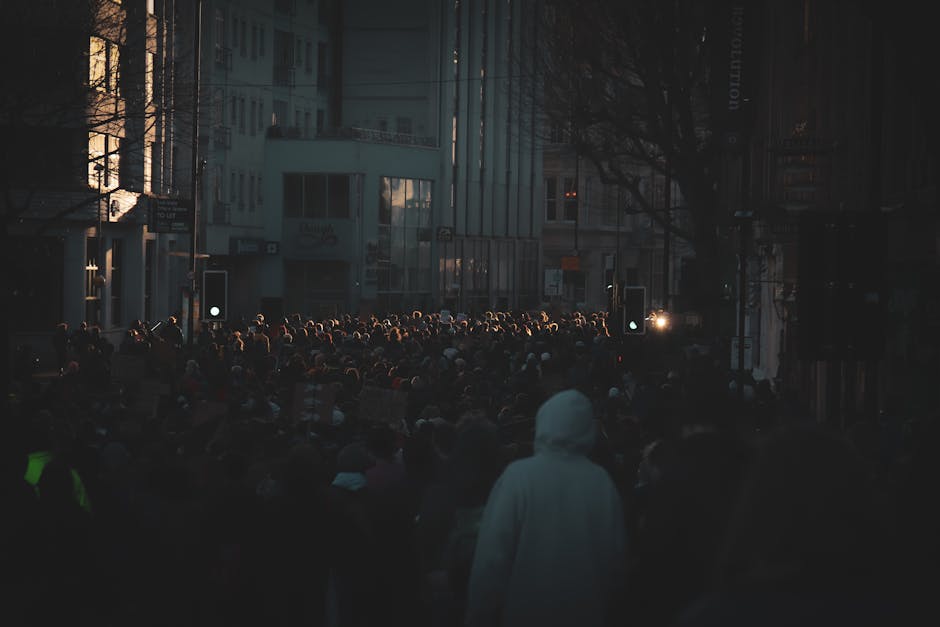
If you walk from Manchester Piccadilly station to St Peter’s Square — about ten minutes — you cross the square mile that has produced more political upheaval than almost any other patch of ground in Britain. The Peterloo Massacre happened here in 1819. The largest Chartist rallies in British history were held on Kersal Moor, five miles north, in 1838 and 1842. The suffragette movement was founded in a Moss Side parlour in 1903. The British anti-slavery movement was sustained by cotton workers at the Free Trade Hall in 1862. The TUC’s first congress met in Manchester in 1868. Karl Marx wrote with Friedrich Engels at Chetham’s Library a few hundred metres up the road. Within sight of where you’re standing, three Manchester women launched the militant phase of women’s suffrage in 1905. The Pankhurst Centre is a half-mile away.
Manchester gets called Britain’s most radical city. It is a defensible claim — and unlike most marketing slogans about northern cities, this one comes with documentary evidence. The radical movements that built modern democracy — universal suffrage, the rights of organised labour, women’s votes, the welfare state — were not invented in Manchester. But they were tested here, amplified here, and shaped here, in a city whose industrial economy had created both extreme inequality and the dense urban working-class population needed to do something about it.
This guide is the proper visitor walk through that history. Where things happened. What survives. What you can see and feel for yourself in 2026. And, because the story isn’t just educational, why it still matters.
Why Manchester Is Called Britain’s Most Radical City
The claim isn’t sentimental. It’s about a clustering — geographic, temporal and intellectual — that doesn’t really happen anywhere else in Britain.
Within a 90-year window from 1819 to 1907, all of the following happened in or around Manchester: the Peterloo Massacre that catalysed the modern democratic movement (1819); the publication of Engels’s The Condition of the Working Class in England, which laid the foundations of socialist theory (1845); the Chartist mass meetings on Kersal Moor that demanded universal male suffrage (1838-42); the cotton workers’ Free Trade Hall meeting in support of Lincoln during the American Civil War (1862); the first Trades Union Congress (1868); the founding of the Women’s Social and Political Union at 62 Nelson Street (1903); the Free Trade Hall heckling incident that launched militant suffragism (1905); and the founding of the Co-operative movement just up the road in Rochdale (1844).
Three things made it possible. First, scale — Manchester was the world’s first proper industrial city, with a working-class population of unprecedented density and density. Second, education — the city’s free libraries, mutual improvement societies and dissenting churches produced a self-taught working-class intelligentsia at a level rarely seen elsewhere. Third, geography — the radical print culture (the Manchester Observer, the Manchester Guardian), the public meeting spaces (St Peter’s Field, the Free Trade Hall, the Cooperative Hall), and the working-class neighbourhoods (Ancoats, Hulme, Salford) all sat within walking distance of each other.
You can still walk that ground today. Most of it is free. Our Manchester history and heritage guide sets the broader context; this article goes deep on the political thread.

The Peterloo Massacre: What Happened on 16 August 1819
Monday 16 August 1819. St Peter’s Field — an open area on the southern edge of Manchester town, where the city’s central square now stands.
Sixty thousand people had gathered, dressed in their Sunday best, to hear the radical orator Henry “Orator” Hunt speak. Their demand was simple: parliamentary reform. At that point in 1819, only a tiny fraction of the male population could vote, almost none of them in industrial Manchester. The city had no Member of Parliament of its own, despite being the world’s largest manufacturing centre. The crowd wanted the franchise extended.
The local magistrates, panicking at the size of the gathering, decided to arrest Hunt mid-speech. The magistrate William Hulton ordered the Manchester and Salford Yeomanry — a part-time cavalry unit of local Tory businessmen on horseback — to push into the crowd. The Yeomanry, untrained for crowd control, lost discipline almost immediately and began slashing at the crowd with sabres. The 15th Hussars, regular cavalry, were then ordered in to “rescue” the Yeomanry from the crowd. They charged the densely packed gathering.
The chaos lasted ten minutes. By the end, 18 people were dead — including a two-year-old child, William Fildes, knocked from his mother’s arms and trampled — and somewhere between 400 and 700 were injured. Two were sabred. Two were trampled by horses. One was crushed in the panicking crowd. The Yeomanry returned to their barracks and were not punished.
The radical journalist James Wroe of the Manchester Observer coined the name “Peterloo” — a bitter pun on the recent battle of Waterloo. The British government’s response was to introduce the Six Acts of December 1819, which restricted public meetings, taxed radical newspapers, and authorised search warrants for political pamphlets. The repression backfired. Peterloo became, and remains, the defining symbol of the British struggle for parliamentary democracy. Without it, the Reform Act of 1832 and the slow democratisation of the British state would have looked very different.
Visiting the Peterloo Memorial at St Peter’s Square
For 200 years Manchester had no proper memorial to Peterloo. There was a small plaque on the wall of the Free Trade Hall (which had been built on the massacre site as a monument to the cause of free trade and reform) — but no public sculpture, no commemoration in the square itself.
The bicentenary in 2019 changed that. The artist Jeremy Deller, working with Caruso St John Architects, designed the Peterloo Memorial — a circular stepped monument of British stone, 1.8 metres high and 11.6 metres wide, with the names of the 18 victims and their hometowns inscribed on the upper tier. It was unveiled on the exact 200th anniversary, 16 August 2019, by the campaigning historian Maxine Peake.
You’ll find the memorial just outside the Manchester Central Convention Complex, on Windmill Street, immediately adjacent to St Peter’s Square Metrolink stop. It is free, outdoor, accessible 24 hours. Walk around the upper edge and read the names. The youngest victim, two-year-old William Fildes, sits at the top.
The memorial has been criticised for its design — the stepped concentric tiers are not wheelchair-accessible at the top, which feels like an awkward irony for a monument to democratic equality. A subsequent ramp solution has been proposed but, as of 2026, the accessibility issue remains unresolved. The criticism is worth knowing about. The monument is nonetheless powerful, particularly if you stand in front of it on a busy Saturday afternoon and notice how few of the people passing through St Peter’s Square realise what happened on the ground they’re crossing.
The bigger commemoration of Peterloo, however, is the People’s History Museum on the Left Bank, a six-minute walk from St Peter’s Square. Free, open daily 10am-5pm. The museum holds the original Peterloo Banner — a worker-made banner carried at the massacre — and dedicates substantial gallery space to the story. Worth at least an hour.

The Chartists and the Mass Meetings on Kersal Moor
Twenty years after Peterloo, the radical political tradition in Manchester had matured into the Chartist movement — a mass campaign demanding six basic democratic reforms (the Charter), including universal male suffrage, secret ballots, paid MPs and annual parliaments.
Manchester became the Chartist movement’s biggest crowd-puller. On 24 September 1838, somewhere between 30,000 and 300,000 people (the estimates vary wildly; 100,000 is the most commonly cited middle figure) gathered on Kersal Moor in Salford to hear the firebrand Chartist leaders Feargus O’Connor and Joseph Rayner Stephens. Engels later called Kersal Moor the “Mons Sacer of Manchester” — comparing it to the sacred hill where the plebeians of ancient Rome had withdrawn in protest against the patricians.
Further Chartist rallies followed in 1839, 1842 and 1848. The 1848 General Strike was particularly tense — government troops were stationed at Manchester Town Hall and at strategic points across the city, anticipating revolution. It didn’t come, but the threat reshaped British politics. The Chartist programme — universal manhood suffrage, secret ballots, paid MPs — was almost entirely realised within seventy years.
Kersal Moor itself today is an open Site of Special Scientific Interest, accessible from Cromwell Road in Salford. There’s a small Chartist plaque marking the site of the 1838 meeting. It is not a major tourist destination — bring sensible shoes and don’t expect interpretation panels. But standing on the moor, looking across to the Manchester skyline, with the wind coming off the Pennines, the imaginative leap to a crowd of 100,000 working men in caps and shawls is not difficult.
Emmeline Pankhurst and the Birth of the Suffragette Movement
Manchester invented suffragism in its modern, militant form. The activists Emmeline Pankhurst, her daughters Christabel, Sylvia and Adela, and their close colleagues founded the Women’s Social and Political Union (WSPU) in the front parlour of the Pankhurst family home, 62 Nelson Street, Chorlton-on-Medlock, on 10 October 1903.
Emmeline Pankhurst was a Manchester woman through and through. Born Emmeline Goulden on 15 July 1858 in Moss Side, she married the Manchester barrister Richard Pankhurst (himself a radical lawyer who’d drafted the Married Women’s Property Act) in 1879. After Richard’s death in 1898, Emmeline turned full-time to the suffrage cause. The WSPU was founded with the simple motto “Deeds Not Words”, a deliberate break from the older constitutional suffragist organisations who’d been politely petitioning for forty years without result.
The Pankhurst daughters became as famous as their mother. Christabel, trained as a barrister, was the strategist. Sylvia, an artist, organised in the East End of London and eventually split with her mother over working-class focus. Adela emigrated to Australia after a similar political falling-out. The WSPU’s tactics escalated rapidly — interrupting political meetings, smashing windows, chaining themselves to railings, planting bombs in empty buildings, going on hunger strike in prison and being force-fed.
It worked. The Representation of the People Act of 1918 gave the vote to women over 30. The Equal Franchise Act of 1928 — three weeks before Emmeline’s death — extended it to all women over 21 on the same terms as men. The fight had taken twenty-five years from the founding of the WSPU to the universal franchise.
A statue of Emmeline Pankhurst, by Hazel Reeves, was unveiled on 14 December 2018 in St Peter’s Square — exactly 100 years after British women first voted in a general election. She is shown mid-speech, standing on a chair, addressing an unseen crowd. The work is titled “Rise Up, Women”. You’ll find it directly across the square from the Peterloo Memorial.

The Pankhurst Centre: Visiting 62 Nelson Street Today
The original Pankhurst family home at 60-62 Nelson Street, Chorlton-on-Medlock, is now a small, free museum. The Pankhurst Centre preserves the front parlour where the WSPU was founded and contains a small museum dedicated to Emmeline, her daughters, and the wider suffragette movement.
The Centre is run by volunteers and has limited opening hours — typically Thursdays and Sundays, 11am-4pm, though check the website (pankhurstmuseum.com) for current 2026 hours. Entry is free but a small donation is appreciated. Annual passes are also available.
It’s a small place. Two rooms of the original house are accessible, with original wallpaper and fixtures preserved. The parlour where the WSPU was founded sits much as it would have on that October day in 1903. The museum elements are modest but moving — original suffragette banners, prison medals, the famous purple-white-and-green colour scheme, and letters from suffragettes describing their treatment in Holloway Prison.
The Centre also functions as Britain’s only living memorial to the suffragette movement — it houses an active women’s centre and continues women’s rights advocacy work today. That continuity matters.
Getting there: from St Peter’s Square, walk 10-15 minutes south down Oxford Road, then turn left onto Nelson Street. Or take any Oxford Road bus to Manchester Royal Infirmary. The Centre sits on what is now part of the Manchester Royal Infirmary campus — slightly tucked away, but signposted from the main road.
The Free Trade Hall and the 1905 Heckling That Changed Everything
The single moment that turned suffragism militant happened on 13 October 1905, inside Manchester’s Free Trade Hall on Peter Street.
The Liberal politician Sir Edward Grey was speaking at a major political rally in advance of the December 1905 general election. Winston Churchill (then a Liberal MP) was also on the platform. Christabel Pankhurst and Annie Kenney — a Lancashire mill worker who’d become one of the WSPU’s most effective organisers — were in the audience. As Grey took questions, they stood up and shouted: “Will the Liberal government give votes to women?”
Grey ignored the question. The women shouted it again. Stewards tried to remove them. They unfurled a banner reading “Votes for Women” — possibly the first time that exact phrase had been used as a political slogan. They were thrown out of the hall, then arrested in the street for assaulting police officers. Christabel was sentenced to seven days in Strangeways Prison; Annie Kenney to three days.
The arrests made national news. The image of educated middle-class women being marched off to prison for shouting a political question was electrifying. WSPU membership exploded. Donations poured in. Within months, the militant phase of the suffragette movement was underway.
The Free Trade Hall itself was bombed in 1940 and partially rebuilt; the original façade survives, and the building is now the Radisson Blu Edwardian Manchester hotel. You can walk into the hotel lobby for free and look at the historic interior. A plaque on the exterior of the building, on the Peter Street side, marks the 1905 incident. Visit it. Stand on the pavement. Imagine the noise.
Manchester, the Cotton Famine and Abraham Lincoln
There is one piece of Manchester’s political history that I find more moving than any other, and it’s not the Peterloo monument or the suffragette statue. It’s a small bronze statue, slightly tucked away off Brazennose Street, on what is now called Lincoln Square. It depicts Abraham Lincoln.
The story is this. During the American Civil War, the Union naval blockade cut off Confederate cotton exports. Manchester, totally dependent on Confederate cotton for its mills, was devastated. By late 1862 hundreds of cotton mills had closed. Hundreds of thousands of Manchester and Lancashire workers were unemployed. There was real starvation in the cotton districts. Many of the mill owners and merchants of the Manchester Southern Club pressured the British government to recognise the Confederacy and break the blockade — which would have saved their businesses and the workers’ jobs but kept slavery alive.
On New Year’s Eve 1862, a mass meeting of Manchester cotton workers gathered at the Free Trade Hall and voted overwhelmingly to support President Lincoln and the Union — to support, in other words, the abolition of slavery, even at the price of their own continued unemployment and hunger.
Lincoln received their address and wrote back. His letter, dated 19 January 1863, included this line: “I cannot but regard your decisive utterance upon the question as an instance of sublime Christian heroism which has not been surpassed in any age or in any country.”
The cotton workers carried on through the Cotton Famine. Some emigrated. Many starved. The Union won. Slavery was abolished. Manchester’s mills slowly recovered.
The statue of Lincoln on Lincoln Square was originally commissioned for the United States Congress in 1916, then re-gifted to Manchester in 1919 in recognition of the cotton workers’ stand. The plinth is inscribed with the words of Lincoln’s letter. You can read it for free, any time, on a granite block in a small square fifty metres off Albert Square.
It is one of the most quietly extraordinary pieces of public history in Britain. Most people walk past without noticing. Don’t be one of them.
The People’s History Museum: Britain’s National Museum of Democracy
If you’re going to do one indoor stop on this trail, make it the People’s History Museum. The PHM is housed in a Victorian pumping station on the Left Bank, just off Spinningfields, and is Britain’s national museum of working life, democracy and protest. It is free (suggested donation £5) and open daily 10am-5pm except 24-26 December and 1 January.
The museum holds the world’s largest collection of trade union banners — an art form in itself, hand-painted silk masterpieces from the late nineteenth century onwards. The original Peterloo Banner is here. The galleries walk you through the radical political history of Britain from the seventeenth century to the present — the Levellers, the Diggers, Chartism, Peterloo, suffragism, the labour movement, the civil rights movement, the Greenham Common women, the Stonewall riots, contemporary LGBT+ activism.
It is one of the best museum experiences in the city. Allow two to three hours. There’s a decent café and a shop with proper political books rather than the usual museum tat.
Our complete People’s History Museum guide covers the visit in detail. And for more on free museum options across the city, our free museums guide is the comprehensive list.
A Self-Guided Radical Manchester Walking Tour
Here’s the proper afternoon walk. Free, slow, properly substantive.
Start at St Peter’s Square Metrolink stop. Find the Peterloo Memorial on the square’s southern edge. Read the names of the 18 victims. Walk across the square to the Emmeline Pankhurst statue (“Rise Up, Women”). Carry on west on Peter Street to the former Free Trade Hall (now Radisson Blu Edwardian). Look for the suffragette plaque on the exterior wall.
From there, walk north up Deansgate. Take a left on Bridge Street to reach the People’s History Museum on the Left Bank (allow two hours inside). Coming back out, walk east on Bridge Street to Cross Street. Take a right and walk one block to Albert Square for Manchester Town Hall (the restoration is scheduled to finish in spring 2027, so check what is open before visiting). Behind the Town Hall, find Lincoln Square and the Lincoln statue. Read the inscription.
From Albert Square walk five minutes east to Chetham’s Library (free, weekdays only, booking recommended). Find the Marx and Engels desk in the bay window. Cross the river to glance at Victoria Station, then loop back through Cathedral Gardens past the Glade of Light memorial (a more recent piece of political memorial, commemorating the victims of the 2017 Manchester Arena bombing).
If you have time and energy, add the Pankhurst Centre (Thursdays and Sundays, 11am-4pm) — a fifteen-minute walk south on Oxford Road. Or the Working Class Movement Library in Salford (free, weekdays — call ahead to check opening), a fifteen-minute walk west.
Total walking distance: about 5km. Total time: half a day to a full day with the museums. Total cost: nothing except your coffee and lunch. Our walking tours guide has alternative routes if you want longer or more thematic walks.
Beyond the City Centre: Engels in Salford and the Working Class Movement Library
Two additional stops worth mentioning for committed visitors.
The Working Class Movement Library at 51 The Crescent, Salford — a fifteen-minute walk west from the city centre — holds the country’s largest collection of working-class political pamphlets, banners, books and ephemera. Founded in 1956 by Edmund and Ruth Frow as a labour of love, it’s now a properly resourced public library. Free entry; opening typically Wednesday to Friday but check ahead. The collection is breathtaking if you have any interest in the history of socialism, trade unionism, or radical thought.
And — for the genuinely obsessive — Engels lived in Salford for most of his Manchester years. He worked at his father’s Ermen & Engels cotton mill on Victoria Mill, Weaste. The mill is gone (demolished), but you can still see the original gates incorporated into the modern apartment development on the site. It’s not a tourist destination in any meaningful sense, but if you’ve read The Condition of the Working Class and want to see where Engels did the daily work that funded his radical writing, you’ll find it.
Why This Still Matters
The reason to do this walk isn’t just heritage tourism. It’s that the political settlements that shape contemporary Britain — universal suffrage, women’s votes, the right to organise, the welfare state — were not gifts from the powerful. They were the result of long, dangerous, sometimes lethal campaigns by working-class people in cities like Manchester. The Peterloo dead. The Chartists on Kersal Moor. The cotton workers who chose Lincoln over their own jobs. The suffragettes force-fed in prison cells. The trade unionists who built the institutions that won the eight-hour day and the weekend.
Walking this ground in 2026 is partly an act of curiosity, partly an act of respect. It’s also a reminder that the rights we now take for granted are not natural facts of British life. They were fought for, here, on these streets, by people who looked nothing like the average heritage-tourism brochure and asked for nothing more than to be allowed to vote, to organise, to assemble peacefully, and to be treated as full human beings.
That is, when you think about it, a lot to fit into a half-day walk. Manchester manages it.