This article contains advertising. Our booking links are routed through a partner that adds commission tracking automatically, so if you book through one we earn a commission from the provider, at no extra cost to you. It never affects what we recommend. Affiliate disclosure
This is a guide to Manchester Christmas markets food and drink: what is worth queuing for, what it costs, how the mug deposit works, and where to go when you would rather sit down with a plate than stand in the drizzle holding a bratwurst. It is for anyone heading into the city between early November and Christmas who knows, if they are honest, that they are mostly going to eat and drink.
That is not a criticism. The eating and drinking is the market for most people, and it is done well enough to justify the trip — as long as you know that you are paying event prices, which dishes earn them, and which are the same chips you could buy anywhere for half the money.
What It Costs
The 2026 prices will not be published until the stalls open on Friday 6 November, but the 2025 prices are a reliable floor. Expect the same or a little more.
| Item | 2025 price | Worth knowing |
|---|---|---|
| Mulled wine, small | £6.50 | Plus a £3.50 refundable mug deposit |
| Mulled wine, large | £8.50 | Goes cold before you reach the bottom |
| Glühwein at some stalls | From £6 | Same mug deposit |
| Bratwurst | £8 | Classic, smoked or cheese-filled |
| Yorkshire pudding wrap | £10 | Porky’s, Exchange Square |
| Pint of German lager | £6 | Krombacher; £3 a half |
| Cocktails and mixers | £8–£9 | At the bigger bars |
| Soft drink | £2 | The only thing on the list that feels cheap |
In practice a hot drink and a hot dish come to about £15 a head before the deposit. Add a second drink and something sweet and you are at £25 to £30 each, which is roughly what a decent sit-down lunch in the city centre costs. That is the honest benchmark. You are paying for the setting — the lights, the cold, the Town Hall behind you — as much as the food, and whether that is good value depends entirely on how much you like the setting.
Card and contactless are taken almost everywhere now, so cash is optional. Entry to every site is free.
The Food: What to Eat
The markets lean German, with a lot of Dutch, a dash of Swiss and French, and a strong British comfort-food streak running through the middle. Here is how the main categories stack up.
Bratwurst and the German classics
The bratwurst is the benchmark dish and the one to judge everything else against. In 2025 it cost £8 and came three ways: classic, smoked and cheese-filled. The cheese one is the pick if you only have one — it is the most filling of the three and the one that feels least like something from a barbecue. Queues move fast because the sausages are cooked in bulk, so this is also the quickest proper food at the markets.
Around the sausage stalls you will find the rest of the German repertoire: pretzels, schnitzel in a bun, potato dishes, and Flammkuchen — the thin Alsatian flatbread with crème fraîche, onion and bacon, which is cooked to order and shares well between two. If you are eating as a group, a Flammkuchen and a round of sausages is a better lunch than everyone queuing separately.
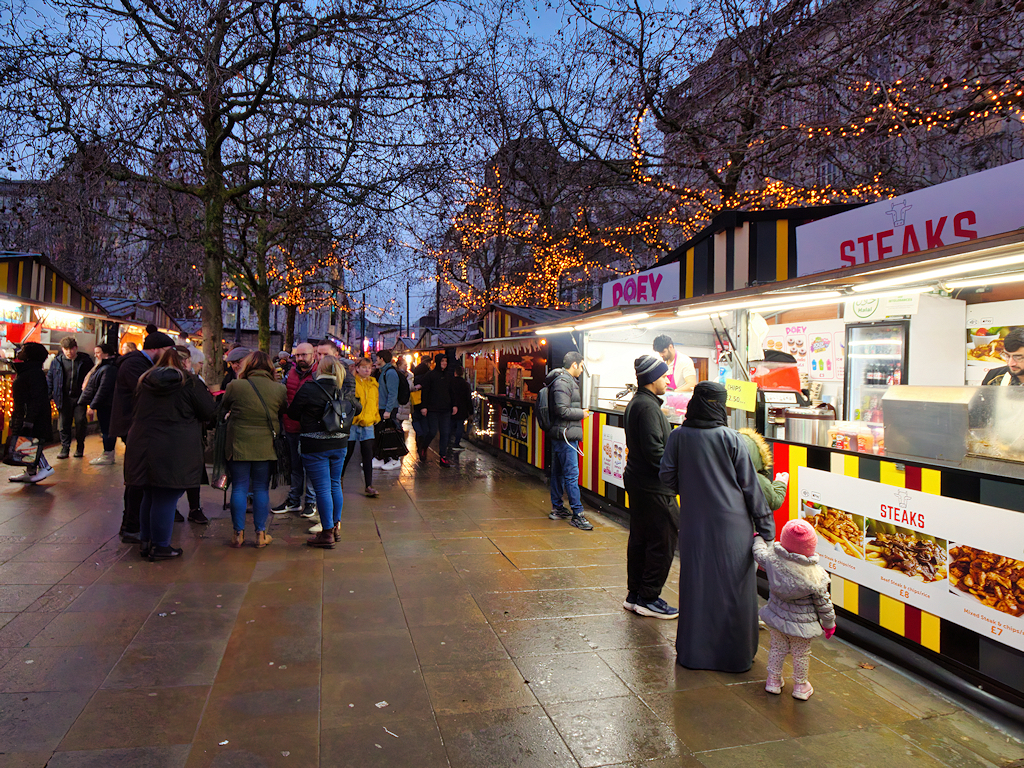
The Yorkshire pudding wrap
If Manchester’s markets have a signature dish, this is it: a Yorkshire pudding the size of a dinner plate, rolled around roast meat with stuffing and gravy, eaten standing up and mostly down your coat. Porky’s sold them at Exchange Square in 2025, for £10. Nobody would call it elegant, and it is not trying to be. It is a Sunday roast you can hold in one hand.
Is it worth it? Once, yes. It is filling enough to count as a meal, which makes it one of the better-value things on offer, and it is the dish people go home and tell their friends about. Just do not attempt it in a white jacket, and do not follow it with a second one because it seemed like a good idea at the time.
Cheese
Look for the stalls melting cheese onto potatoes and bread — if there is a raclette stall scraping from a half-wheel under a grill, it will have a crowd round it — and for the producers at St Ann’s Square selling hard cheeses to take home. Melted cheese on a cold night is hard to argue with, though the portion sizes are rarely generous for the money. Share one rather than having one each.
Something sweet
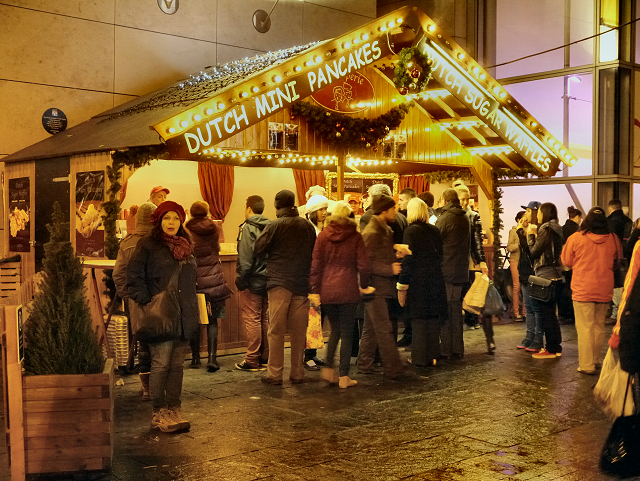
The sweet stalls are where the markets are at their most reliable. The Dutch mini pancakes — poffertjes, small puffed pancakes piled into a tray under butter and icing sugar — have the longest queues of anything sweet, and deserve them: they are made fresh, they are hot, and they are exactly what you want at five o’clock in December. Churros with chocolate sauce come a close second. Crêpes are fine. Chocolate-dipped fruit looks wonderful and costs a lot for what it is.
For things to take home rather than eat on the spot, the fudge, gingerbread and chocolate stalls are the ones to browse, and St Ann’s Square and King Street are where the better-made versions cluster.
What to skip
Anything you could get from a van outside a football ground. Chips, generic burgers and hot dogs are all on offer, all at market prices, and none of them is better for being sold from a wooden chalet with fairy lights on it. If you are going to pay £8 or £10 for something, make it something you would not get on an ordinary Tuesday.
The Drinks
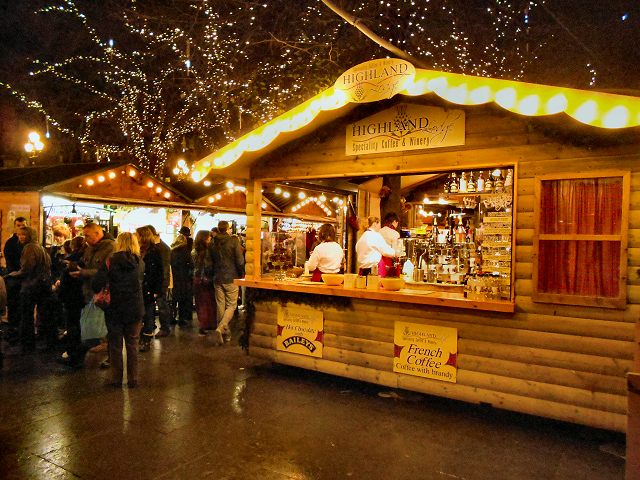
Mulled wine
Mulled wine is the default Christmas market drink in Manchester and the one you pay the mug deposit on. In 2025 a small cost £6.50 and a large £8.50 at the big bars, with Glühwein from £6 at some of the smaller stalls. Red is standard; white and fruit versions turn up at some stalls, and some will add a shot of something for a supplement.
The single most useful tip on this page: buy the small one. A large mulled wine in an open mug on a cold evening is lukewarm halfway down and cold by the end, and you will have paid an extra £2 for the privilege. Two smalls at two different sites are warmer, better and a nicer way to move around the markets.
Beer
German lager by the pint is the other staple — Krombacher was £6 a pint and £3 a half in 2025 — and the big bars at Albert Square pour it all day. It is decent beer at a fair-ish price for the setting, but it is also the drink where the markets compare worst with what is two minutes away: Manchester has some of the best pubs in the country, and several are within a few hundred yards of the stalls.
Hot chocolate, coffee and the spiked versions
Hot chocolate carries the same mug deposit as mulled wine and is the obvious choice for children and anyone driving. Most drinks stalls also do coffee, and many offer a Baileys or liqueur version of both for grown-ups who want something warming that is not wine. Mulled cider turns up at some stalls too, and it is the better choice if you find mulled wine too sweet.
If you are not drinking
Soft drinks were £2 in 2025, which makes them the one genuinely cheap thing at the markets. Hot chocolate is the festive alternative. Alcohol-free options at the bars vary from year to year, so ask rather than assume.
The Manchester Christmas Market Mugs
Every hot drink at the markets comes in a ceramic mug, and every mug carries a deposit — £3.50 in both 2024 and 2025. Hand the mug back at a drinks stall and you get the £3.50 back. Keep it and you have bought a souvenir.
Plenty of people keep them. The design changes every year and the council unveils the year’s designs each autumn, so there is a real collecting habit, and in Manchester homes the mugs pile up in cupboards a year at a time. At £3.50 a mug is the cheapest thing you can take home from the markets, and one of the few things that could only have come from here.
- Keep one, not four. The deposit mounts up quietly. Four drinks across an afternoon is £14 of mugs if you forget to hand them back.
- Return them as you go. Hand back each empty mug at the next stall and buy a fresh drink in a fresh mug. There is no need to carry a stack around.
- Travelling home by train or plane? Wrap it in a scarf or a hat and put it in the middle of your bag. They are sturdy, but not that sturdy.
- Collecting? Some years bring more than one design, so if a full set matters to you, check what the council announces before you start handing mugs back.
For other things to bring home, our guide to Manchester souvenirs goes well beyond the mug.
Where to Eat, Site by Site
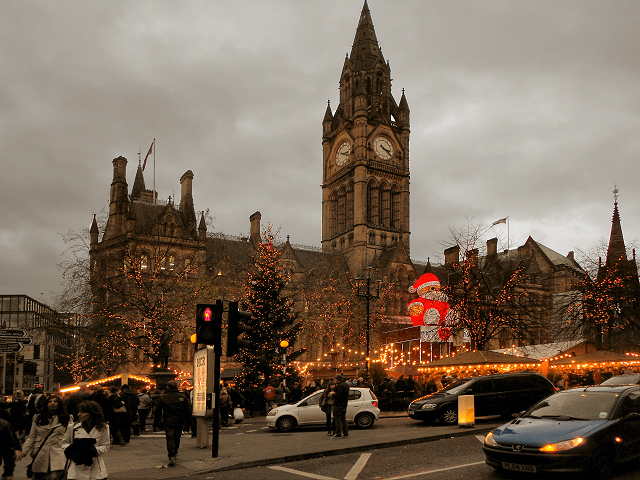
The markets are spread over ten city-centre sites, and they are not interchangeable when it comes to food. Our map of all ten market locations covers the geography; this is the food and drink view of it.
| Site | Food and drink character | Go there for |
|---|---|---|
| Albert Square | The biggest bars and the most drinking, plus hot food around the edges | Atmosphere, a pint, a mulled wine with the Town Hall lit up |
| Exchange Square | The food-led site, between Selfridges and the Corn Exchange; Porky’s Yorkshire pudding wraps in 2025 | Lunch |
| Piccadilly Gardens (the Winter Gardens) | Covered bar, hot food, seating and live music | Sitting down, and bad weather |
| Cathedral Gardens | Family-friendly food beside the ice rink | Hot chocolate and pancakes with children |
| St Ann’s Square | Craft-led, with the better food producers | Cheese, fudge and chocolate to take home |
| King Street | Quiet and gift-heavy | A hot drink without a queue |
A sensible order for grazing: start at Exchange Square for something savoury while you are hungry, drift through St Ann’s Square for things to take home, stop somewhere quiet like King Street for a drink, and finish at Albert Square for the atmosphere once it is dark. If the weather turns, the covered Winter Gardens at Piccadilly is where everyone ends up.
Three Ways to Do It, Costed
Using the 2025 prices, here is what three typical visits actually cost, before mug deposits.
- The weekday lunch, alone: a cheese bratwurst and a soft drink at Exchange Square. £10, fifteen minutes, back to your desk or your hotel. The best-value way to eat at the markets, and the least crowded.
- The afternoon graze, for two: two small mulled wines (£13), a Yorkshire pudding wrap and a bratwurst to share (£18), then a second round of drinks at another site (£13). About £44 for the pair, plus something sweet if you have room. Allow two hours and four sites.
- The evening with friends, for four: a round of pints at Albert Square (£24), a round of mulled wine somewhere quieter (£26), and something to soak it up before the stalls close at nine. Call it £20 to £25 a head — and then go to the pub, where the next round costs less.
None of those is cheap, but none of them is outrageous either, and all three are better than they sound on paper when the lights are on and it is properly cold.
When to Eat
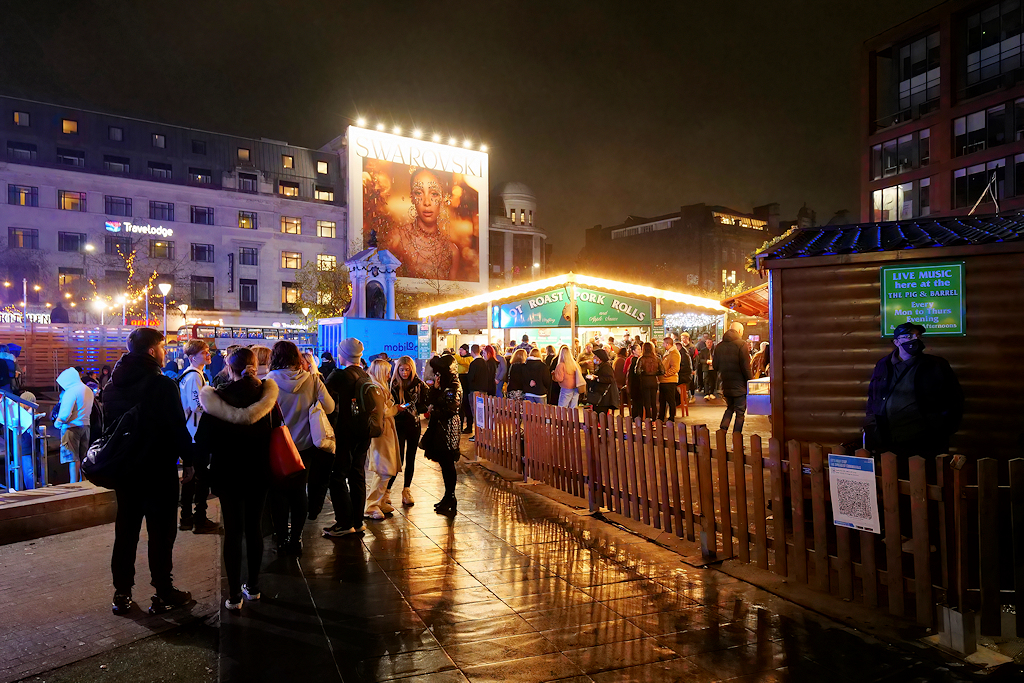
Food and drink stalls open at 11:00 and close at 21:00, an hour after the craft stalls, and from Christmas Eve the two sites that stay open into January — Albert Square and Cathedral Gardens — run 10:00 to 17:00. That timetable shapes everything:
- Weekday lunchtimes are the sweet spot. Everything is open, the queues are short, and you can actually get to the front of the pancake stall.
- From about four on a Saturday until eight, the markets are at their most crowded. Queues at the Albert Square bars can run to twenty minutes, and every covered seat is taken.
- Late evening is shorter than people expect. The stalls stop serving at nine, and several thousand people move into the nearby pubs at the same moment.
- After Christmas, the two late-running sites are small and quiet, with shorter hours. A pleasant surprise if you are in the city between Christmas and New Year, but plan dinner elsewhere.
Our Manchester Christmas markets tips guide covers the quietest times, parking and how to avoid the worst of the crowds.
Vegetarian, Vegan, Gluten-Free and Halal
Vegetarians do well: pancakes, churros, crêpes, cheese, potatoes and pretzels are all meat-free, and it is worth asking the Flammkuchen stall for one without the bacon. Vegan is harder but manageable — some stalls now do plant-based sausages and dairy-free sweet things, but it varies by year, so ask at the counter rather than relying on a menu board.
Gluten-free is genuinely difficult. Batter, bread and buns are everywhere, and cross-contamination in a chalet kitchen is a real risk. Halal is similar: some meat stalls may be able to tell you, but few advertise certification, so ask directly and walk on if the answer is vague. Every stall is required to tell you which of the 14 major allergens are in a dish if you ask, and they are used to being asked.
If a dietary need is more than a preference, eating properly nearby is the better plan. Our guides to vegan and vegetarian restaurants and halal restaurants in Manchester both include places within a short walk of the market sites.
Eating Properly Nearby
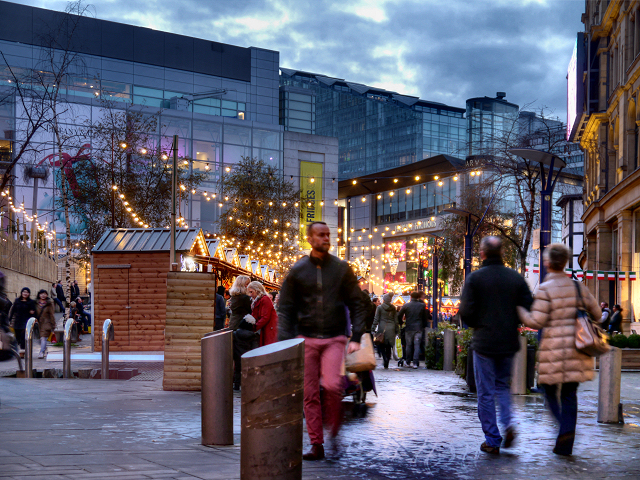
At some point, usually around half past four, someone in your group will want to sit down, get warm and eat something with a knife and fork. The markets are built around the best-connected streets in the city, so you are never far from a proper meal.
- The Corn Exchange — the Grade II listed building beside Exchange Square is full of restaurants, and it is the easiest escape from the cold without leaving the market area.
- Shambles Square — the two timber-framed pubs between Exchange Square and Cathedral Gardens, the Old Wellington and Sinclair’s Oyster Bar, are about as close to the stalls as a pub gets. Sinclair’s is a Samuel Smith’s house, and its prices make the market bars look silly.
- The Northern Quarter — ten minutes’ walk from Piccadilly Gardens, with the best cheap food in the city. Our cheap eats guide has the details.
- Manchester’s food halls — the permanent street food markets are cheaper and, frankly, better than the Christmas stalls. See our guide to Manchester’s street food markets.
- A proper dinner — book ahead in December, because every decent restaurant in the centre is full of office parties. Our pick of the best city-centre restaurants is a good place to start.
And when the stalls close at nine, a proper pub will do more for your evening than a third mulled wine in the cold.
What Is Not Worth It
- The large mulled wine. Two smalls, at two sites, beat one large that goes cold.
- A twenty-minute bar queue at Albert Square at five on a Saturday, for a drink you could buy in two minutes on King Street.
- Chips and burgers at market prices. Save your £8 for something you cannot get on an ordinary day.
- Treating the markets as dinner if eating well matters to you. The food is fun, not fine, and the permanent food halls a few minutes away do it better for less.
- Forgetting about the mugs. Keep the one you want; hand the rest back.
Frequently Asked Questions
How much is mulled wine at the Manchester Christmas markets?
In 2025 a small mulled wine cost £6.50 and a large £8.50 at the main bars, with Glühwein from £6 at some stalls, plus a £3.50 refundable mug deposit. Expect 2026 prices to be similar or slightly higher.
How much is the mug deposit, and can I keep the mug?
The deposit was £3.50 in 2024 and 2025. Return the mug to a drinks stall to get it back, or keep it and forfeit the deposit — the design changes every year, which is why so many people keep one.
What food is at the Manchester Christmas markets?
Mostly German classics — bratwurst, pretzels, schnitzel and Flammkuchen — plus Yorkshire pudding wraps, Dutch mini pancakes, churros, crêpes, melted cheese, fudge and chocolate. Savoury food clusters at Exchange Square; the bars are concentrated at Albert Square.
What time do the food stalls open?
Food and drink stalls run 11:00 to 21:00. From Christmas Eve, Albert Square and Cathedral Gardens open 10:00 to 17:00, running into early January.
Are the markets cash only?
No. Card and contactless are accepted almost everywhere, including for the mug deposit. Cash is still welcome at many stalls.
Is there vegan food at the Manchester Christmas markets?
Some. Vegetarian choices are easy; vegan options exist at a handful of stalls but change each year, so ask at the counter. For a full vegan meal, a restaurant nearby is the more reliable bet.
Planning the Rest of Your Trip
- The complete Manchester Christmas markets guide — dates, history, shopping and where to stay.
- All ten market locations — what is at each site and the walking route between them.
- Christmas in Manchester — everything beyond the markets, from pantomime to Boxing Day.
- Manchester’s street food markets — better food, year round, a few minutes away.
- The best pubs in Manchester — for when the stalls close.
- City-centre hotels — book early for market weekends.