This article contains advertising. Our booking links are routed through a partner that adds commission tracking automatically, so if you book through one we earn a commission from the provider, at no extra cost to you. It never affects what we recommend. Affiliate disclosure
Ask ten Mancunians where they would live if money was no object and at least three will say Didsbury. It is the city’s leafy southern darling — Victorian villas, tree-lined streets, a Sunday brunch scene that goes on too long, and the quiet patrician energy of a suburb that has been wealthy since the days of the cotton barons. But Didsbury is not just a postcode for relocators to size up. It is a brilliant day out from Manchester city centre, and the area around it — Chorlton, Withington, Burnage, Heaton Moor — makes for one of the most rewarding South Manchester wanders you can do.
This is a local’s guide to Didsbury and the wider South Manchester area in 2026 — what to see, where to eat, the best pubs (including the updated Didsbury Dozen route), the parks, the music heritage that most guides miss, and whether you should pick Didsbury or Chorlton if you only have a day. For more context, see our Manchester neighbourhoods guide and the best restaurants in Manchester guide.
Why Didsbury? Manchester’s “stockbroker belt” in sixty seconds
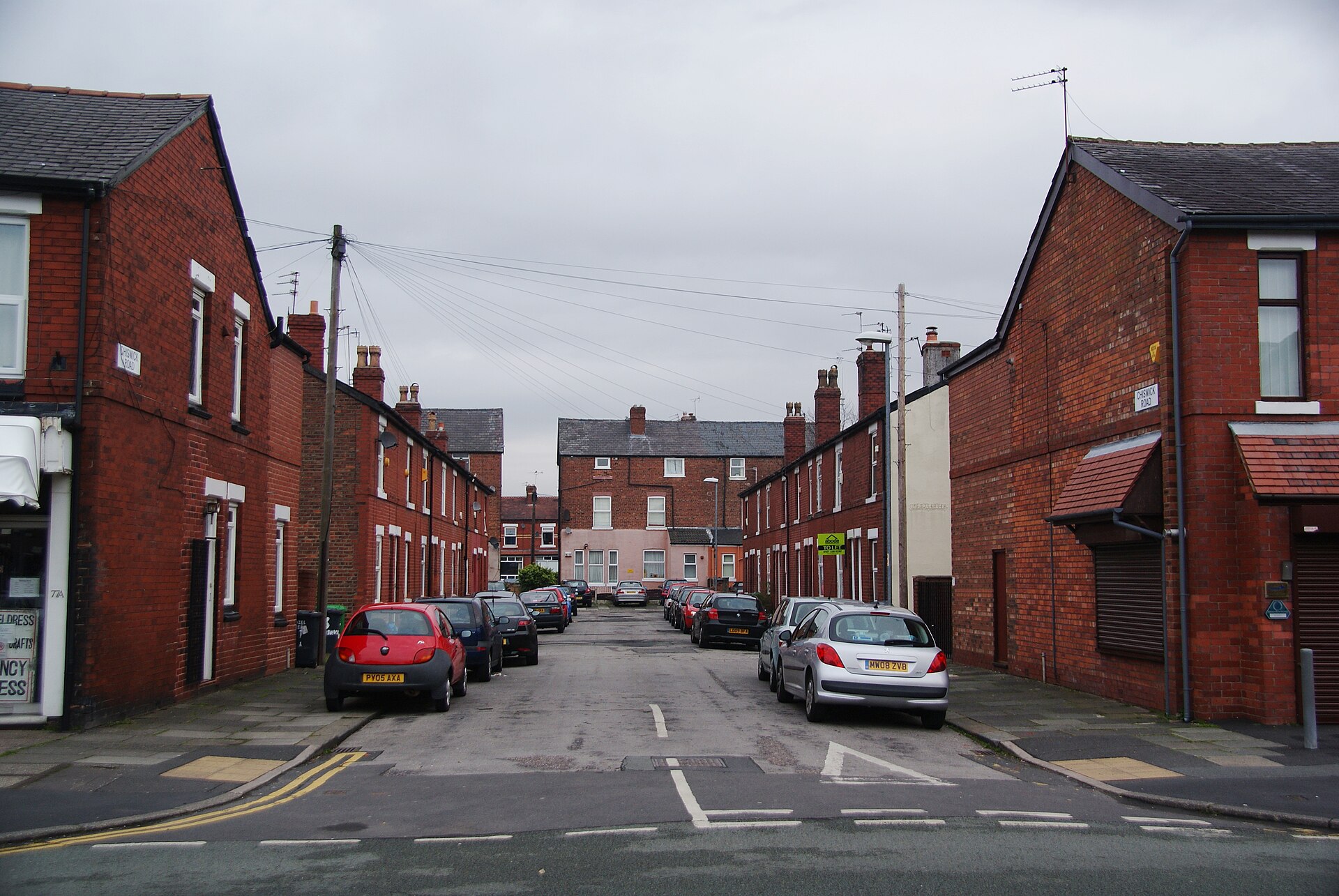
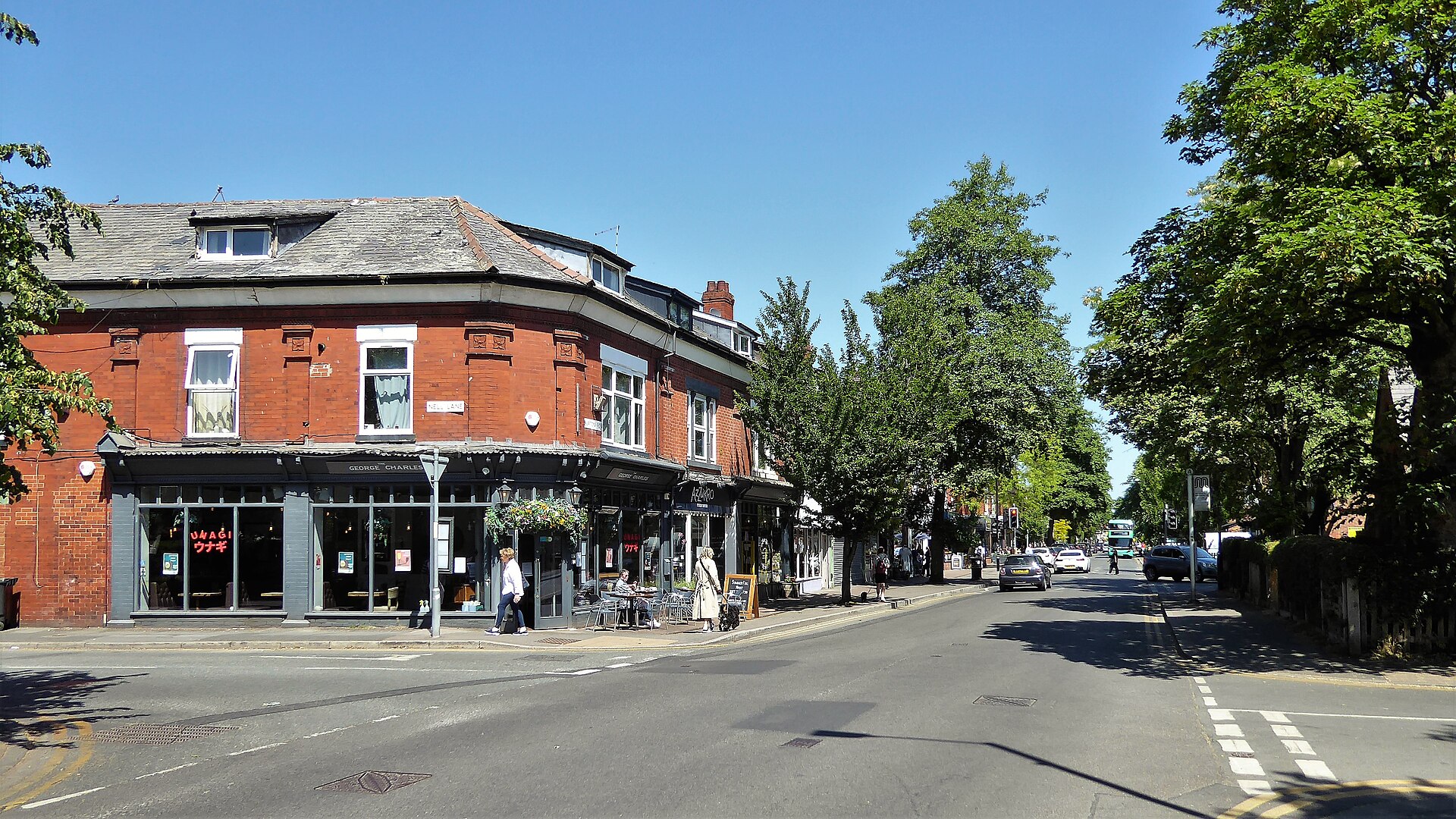
Didsbury is five miles south of Manchester city centre, on the north bank of the River Mersey, in the M20 postcode. It is a Victorian and Edwardian suburb, with conservation areas covering parts of it — a leafy, slightly genteel district of independent shops, big parks, gastropubs, and high-end restaurants. The Sunday Times has named it one of the best places to live in the North West, and it has held that reputation, give or take, since the railways arrived in the 1880s and the city’s cotton merchants moved out of the centre for cleaner air.
What this means as a visitor: a half-day in Didsbury feels closer to visiting a small Cheshire market town than a Manchester suburb. The pace is slower. There are more dogs than cars on Beech Road on a Saturday morning. The pubs have proper beer gardens. The bookshops have not yet been replaced by phone repair shops. It is the bit of Manchester you would not believe was a short tram ride from the bombing-and-bass nightclubs of Deansgate.
Where is Didsbury, and how do you get there?
The three faces of Didsbury
Locals split Didsbury into three distinct areas, and orientating yourself around this triangle is the single most useful thing you can do before visiting:
- Didsbury Village — the historic heart, around Wilmslow Road and the Didsbury Village tram stop. Old coaching inns, the conservation area, Fletcher Moss, the bookshop, the cheesemonger.
- West Didsbury — the foodie/cool sister, centred on Burton Road and the West Didsbury tram stop. Independent restaurants, bars, brunch spots, late-night cocktail rooms. This is where the chefs live.
- East Didsbury — the residential/family side, around the East Didsbury tram terminus. Parrs Wood Entertainment Centre with its 4DX cinema, the bowling alley, the chain restaurants. Less to see for tourists, but the most family-friendly zone.
By Metrolink from Manchester city centre
Take an East Didsbury tram from St Peter’s Square and you can stop at any of Burton Road (for West Didsbury), West Didsbury, Didsbury Village, or East Didsbury (the terminus). The base service is a tram every 15 minutes, with extra trams at peak times on the busiest corridors; TfGM’s tram schedule and journey planner give the times for your stop. Fares are zonal, so the single and the daily cap depend on the zones you cross. Tap in and out with contactless and the right cap is applied for you; TfGM’s contactless page lists the fare for each zone.
If you are doing the whole South Manchester pub crawl (the Didsbury Dozen, more on this below), get off at Didsbury Village, walk south through the village, and either tram back from West Didsbury later or Uber.
By bus, car, bike, or on foot
Buses also run out along Wilmslow Road; check the Bee Network journey planner for the route and times to Didsbury Village. The 143 is handy for West Didsbury: it runs from Piccadilly Gardens via Oxford Road, Rusholme and Fallowfield, but stops short of the village. Useful if the tram is down, or if you are pairing Didsbury with a stop at the Curry Mile in Rusholme (see our Curry Mile guide).
If you are driving, expect parking around the village to be limited at busy times. Cyclists can ride the Trans Pennine Trail, which passes through Didsbury.
A short history of Didsbury
The name Didsbury comes from the Anglo-Saxon Dyddi’s burg — Dyddi’s stronghold — referring to a defensive site on the bend of the Mersey. The village existed in some form by the 13th century, was on the ford the Parliamentary army used to cross the Mersey during the English Civil War, and remained a small farming hamlet until the Industrial Revolution. The arrival of the railway in 1880, when the Manchester South District Line opened, changed everything — Manchester’s textile barons built grand brick villas here, and the population grew fast. Didsbury was officially absorbed into the City of Manchester in 1904.
One quiet boast: the RSPB was born in Didsbury. In 1889, Emily Williamson founded the Plumage League at her home in The Croft (now Fletcher Moss Botanical Garden) to campaign against the use of bird feathers in women’s hats. The League merged with another group in 1891 and was granted a Royal Charter in 1904, becoming the Royal Society for the Protection of Birds — now the largest wildlife conservation charity in Europe. There is a plaque at Fletcher Moss.
Things to do in Didsbury and South Manchester
Fletcher Moss Botanical Garden (the must-visit)
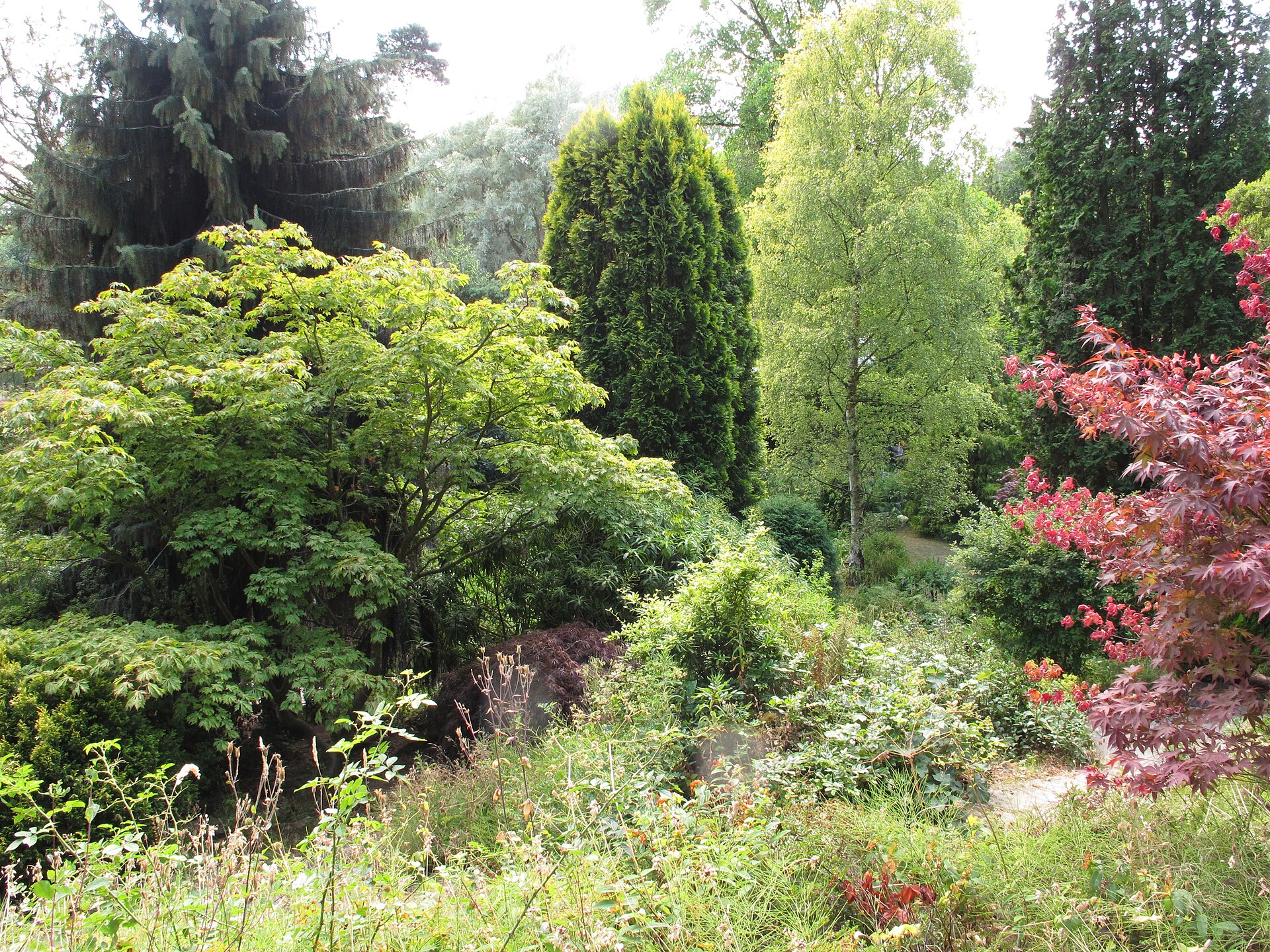
If you do one thing in Didsbury, do this. Fletcher Moss Botanical Garden (Wilmslow Road, M20 2SW) is cultivated and wild green space on the bank of the Mersey, given to the people of Manchester by Alderman Fletcher Moss in 1919. The signature feature is the rockery — built into the slope, it cascades down with alpines, ferns, and the kind of carefully unkempt planting that Edwardian gardeners loved. Below that there is a parsonage garden, tennis courts, an orchid house, and the Stenner Woods marshland trail that leads down to the river. Open dawn to dusk, free, with a café (the Alpine Tea Rooms) on site that opens daily 8am–5pm.
Summer programming includes open-air theatre from Heartbreak Productions through June, July and August — Shakespeare, Dickens, Austen adaptations on a portable stage in the parsonage gardens. Bring a picnic, low chairs (no high backs that block view), and a blanket.
Parks and green spaces
Beyond Fletcher Moss, Didsbury punches above its weight for parks. Parsonage Gardens adjoins Fletcher Moss and contains the Grade II-listed Old Parsonage building. Didsbury Park is the small civic green in the village. Marie Louise Gardens, off Old Broadway, opened in 1903 in memory of Marie Louise Silkenstadt and has rare specimen trees and a quiet contemplative feel. Fog Lane Park on the Burnage/Withington border is the big municipal one — established 1926, with a skate park, basketball courts, tennis, a play area and a sensory garden. The River Mersey walking and cycling trail (part of the Trans Pennine Trail) runs through the area from Northenden to Cheadle.
Heritage walk through Didsbury Village
Pick up the trail at St James’ Church (Stenner Lane), Didsbury’s historic parish church. From here, walk past the Old Parsonage, then up Wilmslow Road to Didsbury Library, a handsome Carnegie-funded library that opened in 1915.
Then there is the curious “Gates of Hell” passage — a narrow alley between The Didsbury pub and Ye Olde Cock Inn. The name comes from Victorian Sunday-school humour: parishioners on the way to St James’ Church had to pass two pubs to reach the church door, the perfect description of the path of temptation.
The Didsbury music and murals trail (the bit other guides skip)
This is the bit that makes Didsbury more interesting than its leafy reputation suggests. Three pilgrimages, all walking distance from each other:
86 Palatine Road — the flat where Tony Wilson and Alan Erasmus founded Factory Records in the late 1970s, releasing Joy Division, A Certain Ratio, and eventually New Order. There is a small plaque. It is a private residence; respect the residents, photograph from the pavement.
8 Stratford Avenue, West Didsbury — the front room of Bonehead’s house was the location of the cover photograph for Oasis’s Definitely Maybe (1994). The Shakermaker video was also shot here. Again, private residence — pavement photo only.
The murals — Phlegm’s Bird Towers mural on the side of Folk café-bar (Burton Road), and Mateus Bailon’s nesting-bird murals above G.T. Blaggs hardware and Wine and Wallop on Lapwing Lane in West Didsbury.
For families: Parrs Wood Entertainment Centre
If you are travelling with kids and the weather has turned, head for the Parrs Wood Entertainment Centre in East Didsbury (right next to East Didsbury tram terminus). It has a Cineworld with 4DX screenings, a 26-lane Tenpin bowling alley with karaoke and lasertag, a Nuffield Health gym and swimming pool, escape rooms, and a row of family-friendly restaurants (Wagamama, Pizza Hut, Five Guys, Nando’s). Free parking. Not particularly Didsbury-character but very useful as a rainy-day backup.
Best restaurants in Didsbury
This is what Didsbury is best known for outside of property pages: a serious independent food scene, packed into about a square mile.
Special-occasion dining
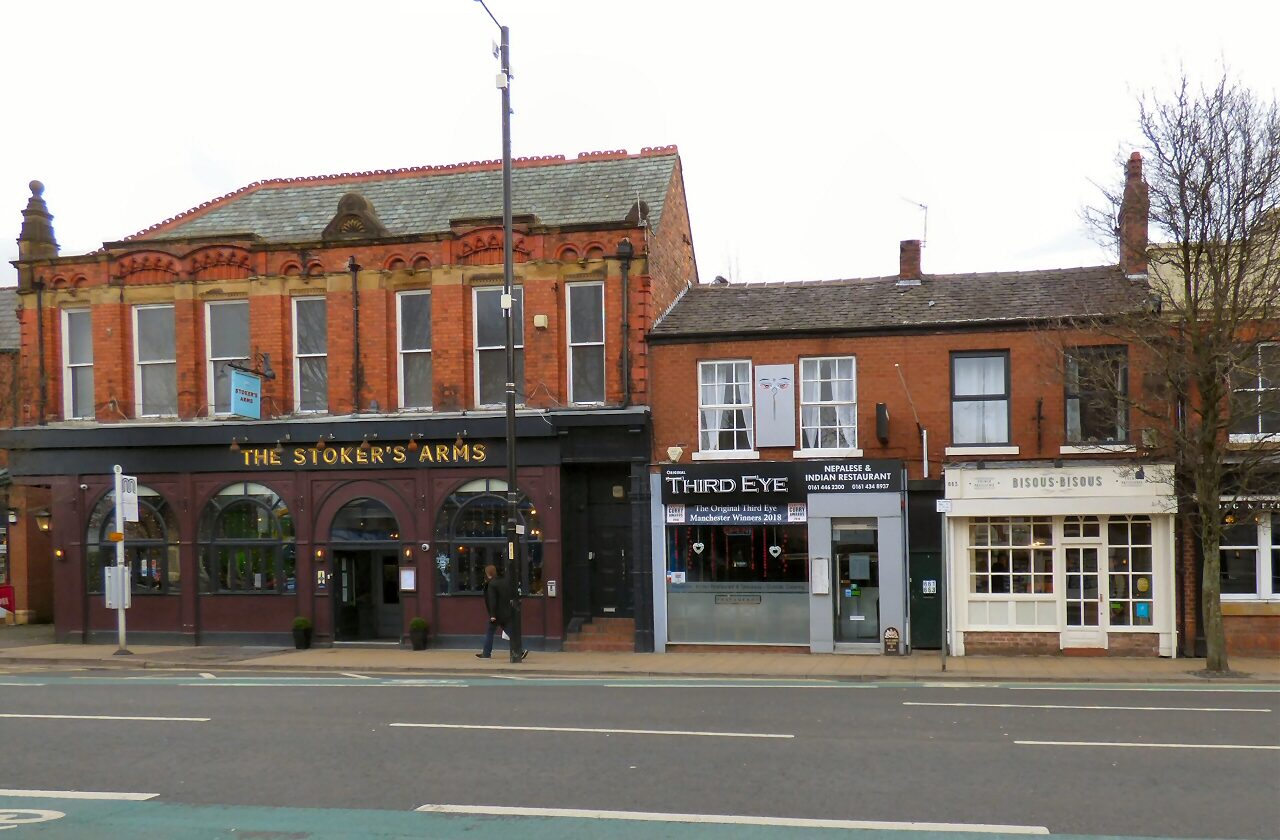
Hispi — Gary Usher’s modern British bistro in a converted bank on School Lane in Didsbury Village. Part of the Sticky Walnut family (Wreckfish, Burnt Truffle, Pinion). The set lunch is £20. Book ahead — weeks ahead at weekends.
No.4 Dine and Wine — a small modern-British room on Didsbury’s last cobbled street. Seasonal menu, intelligent wine list, properly cared-for service.
The Lime Tree — a long-established West Didsbury restaurant at 8 Lapwing Lane, run by chef-owner Patrick Hannity and doing seasonal British plates. Old-school in the best way.
Burton Road’s foodie strip (West Didsbury)
Volta — a small-plates restaurant in West Didsbury, handy for a late lunch between walks.
Folk — bar-restaurant in a converted gym building, with the original sprung floors. Brunch is the headline, but their jazz and northern-soul DJ nights are a Didsbury institution.
Proove Pizza — wood-fired Neapolitan, frequently named the best pizza in Manchester. Tiny, no bookings, expect a wait.
Indique — modernised Indian on Burton Road, with the kind of plating you would expect from a city-centre opening. Friendly service.
Namaste Nepal — Nepali momos and curries, family-run, BYOB.
Casual and global plates
OKitchen for Japanese and Korean small plates. Casa Italia for proper Sicilian pasta. 2Nakhon for Thai. Zena for Levantine. Rudy’s for Naples-via-Ancoats pizza. Solita for US-style burgers and ribs. Albert’s Didsbury for a big stylish room with outdoor seating.
Brunch and café culture in Didsbury
Didsbury is a brunch town. Some of what we would recommend:
Thyme Out — the brunch institution just off Burton Road; the £12 “Full Didsbury” plate is the local benchmark. La Chouquette — Parisian patisserie in Didsbury Village; tiny, perfect croissants. Bisous Bisous — French patisserie that has won Observer Food Monthly awards. The Art of Tea — tea, second-hand books, cake, on Barlow Moor Road, since the early 1990s. Caramello of Didsbury — Italian gelato and all-day brunch. A Front For Something — 80s-themed café with a budget menu that students love. Afti — focaccia sandwiches done properly. Another Heart to Feed — West Didsbury coffee specialist. The Turkish Sweet Centre — baklava, espresso, and a brief escape to Istanbul.
Pubs in Didsbury and the famous Didsbury Dozen
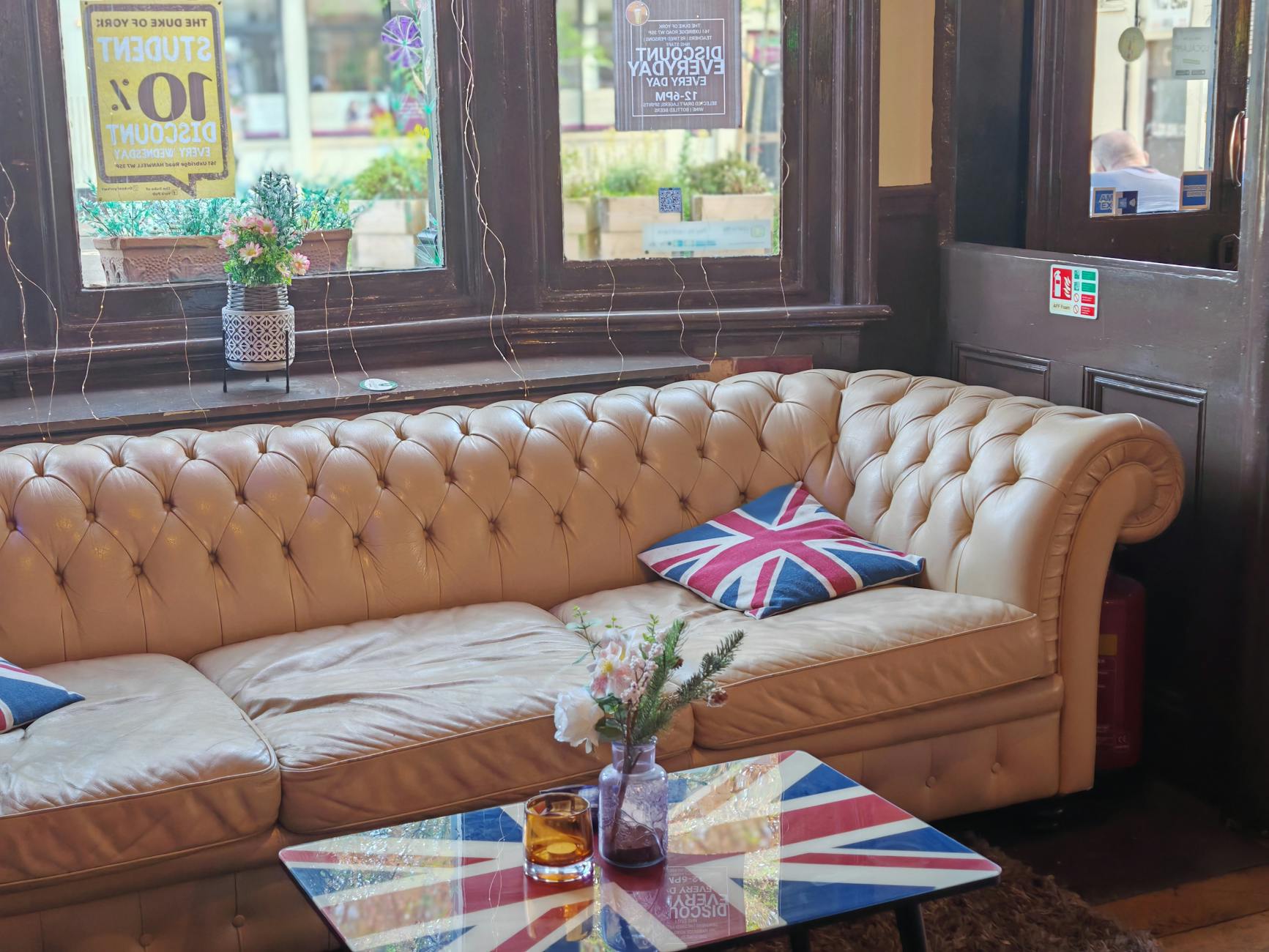
The Didsbury Dozen is a 12-pub crawl and a rite of passage for South Manchester students, stag dos and locals. The classic route used to run from The Didsbury at the top of the village down to The Railway in West Didsbury — twelve pints in twelve pubs across about a mile. It is still very doable, though one pub on the route, The Dockyard, now trades as Salmon of Knowledge.
There is no official route, and the order varies from crawl to crawl. One version runs: The Didsbury → Ye Olde Cock Inn → The Famous Crown → The Royal Oak → The Fletcher Moss → The Nelson → The Dog and Partridge → Salmon of Knowledge → The Station → The Woodstock → The Metropolitan → The Railway. Pace yourself. Halve the round if it is your first attempt.
Standout pubs even outside the crawl:
- The Didsbury — 18th-century coaching inn with a huge beer garden, the village’s anchor pub.
- Ye Olde Cock Inn — historic former cockfighting site, low ceilings, classic boozer.
- The Fletcher Moss — a Hydes house with one of the best beer gardens in Manchester.
- The Station — Irish-themed, regularly named the best Guinness pour in the city.
- The Railway — a small Joseph Holt pub at 3 Lapwing Lane in West Didsbury, the Dozen finish line.
- The Metropolitan — flagship gastropub with a canopied beer garden, around the corner from the Factory Records flat.
For wine and cocktails: Juicebox (Didsbury Village wine bar with £5 negronis), Wallop (boutique wine bar on Lapwing Lane), and The Drawing Room on Burton Road.
Shopping: independents, charity-shop chic and foodie finds
Didsbury’s shopping is genuinely independent — chains exist but are diluted by the kind of one-off shop you cannot find in most British suburbs.
Cheese Hamlet at 706 Wilmslow Road — a long-established cheesemonger with knowledgeable staff, who will let you taste anything. EJ Morten Booksellers (also called the Didsbury Bookshop) — second-hand and antiquarian, three floors of shelves, the kind of place you go in for ten minutes and emerge ninety minutes later with three books. Axons — proper butchers. Reserve Wines — boutique wine merchant with tastings. The Epicurean — craft beer and cider. Cocoa Cabana — award-winning chocolaterie. Flourish — florist. Moth — minimal homewares. Steranko — menswear. Bond — womenswear.
The West Didsbury Makers Market brings independent crafts, food and design to the area on Sundays: the coming dates are 25 October, 29 November and 20 December 2026, and the organiser’s page gives the venue and later dates. Worth timing a visit around.
Events and festivals in Didsbury
- Didsbury Festival — annual community festival in May with parade, food stalls and live music.
- Didsbury Arts Festival — the 2026 festival ran from 27 June to 5 July with the theme “Visibility and Invisibility”, and Manchester Collective played Broomcroft Hall on 2 July. Future dates and programmes appear on the festival’s website.
- WestFest — September; Burton Road street party with food, music, and family activities.
- Didsbury Beer Festival — October; one of the best small beer festivals in Greater Manchester.
- Didsbury Comedy Club — first Sunday of the month at The Metropolitan.
- Makers Market — Sunday markets in West Didsbury, next on 25 October, 29 November and 20 December 2026.
- Open-air theatre at Fletcher Moss — June through August, Heartbreak Productions.
Beyond Didsbury — exploring South Manchester
Chorlton
Five miles south-west of the city centre, Chorlton is Didsbury’s bohemian sister; the Bee Network journey planner will find the quickest link between the two. Independent shops on Beech Road, more vegan options per square metre than anywhere in Manchester, the Chorlton Beer Mile, and the largest municipal cemetery in the UK (Southern Cemetery, where L.S. Lowry, Sir Matt Busby and Tony Wilson are all buried). If Didsbury is the doctor’s-wife suburb, Chorlton is the graphic-designer-with-a-vinyl-collection suburb. See our full Chorlton guide.
Withington
Four miles south of the city centre, just before Didsbury on the same Wilmslow Road corridor, Withington is the studenty, slightly edgier neighbour. Best for Withington Baths (a community-saved Edwardian swimming pool), Fuel Café (legendary vegetarian/vegan), and the Red Lion (huge garden pub).
Burnage
Four miles south, technically on Manchester’s south-eastern edge. The playwright George Bernard Shaw called it “the prettiest village in Manchester” in 1894, and the Edwardian model housing of Burnage Garden Village backs up the description. Also: this is where Liam and Noel Gallagher grew up — Burnage High School (now closed and converted) was where the future Oasis members went. There is a quiet local tourism trade in Oasis-house drive-bys; do this respectfully, the houses are private homes.
Heaton Moor and the Heatons
Technically just over the border in Stockport (SK4), but spiritually part of South Manchester, Heaton Moor is one of four “Heatons” (Heaton Moor, Heaton Mersey, Heaton Norris, Heaton Chapel). Edwardian villas, a thriving high street with independent restaurants, a monthly farmers’ market on the first Sunday, and a craft-beer scene to rival Chorlton’s.
Where to stay in Didsbury
The two boutique-hotel choices are both Victorian townhouses within walking distance of the village:
Didsbury House Hotel (Ad) (Didsbury Park, M20 5LJ) — 27 individually styled rooms in a former merchant’s villa with a Victorian walled terrace. Doubles from around £140.
Eleven Didsbury Park — a sister property with a similar Victorian-townhouse feel, slightly more design-led. Doubles from around £150.
Beyond these, the larger options are back in the city centre. See our Manchester hotels guide for the wider city picture.
Is Didsbury a nice place to live? A quick relocator FAQ
If you are reading this guide because you are thinking of moving to Didsbury — quick answers to the questions our friends keep asking us:
Is Didsbury safe? Yes, by Manchester standards distinctly so. For street-by-street figures, look up the M20 postcode on police.uk, which maps reported crime month by month.
What does it cost to live in Didsbury? Average house price (2026) is around £405,000, with two-bed Victorian terraces from £325,000 and four-bed villas in West Didsbury or the conservation area over £700,000. Two-bed flat rentals from around £1,250 a month.
Are the schools good? Yes — Didsbury Primary and Beaver Road Primary are both Ofsted Outstanding; The Manchester Grammar School (MGS, fee-paying) is on Old Hall Lane in Fallowfield; Parrs Wood High in East Didsbury is one of the larger and better-rated state secondaries.
How is the transport? Excellent — four Metrolink stops, buses along Wilmslow Road, and Manchester Airport close by to the south.
Chorlton or Didsbury? Didsbury for grown-up dining, leafy walks, and good schools. Chorlton for indie bars, vinyl shops, more interesting takeaways and lower house prices. Both are bohemian; Didsbury is the more polished version. See our Chorlton guide for the case in favour.
Suggested itineraries
A half day in Didsbury (3 hours)
Tram to Didsbury Village, coffee and a pastry at La Chouquette, walk Wilmslow Road to Fletcher Moss Botanical Garden (45 minutes), brunch at The Art of Tea or Albert’s Didsbury, browse Cheese Hamlet and EJ Morten Booksellers, tram back to the city.
A perfect Saturday in Didsbury
10am Fletcher Moss → 12pm brunch at Folk (West Didsbury) → 1.30pm walk Burton Road, browse the murals → 3pm late lunch at Volta → 5pm Cocoa Cabana coffee and cake → 7pm dinner at Hispi → 9pm cocktails at Juicebox → 11pm Uber home.
A weekend in Didsbury
Stay at Didsbury House Hotel. Friday: dinner at No.4, drinks at The Drawing Room. Saturday: Fletcher Moss, brunch, walk along the Mersey, late lunch at OKitchen, evening at The Metropolitan and Didsbury Comedy Club. Sunday: roast at The Fletcher Moss, Makers Market on Lapwing Lane (last Sunday only), tram back.
FAQ — Didsbury and South Manchester
Where is Didsbury in Manchester?
Five miles south of Manchester city centre, on the north bank of the River Mersey, in the M20 postcode. Metrolink trams run there direct from St Peter’s Square.
Is Didsbury a nice place to live?
Yes — frequently named one of the best places to live in the North West by the Sunday Times. Leafy, safe, good schools, excellent transport into the city.
Is Didsbury safe?
Yes — crime rates are roughly half the Manchester city average.
What is Didsbury famous for?
Fletcher Moss Botanical Garden, the RSPB (founded here in 1889), Victorian villas, the Didsbury Dozen pub crawl, and an independent restaurant scene that punches well above its suburb weight.
How do I get to Didsbury from Manchester city centre?
Metrolink from St Peter’s Square on the East Didsbury line, get off at Burton Road, West Didsbury, Didsbury Village, or East Didsbury. The base service is every 15 minutes, with extra trams at peak times.
What are the three areas of Didsbury?
Didsbury Village (the historic centre), West Didsbury (the foodie zone around Burton Road), and East Didsbury (residential, family-focused, Parrs Wood Entertainment Centre).
What is the difference between Chorlton and Didsbury?
Didsbury is more polished, leafy, family-oriented; Chorlton is more bohemian, vegan, independent. Property is cheaper in Chorlton, schools are stronger in Didsbury, both are foodie hotspots.
What is the Didsbury Dozen?
A 12-pub crawl taking in Didsbury Village and West Didsbury. There is no official route; one version includes The Didsbury, Ye Olde Cock Inn, The Famous Crown, The Royal Oak, The Fletcher Moss, The Nelson, The Dog and Partridge, Salmon of Knowledge, The Station, The Woodstock, The Metropolitan, and The Railway.
What are the best restaurants in Didsbury?
Hispi (modern British), No.4 Dine and Wine (seasonal British), Folk (brunch and small plates), Proove (Neapolitan pizza), Indique (modern Indian), The Lime Tree (fine dining).
Where is the best brunch in Didsbury?
Thyme Out, Folk, The Art of Tea, La Chouquette, Albert’s Didsbury, Mary and Archie (over in Chorlton but worth the bus).
What is there to do in Didsbury with kids and family?
Fletcher Moss for picnics and open-air theatre; Parrs Wood Entertainment Centre (4DX cinema, bowling, lasertag); Fog Lane Park (skate park, play area); River Mersey walks.
Where can I park in Didsbury?
On-street parking around the village, though it is limited at busy times; JustPark for residential driveways from about £1/hour.
Is Didsbury good for shopping?
For independent shopping, yes — Cheese Hamlet, Cocoa Cabana, EJ Morten Booksellers, Reserve Wines, Steranko menswear, Bond womenswear, Flourish florist. For chain shopping, head to East Didsbury or the city centre.
Where should I stay in Didsbury?
Didsbury House Hotel or Eleven Didsbury Park — both Victorian townhouse boutique hotels in walking distance of the village.
Plan more of your Manchester visit
If you have enjoyed Didsbury, the rest of South and West Manchester is full of similar character. Our Chorlton guide covers the bohemian neighbour; our Rusholme and Curry Mile guide covers the food street between Didsbury and the city centre; our Salford Quays guide covers the waterfront and MediaCityUK. For where this all sits, see the main Manchester neighbourhoods guide.