This article contains advertising. Our booking links are routed through a partner that adds commission tracking automatically, so if you book through one we earn a commission from the provider, at no extra cost to you. It never affects what we recommend. Affiliate disclosure
This is a guide to Manchester weather by month, and to everything the weather decides: what is on, how busy the city gets, what hotels cost, how long the days are and what to pack. It is for anyone choosing when to come — or who has already booked and wants to know what they are in for — and it takes the city’s damp reputation seriously without pretending it is the whole story.
The honest summary is that Manchester is a year-round city with no bad month, only different ones. Summer brings long light evenings, festivals in the parks and cricket at Old Trafford. Winter brings the Christmas markets, packed theatres and the best of the pubs. The two in-between seasons are when the city is at its most relaxed and, often, its best value. What changes most from month to month is not whether it rains — it will — but how much daylight you get and how many other people have had the same idea.
The Year at a Glance
Temperatures and rainfall below are the long-term averages recorded at Manchester Airport for 1991–2020, the official Met Office normals. Daylight is sunrise to sunset on the fifteenth of the month.
| Month | Avg high / low | Rain | Daylight | Big moments |
|---|---|---|---|---|
| January | 7°C / 2°C | 67mm, 13 days | 8 hours | Sales, quiet museums, cheapest hotels |
| February | 8°C / 2°C | 61mm, 10 days | 10 hours | Chinese New Year, half-term |
| March | 10°C / 4°C | 51mm, 12 days | 11¾ hours | Driest month; St Patrick’s Day; Easter in 2027 |
| April | 13°C / 5°C | 61mm, 11 days | 14 hours | Manchester Marathon, spring in the parks |
| May | 16°C / 8°C | 59mm, 10 days | 15¾ hours | Sunniest month; jazz festival; Great Manchester Run |
| June | 19°C / 10°C | 63mm, 11 days | 17 hours | Parklife, stadium gigs, longest evenings |
| July | 21°C / 13°C | 60mm, 11 days | 16½ hours | Manchester International Festival in odd years; cricket |
| August | 21°C / 13°C | 73mm, 12 days | 15 hours | Manchester Pride; football returns |
| September | 18°C / 10°C | 71mm, 11 days | 12¾ hours | Heritage Open Days; students return |
| October | 14°C / 7°C | 95mm, 14 days | 10¾ hours | Wettest month; Literature Festival; Grand Final |
| November | 10°C / 4°C | 86mm, 14 days | 8¾ hours | Bonfire Night; Christmas markets open |
| December | 7°C / 2°C | 84mm, 14 days | 7½ hours | Christmas markets, panto, New Year’s Eve |
The Truth About Manchester Rain
Manchester’s reputation for rain is bigger than its rainfall. The airport records around 830mm a year — comfortably below the UK average, and far less than Glasgow, Cardiff or anywhere in the Lake District. What Manchester has is frequency rather than volume: roughly 143 days a year with at least a millimetre of rain, much of it the fine, persistent kind that does not look like much from a window and soaks you in twenty minutes outside.
Three practical conclusions follow. First, a waterproof jacket with a hood beats an umbrella, which is a nuisance on busy pavements and useless in the wind that funnels between the city-centre towers. Second, the city is built for it: almost everything worth doing has a roof, and our guide to things to do in Manchester in the rain could fill a week. Third, the wettest months are autumn’s, not winter’s — October is the wettest of the year on average, while March is the driest and May the sunniest.
Snow is a different matter. It rarely settles in the city centre, which is warmed by its own buildings, but the moors on the eastern skyline get it most winters, and it is worth checking conditions before any hill walk between December and March.
Sunrise and Sunset Through the Year
Daylight shapes a Manchester trip more than temperature does. These are sunrise and sunset times on the fifteenth of each month, in local clock time.
| Month | Sunrise | Sunset | Daylight |
|---|---|---|---|
| January | 08:17 | 16:18 | 8h 01m |
| February | 07:30 | 17:17 | 9h 47m |
| March | 06:26 | 18:11 | 11h 45m |
| April | 06:11 | 20:07 | 13h 56m |
| May | 05:10 | 21:00 | 15h 50m |
| June | 04:39 | 21:39 | 17h 00m |
| July | 04:58 | 21:32 | 16h 34m |
| August | 05:47 | 20:41 | 14h 54m |
| September | 06:41 | 19:28 | 12h 47m |
| October | 07:34 | 18:15 | 10h 41m |
| November | 07:33 | 16:14 | 8h 41m |
| December | 08:18 | 15:50 | 7h 32m |
In practice: between November and January, plan outdoor sightseeing for the middle of the day and save museums, shops and pubs for after dark, which arrives around four. From May to July you can walk in the hills after a day in the city and still be back before sunset. Most museums close at around five all year round, so the long summer evenings are for parks, canals and beer gardens rather than galleries.
The Best Month to Visit Manchester
There is no single best month to visit Manchester, but there are best months for particular trips.
- For the weather: May and June. May is the sunniest month of the year, June has the longest days, and neither has the school-holiday crowds of high summer.
- For a bit of everything: September. Still warm, still light into the evening, football in full swing, the summer crowds gone, and hotel prices a notch lower once the school holidays end.
- For atmosphere: late November and the first half of December, when the Christmas markets are open, the lights are up and the city is at its most festive. Go midweek if you can.
- For value: January and February. Hotels are at their cheapest, museums and restaurants are quiet, and the only thing you give up is daylight.
- For a big event: the weekend of it, obviously — but book early, because Parklife, Pride and major stadium gigs fill the city’s hotels months ahead.
Winter: January and February
January
January is Manchester at its quietest and cheapest. Average highs of around 7°C, eight hours of daylight — the sun rises after eight and sets soon after four — and a city recovering from December. That makes it a very good month for a certain kind of trip: museum days, long lunches, theatre, and pubs with fires, all at the lowest hotel prices of the year. The last two Christmas market sites close in the first days of the month, some pantomimes run into early January, and the winter sales fill the Arndale and King Street.
The one exception to the cheap hotel rule is football. Premier League fixtures carry on all winter, and a home game at Old Trafford or the Etihad lifts prices on its weekend in any month.
Good January days out: the free museums — our free museums guide has the full list — the John Rylands Library on a grey afternoon, and a canal walk on one of those cold, bright days that January does surprisingly well. Theatre tickets are easier to come by than at any other time of year, and restaurants that were impossible in December will find you a table.
What is on, what to do and where to stay are in our Manchester in January guide.
February
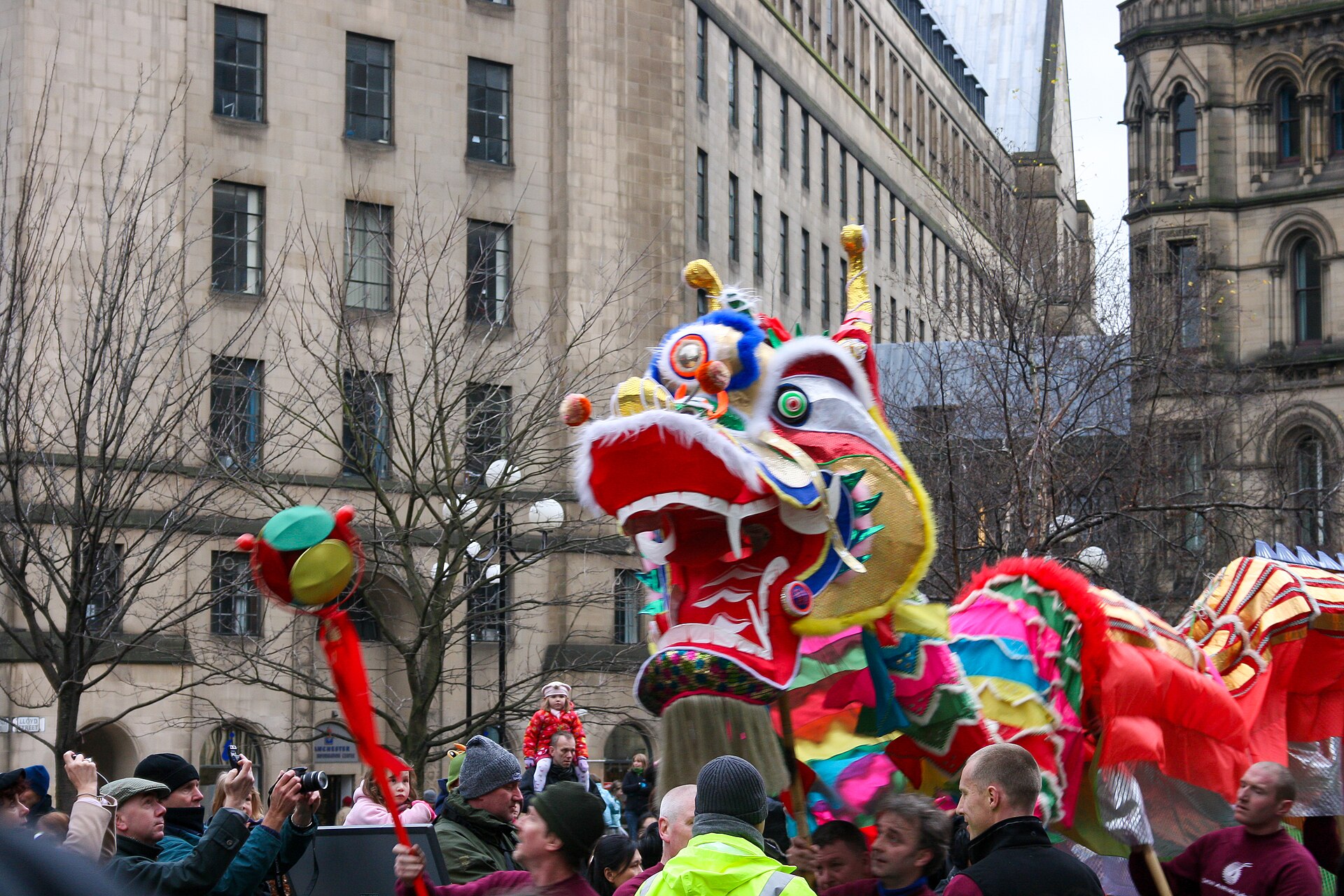
February is still cold — around 8°C at best — but it has the fewest rainy days of any month, and the days lengthen quickly: by the end of the month the sun is setting after half past five. The big event is Chinese New Year, which Manchester celebrates on a large scale, with dragon parades, lion dances and food stalls centred on Chinatown and the streets around it. In 2027 the new year falls on Saturday 6 February. Mid-February half-term brings families into the city, and Valentine’s weekend fills the restaurants — our guide to romantic things to do in Manchester has ideas.
For the rest of the month, February is a museum-and-restaurant month with better light than January. If you catch a dry, clear weekend, the moors are at their most dramatic with a dusting of snow on the tops — but check conditions first, because the hills run several degrees colder than the city.
More in our Manchester in February guide.
Spring: March to May
March
March is, on average, the driest month in Manchester, with around 51mm of rain, and it is the month the city starts to look up. Highs climb to around 10°C, the clocks go forward on the last Sunday, and suddenly there is light after six in the evening. The Irish community’s St Patrick’s celebrations bring a parade and a lot of Guinness to the city in mid-March, and in 2027 Easter falls early — Good Friday is 26 March and Easter Sunday the 28th, the same day the clocks change.
March is a good month for walking the city itself. The canal walks through Castlefield and Ancoats are pleasant without the summer crowds, and the parks start to green up by the end of the month. Hotel prices stay low outside Easter and home-match weekends.
More in our Manchester in March guide.
April
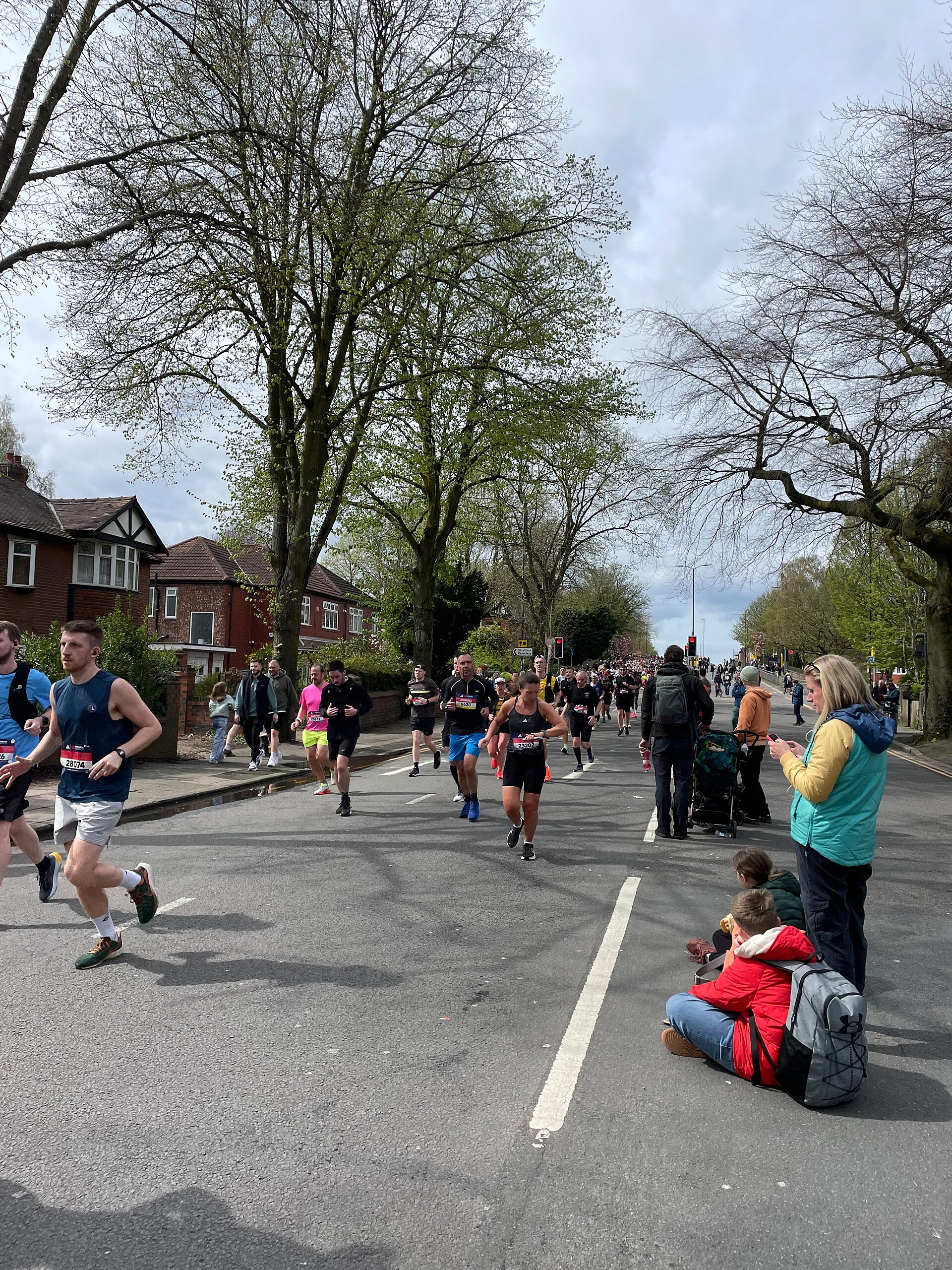
April brings highs of around 13°C, fourteen hours of daylight and the first proper spring days in the parks. It is also marathon month: the Manchester Marathon, run on a flat course through the city, Trafford and back, is one of the biggest in the country, and on race day it closes roads across the south of the city and fills hotels. The football season reaches its run-in, and the cricket season starts at Emirates Old Trafford.
For runners and spectators, see our Manchester Marathon and Great Manchester Run guide.
Outside race weekend, April is a quietly lovely month: blossom in the parks, the first beer-garden afternoons, and the great houses around the city — Dunham Massey, Bramall Hall — opening up for the season. The Easter school holidays bring families into the museums, so book anything popular.
More in our Manchester in April guide.
May
May is the sunniest month of the year, with around 185 hours of sunshine on average and highs of 16°C, and it may well be the best month of all for a first visit. The Manchester Jazz Festival fills venues and outdoor stages across the city in the second half of the month — 15 to 24 May in 2026 — and the Great Manchester Run brings tens of thousands of runners into the centre on a Sunday late in May; the 2027 date is Sunday 23 May. There are two bank holiday weekends, the football season ends, and in the Saddleworth and Tameside villages the Whit Friday brass band contests fill an extraordinary evening — 21 May in 2027.
May is also the month Manchester moves outdoors. The canal-side bars in Castlefield and Ancoats fill on warm evenings, the parks host food festivals, and the moors are at their best for walking before the bracken grows high. If you only ever visit once, this is a strong candidate.
More in our Manchester in May guide.
Summer: June to August
June
June has the longest days of the year: on the fifteenth the sun rises before five and sets after half past nine, and it does not feel properly dark until nearly eleven. Highs reach 18 or 19°C. This is festival season. Parklife, the big dance and pop festival, takes over Heaton Park on a mid-June weekend — 20 and 21 June in 2026 — and the stadium concert season starts at the Etihad and Emirates Old Trafford. Outdoor gigs in Castlefield and long evenings on the canal towpaths make it the best month to be outside in the city.
The long days also make June the best month for day trips. With light until ten, you can walk in the Peak District, come back on the train and still have a table in town for dinner. Hotel prices rise on festival and gig weekends, so check the calendar before you book.
More in our Manchester in June guide.
July
July and August are the warmest months, with average highs around 21°C — pleasant rather than hot, though heatwaves do happen. In odd-numbered years July belongs to the Manchester International Festival, the biennial arts festival of new work run from Aviva Studios; the next edition is in 2027, with dates still to be announced. Cricket is in full swing at Old Trafford, the school holidays begin in the second half of the month, and university graduation ceremonies fill the city with families during July.
Warm evenings are when Manchester’s rooftop terraces earn their keep, and our guide to the best rooftop bars in Manchester covers the ones worth the lift ride. On a genuinely hot day the city’s parks and the reservoirs beyond it fill quickly, so go early.
More in our Manchester in July guide.
August
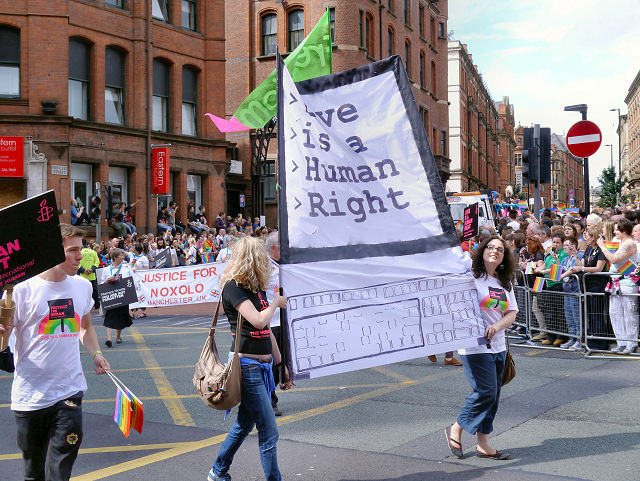
August is warm, busy and — slightly unfairly for high summer — one of the damper months, with around 73mm of rain. The main event is Manchester Pride over the August bank holiday weekend (28 to 31 August in 2026), with a parade through the city centre and a huge party in and around the Gay Village. Heaton Park hosts a food and drink festival early in the month, the Premier League season kicks off in mid-August, and The Hundred brings short-form cricket to Old Trafford. Hotels fill for the Pride weekend in particular; book well ahead.
With the school holidays in full swing, August is the month for family outings — our guide to family days out from Manchester has the best of them — and the month the museums are at their busiest. Outside Pride weekend, hotel prices tend to be steady rather than sky-high.
More in our Manchester in August guide.
For the whole summer programme, see our guide to Manchester’s summer events.
Autumn: September to November
September
September is Manchester’s most underrated month. Highs are still around 18°C, the evenings stay light until after seven for most of the month, the school holidays are over and the football season is in full swing. Heritage Open Days, usually in the middle of the month, open buildings across the city that are normally closed to the public. The one thing to watch is the last week or two, when tens of thousands of students arrive for the new university year and the bars, supermarkets and trams near Oxford Road are at their most chaotic.
September is also when the theatre and concert season starts in earnest and the new football season is at its most exciting. It is a very good month for a first visit: everything is open, the weather usually holds, and the city feels lively without being overwhelmed.
More in our Manchester in September guide.
October
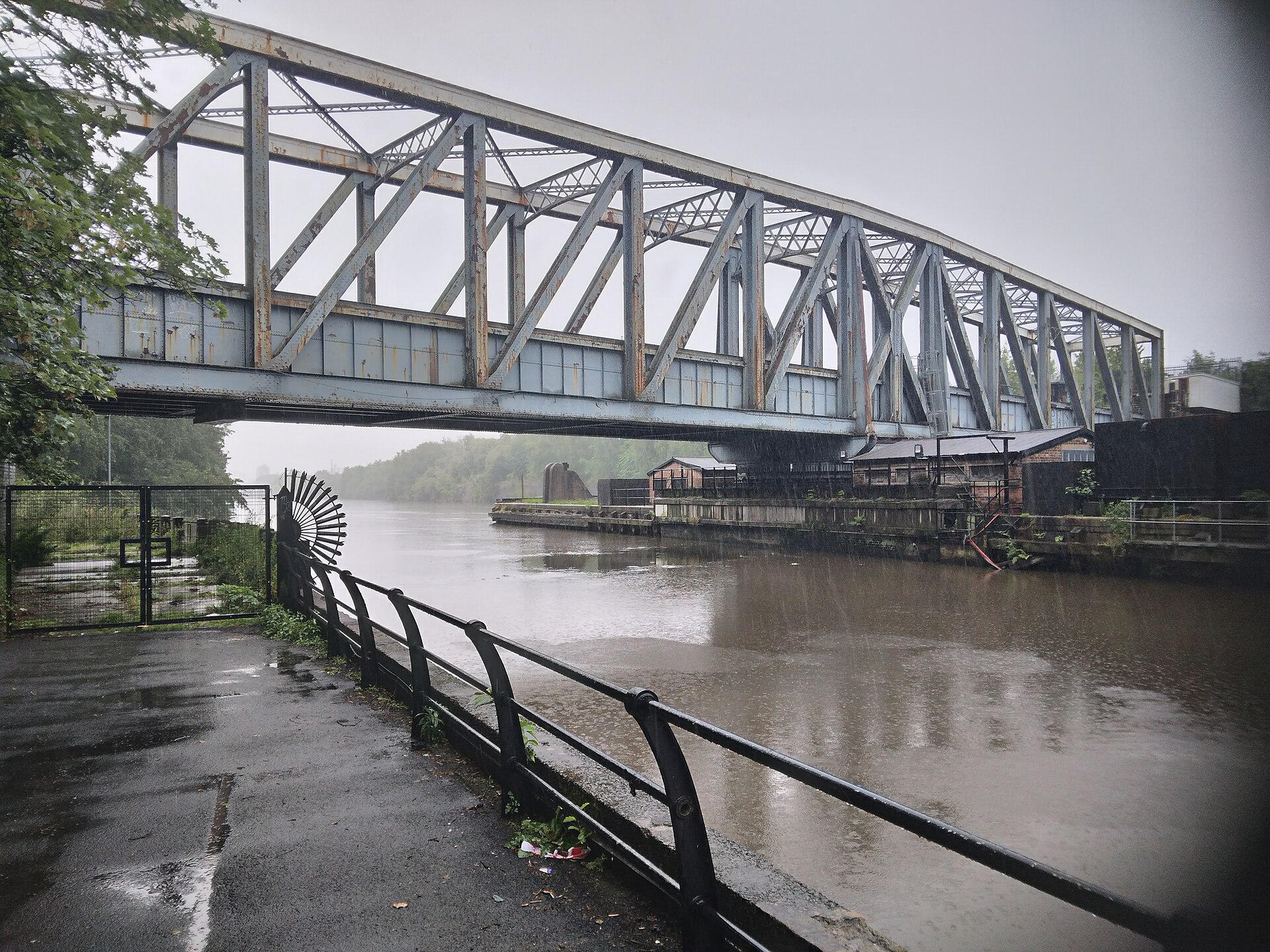
October is the wettest month of the year on average, with around 95mm of rain over fourteen days, and highs fall to about 14°C. It is also a very good month for culture: the Manchester Literature Festival runs for most of the month (9 to 25 October in 2026), the theatres launch their autumn seasons, and the rugby league Super League Grand Final is traditionally played at Old Trafford. The parks and the moors around the city turn copper and gold. The clocks go back on the last Sunday, and half-term brings families into the city in the final week.
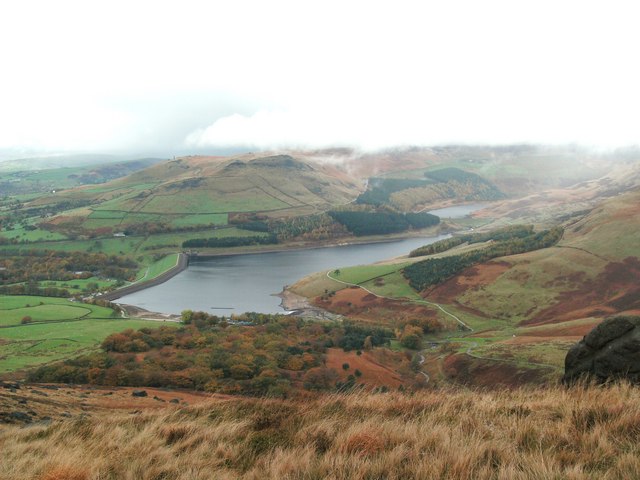
Rain or not, October shows indoor Manchester at its best — the museums and galleries, the theatres, the pubs — with bright, cold days on the moors between the showers. Halloween brings themed nights to the bars and clubs at the end of the month.
More in our Manchester in October guide.
November
November has the most rainy days of any month and less than nine hours of daylight by the middle of it, and Manchester spends it building up to Christmas. Bonfire Night brings fireworks displays around the city on and around the fifth. The Christmas markets open in early November — on Friday 6 November in 2026 — and the Christmas lights go up. The first half of the month, midweek, is the sweet spot for the markets: fully open, festive, and far quieter than December.
Beyond the markets, November is a strong month for theatre and gigs, with arena tours in full flow at Co-op Live and the AO Arena. Weekday hotel prices stay reasonable until the markets hit their stride; Saturdays in the second half of the month are a different story.
More in our Manchester in November guide.
December
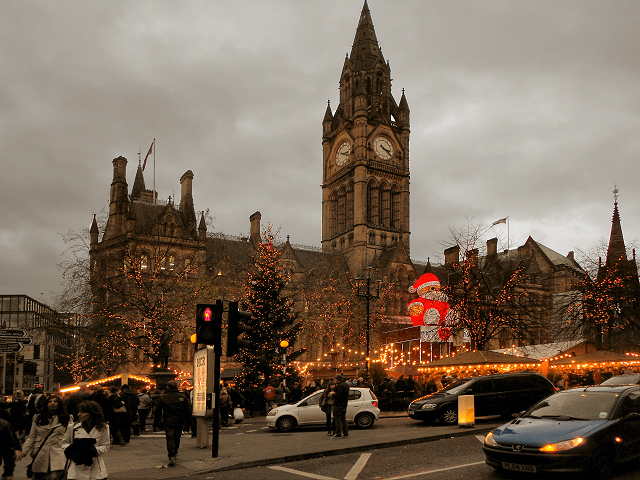
December is the darkest month, with the sun setting before four, highs of around 7°C and rain on roughly half the days, and it is one of the busiest months of the year anyway. The Christmas markets run until 22 December, with Albert Square and Cathedral Gardens staying open into the new year; the pantomimes and Christmas shows fill the theatres; and the city’s restaurants and bars are packed with office parties from the first weekend onwards.
Two practical points. Christmas Day is the one day the city genuinely shuts: there is no Metrolink or national rail service, buses are few or none, and most restaurants that open want booking weeks ahead. And New Year’s Eve is a big night out with no single official focus, so plan and book where you want to be.
For something festive beyond the stalls, the ice rink at Cathedral Gardens and the Christmas shows at the city’s theatres are the big draws; our Christmas in Manchester guide has the lot. Between Christmas and New Year the city is quieter than you might expect, and hotel rates can be surprisingly reasonable.
For the full month — events, weather and what to book — see our Manchester in December guide.
Manchester Events Calendar
The Manchester events calendar below lists what happens every year, or every other year, and roughly when. Exact dates move, so check each event’s own site before you book travel around it.
| When | Event |
|---|---|
| Late January or February | Chinese New Year celebrations (6 February 2027) |
| Mid-March | St Patrick’s Day celebrations |
| April | Manchester Marathon; cricket season opens |
| May | Manchester Jazz Festival; Great Manchester Run (23 May 2027); Whit Friday brass bands |
| June | Parklife at Heaton Park; stadium concerts |
| July, odd years | Manchester International Festival (next in 2027) |
| August bank holiday | Manchester Pride |
| Mid-August to May | Premier League football |
| September | Heritage Open Days |
| October | Manchester Literature Festival; Super League Grand Final |
| 5 November | Bonfire Night |
| Early November to 22 December | Christmas markets (two sites into early January) |
| 31 December | New Year’s Eve |
For this year’s dates in detail, see our Manchester events guide. For match days, see our guide to getting football tickets — the fixtures matter as much as the festivals when it comes to hotel prices.
The Sporting Year
- Football — the Premier League runs from mid-August to late May, with United at Old Trafford and City at the Etihad, plus cup ties and European nights midweek. There are no Premier League games during the international breaks, usually in September, October, November and March — useful if you want a football-free weekend and slightly calmer hotel prices. Our football tourism guide covers the stadium tours and museum, which run all year.
- Cricket — April to September at Emirates Old Trafford: Lancashire’s county and T20 matches, The Hundred in late summer, and international matches in some years.
- Rugby league — the Super League season runs from late winter to early autumn, with Wigan and Leigh a short train ride away and the Grand Final at Old Trafford in October.
- Running — the Manchester Marathon in April and the Great Manchester Run in May, both of which close roads and fill hotels.
Our guide to sport in Manchester beyond football covers the rest.
Prices and Crowds Through the Year
Manchester is a business city as well as a leisure one, and hotel prices follow both. The patterns are consistent enough to plan around:
- Cheapest: January and February, and Sunday nights all year round.
- Most expensive: Saturdays in late November and December, Pride weekend, Parklife weekend, big stadium-concert nights, and home-match weekends for either club.
- Surprisingly busy: graduation weeks in mid-July and the student arrival fortnight in late September.
- Best balance: weekdays in May, June and September, when the weather is at its best and the city is not full.
Our hotel booking tips go into more detail, and our trip cost guide puts numbers on a typical visit.
Manchester Seasons: What to Pack
- Winter (December to February): a warm waterproof coat, a hat and gloves, and shoes that can take a wet pavement. Layers, because everywhere indoors is warm.
- Spring (March to May): a light waterproof and a jumper. Temperatures swing by ten degrees in a day.
- Summer (June to August): a light jacket for the evenings and something rainproof. Proper heat is rare, but it happens.
- Autumn (September to November): the waterproof moves back to the top of the list, especially in October.
The full list is in our Manchester packing guide.
What Is Not Worth It
- Choosing your dates by the weather forecast alone. The differences between months are real but modest. Daylight and events matter more.
- A December Saturday if you hate crowds. The same trip on a Tuesday in mid-November is a different city.
- Arriving on Christmas Day. No trams, no trains, few buses.
- Booking a hotel for a festival weekend late. Parklife and Pride weekends fill up months in advance.
- Packing an umbrella instead of a hood. The wind wins.
Frequently Asked Questions
What is the best month to visit Manchester?
May or June for weather and long days; September for the best balance of weather, value and things to do; late November and early December for the Christmas markets; January and February for the lowest prices.
What is the rainiest month in Manchester?
October, with around 95mm on average. November has the most rainy days, and March is the driest month of the year.
Does it rain all the time in Manchester?
No. Manchester gets less rain than the UK average — around 830mm a year — but it falls on many days, roughly 143 a year, often as light drizzle. Pack a hooded waterproof and you will be fine.
Does it snow in Manchester?
Rarely in the city centre, where snow seldom settles. The moors to the east and north get snow most winters.
When is the cheapest time to visit Manchester?
January and February, avoiding home-match weekends, and Sunday nights at any time of year.
When is the football season in Manchester?
The Premier League runs from mid-August to late May. There are no league games during the international breaks, usually in September, October, November and March, and none in June and July — though the stadium tours run all year.
What is Manchester like in winter?
Cold rather than freezing, with highs around 7°C, often damp, and dark by four in December. It is also when the city is at its cosiest: the Christmas markets, theatres, pubs and museums all come into their own, and from January the hotels are at their cheapest.
How many hours of daylight does Manchester get?
From about seven and a half hours in mid-December, when the sun sets before four, to about seventeen hours in mid-June, when it sets after half past nine.
Planning the Rest of Your Trip
- The best time to visit Manchester — the short answer, season by season.
- Manchester events — this year’s festivals, gigs and sport.
- Christmas in Manchester — markets, shows and the festive city.
- Manchester in summer — festivals, gigs and outdoor life.
- Things to do in the rain — for the days the forecast wins.
- Greater Manchester towns — days out that change with the seasons.