This article contains advertising. Our booking links are routed through a partner that adds commission tracking automatically, so if you book through one we earn a commission from the provider, at no extra cost to you. It never affects what we recommend. Affiliate disclosure
The Manchester Marathon has quietly become the second-biggest marathon in Britain, and it is not hard to see why: it is flat, fast, well supported and far easier to get into than London. Add the Great Manchester Run in May and the Manchester Half in October, and the city now hosts three of the largest mass-participation races in the country every year. This guide is for runners weighing up an entry and for the friends and families coming to cheer them on — what each race involves, how to get a place, where to stay, and where to stand.
The single most useful thing to know before anything else: the marathon’s finish moved in 2025. It still starts beside Old Trafford, but it now ends on Oxford Road outside the University of Manchester, in the city itself. That changes where runners should sleep and where supporters should stand, and plenty of older advice online has not caught up.
Manchester’s Big Three Races at a Glance
| Race | Next date | Distance | Start and finish | Entry | Field |
|---|---|---|---|---|---|
| Manchester Marathon | Sunday 18 April 2027 | 26.2 miles | Start by Old Trafford; finish on Oxford Road | From about £40 plus booking fee, rising by tier | 42,000+ in 2026 |
| Great Manchester Run | Sunday 23 May 2027 | Half marathon and 10K | Start on Portland Street; finish on Deansgate | Roughly £41–£48 general entry | Tens of thousands |
| Manchester Half Marathon | Every October (4 October in 2026) | 13.1 miles | Start and finish at Emirates Old Trafford | General entry sold out in 2026 | Around 31,000 |
How Manchester Became a Running City
Twenty years ago Manchester’s running calendar had one headline event: the Great Manchester Run, a city-centre 10K first held in 2003 that quickly became one of the biggest road races in Europe, with Olympic champions at the front and tens of thousands of fun-runners behind them. The marathon was a much smaller affair. It was relaunched in Trafford in the early 2010s and grew year after year on the strength of its flat course and its reputation for fast times, until it overtook every other British marathon bar London.
The Manchester Half, set up in the same corner of Trafford, completed the set. Today the three races between them bring around 100,000 runners into the city every year, and on each of those Sundays the tram network, the hotels and the pubs of the city are organised around them.
The Manchester Marathon
Why so many people run it
Three reasons, in roughly this order. It is flat — genuinely flat, with no hill worth the name — which makes it one of the best courses in Europe for a personal best. It is accessible: there is no ballot, so if you enter early enough you are in, unlike London, where most applicants are turned away every year. And it is a proper big-city event, with more than 42,000 participants in 2026 and an estimated 140,000 spectators along the route. For a first marathon or a PB attempt, those three things together are hard to beat.
It is also well timed. Mid-April sits in the heart of the spring marathon season, after a winter of training, and Manchester’s April weather — average highs of around 13°C and lows of 5°C — is close to ideal for running 26 miles, even if the early start can be bitterly cold and a wet, windy morning is never out of the question.
Getting a place
Entry works on tiered pricing rather than a ballot. Places open at the lowest price, from around £40 plus a booking fee, and the price rises as each tier sells out, so the earlier you commit, the less you pay. Demand is enormous — more than 48,000 people entered for the latest edition — and general entry reaches capacity well before race day. After that, the way in is a charity place, which usually means a reduced or waived entry fee in exchange for a fundraising pledge. The 2027 race is on Sunday 18 April.
The Manchester marathon route
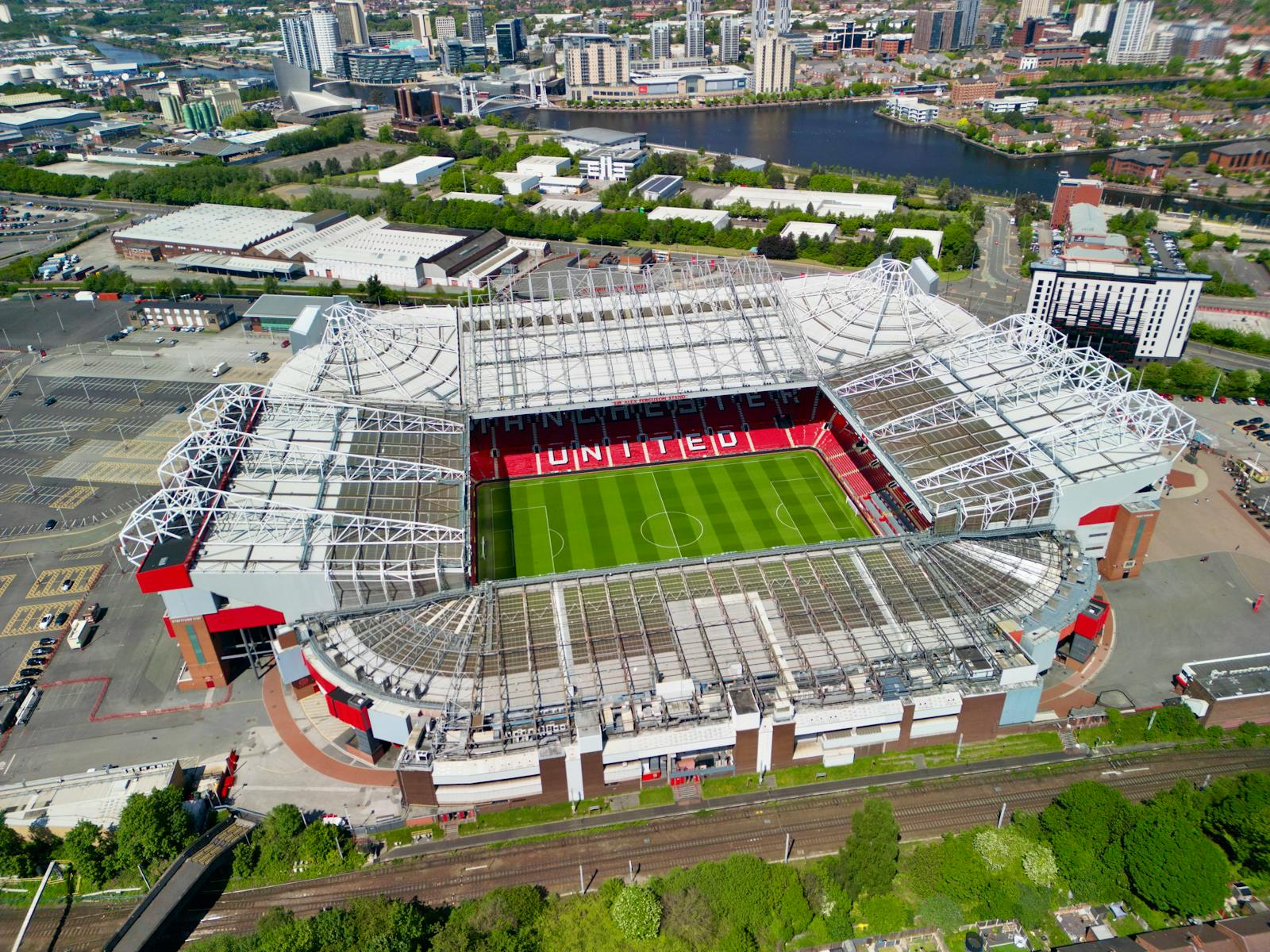
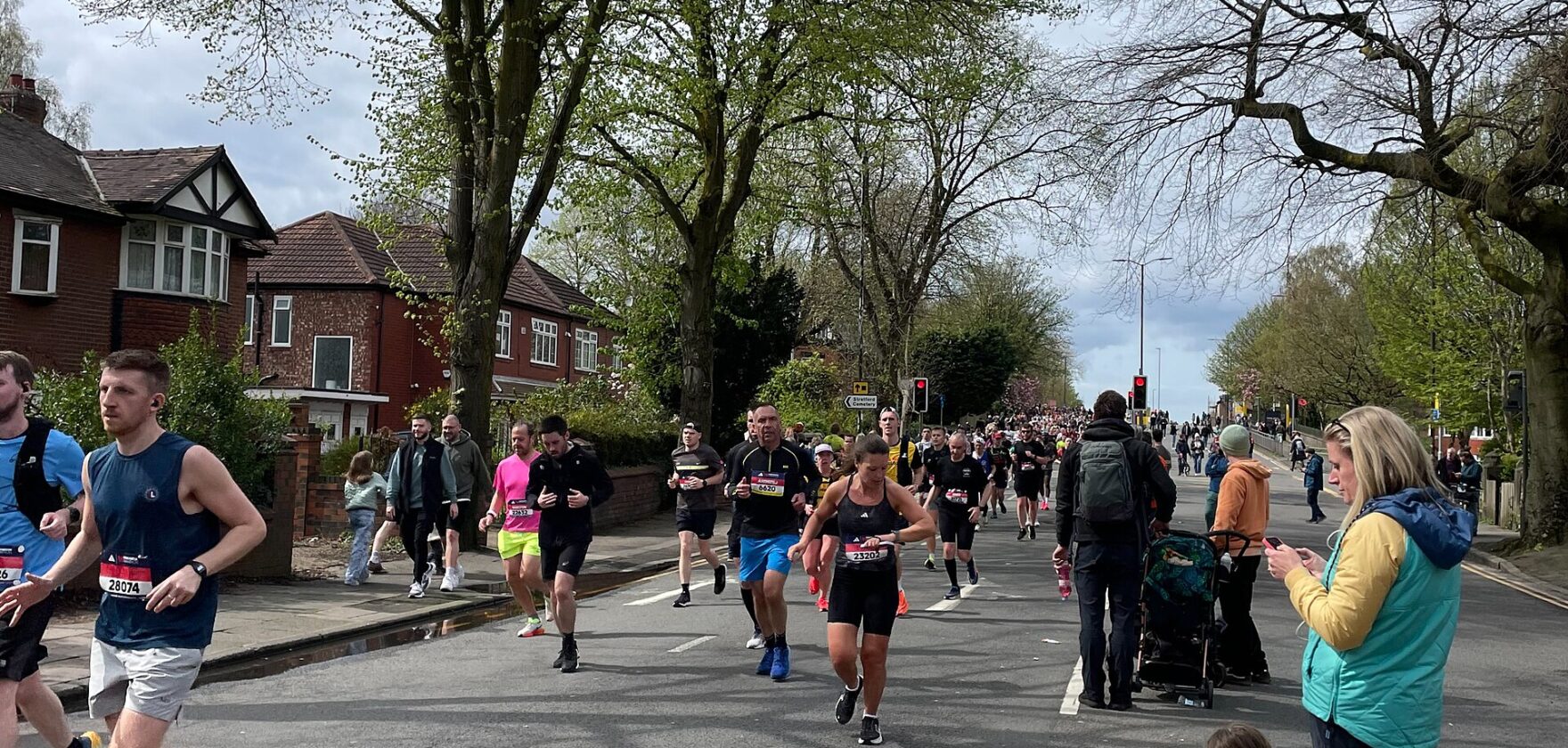
The Manchester marathon route starts beside Old Trafford in Trafford, heads out through the borough’s leafy southern suburbs on long, flat, closed roads, and then turns back towards the city, finishing — since 2025 — on Oxford Road outside the University of Manchester. The details shift slightly from year to year, so always check the official route map for your edition; what does not change is the profile, which is about as flat as a big-city marathon gets.
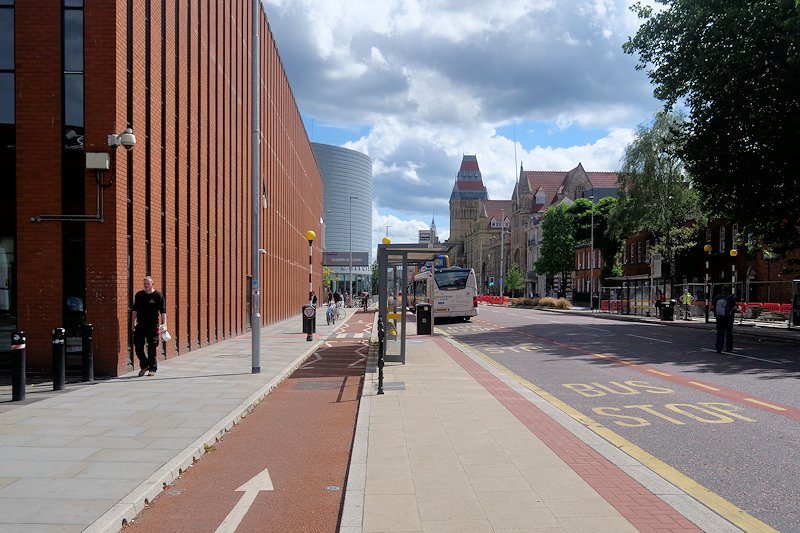
The move to an Oxford Road finish has made the closing miles far more atmospheric than the old finish near the start, with the university buildings, the city-centre towers and the densest crowds of the day all in the final stretch.
Race day for runners
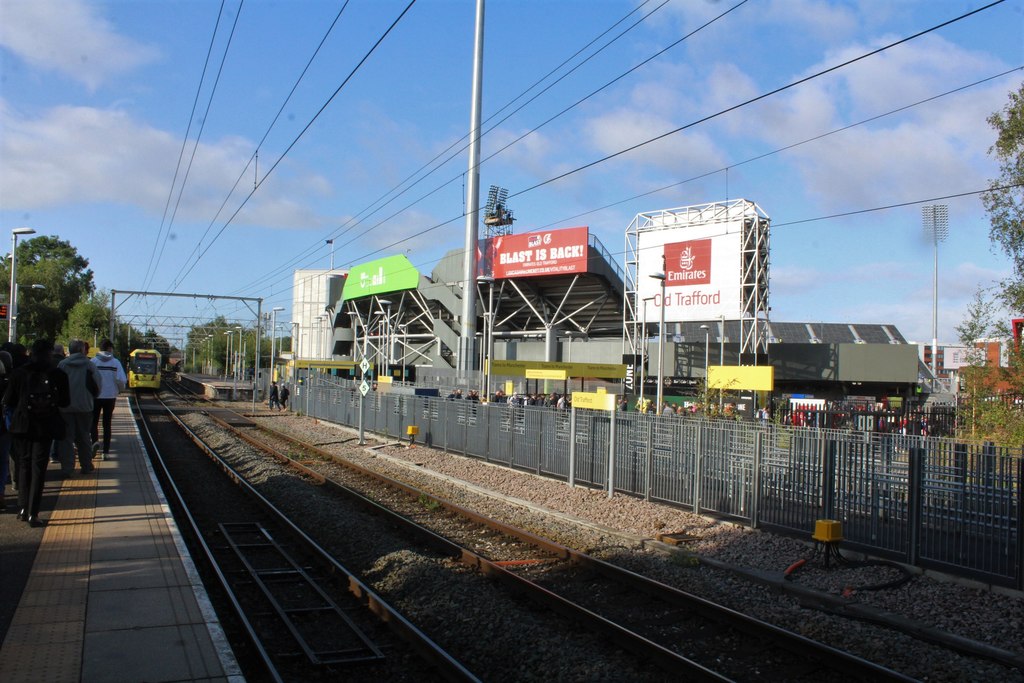
- Getting to the start — take the tram. Old Trafford, Wharfside and Trafford Bar stops are all within walking distance of the start area, and the city centre is ten minutes away by tram. Trams are extremely busy early on race morning, so allow far more time than you think you need, and check TfGM’s race-day travel advice in the week before.
- Keep warm — bring an old top or a bin bag to wear in the start pen and discard before you set off. April mornings in Manchester can be close to freezing.
- Bag drop — follow the organisers’ instructions to the letter; with more than 40,000 runners, the system only works if everyone uses it properly.
- After the finish — Oxford Road station, the tram stops at St Peter’s Square and a wide choice of pubs and cafés are all a short walk from the finish, which is the great practical advantage of the new layout.
- Meeting people — agree a meeting point beyond the finish area in advance, somewhere specific and away from the funnel. Phones struggle when 100,000 people are in the same few streets.
A training calendar for April
Most marathon plans run sixteen to eighteen weeks, which puts the start of training for an April race in early to mid December — just as the Christmas parties begin. Manchester’s winter shapes what follows: dark evenings from four o’clock, rain on around half the days, and the occasional frost. The runners who arrive at the start line in good shape are the ones who planned for that.
- December — build a base of easy running. Christmas week is the hardest week of the whole plan to stick to; do the long run first thing.
- January and February — the long runs lengthen. Flat, traffic-free routes matter now: the canal towpaths and the big parks are where Manchester’s marathon runners do their miles.
- March — the peak weeks, with the longest runs of the plan and, for many, a tune-up half marathon somewhere in the region.
- April — taper for the final two to three weeks, and stop worrying about the forecast. Everyone runs in the same weather.
Watching the Manchester Marathon
Spectating a big-city marathon is its own endurance event. Here is how to do it well.
- Pick two spots, not five. With road closures across Trafford and south Manchester, you will not see your runner more than two or three times, however well you plan. A spot in the middle miles and a spot near the finish is the sensible combination.
- Use the tram. The Altrincham tram line runs through Trafford close to parts of the course, and it is by far the quickest way to move between viewing points while the roads are shut.
- Go for the final miles. The crowds on the approach to Oxford Road are the biggest and loudest of the day. If you only see your runner once, see them here.
- Use the tracking. The organisers’ app has offered live tracking in recent years, which turns guesswork into a plan.
- Do not drive. Road closures run for hours, and the car parks near the start and finish are the worst places in the city to be stuck that morning.
- Bring a sign, a flask and a snack. You will be standing still for longer than you expect, and the runners genuinely appreciate the noise.
The Great Manchester Run
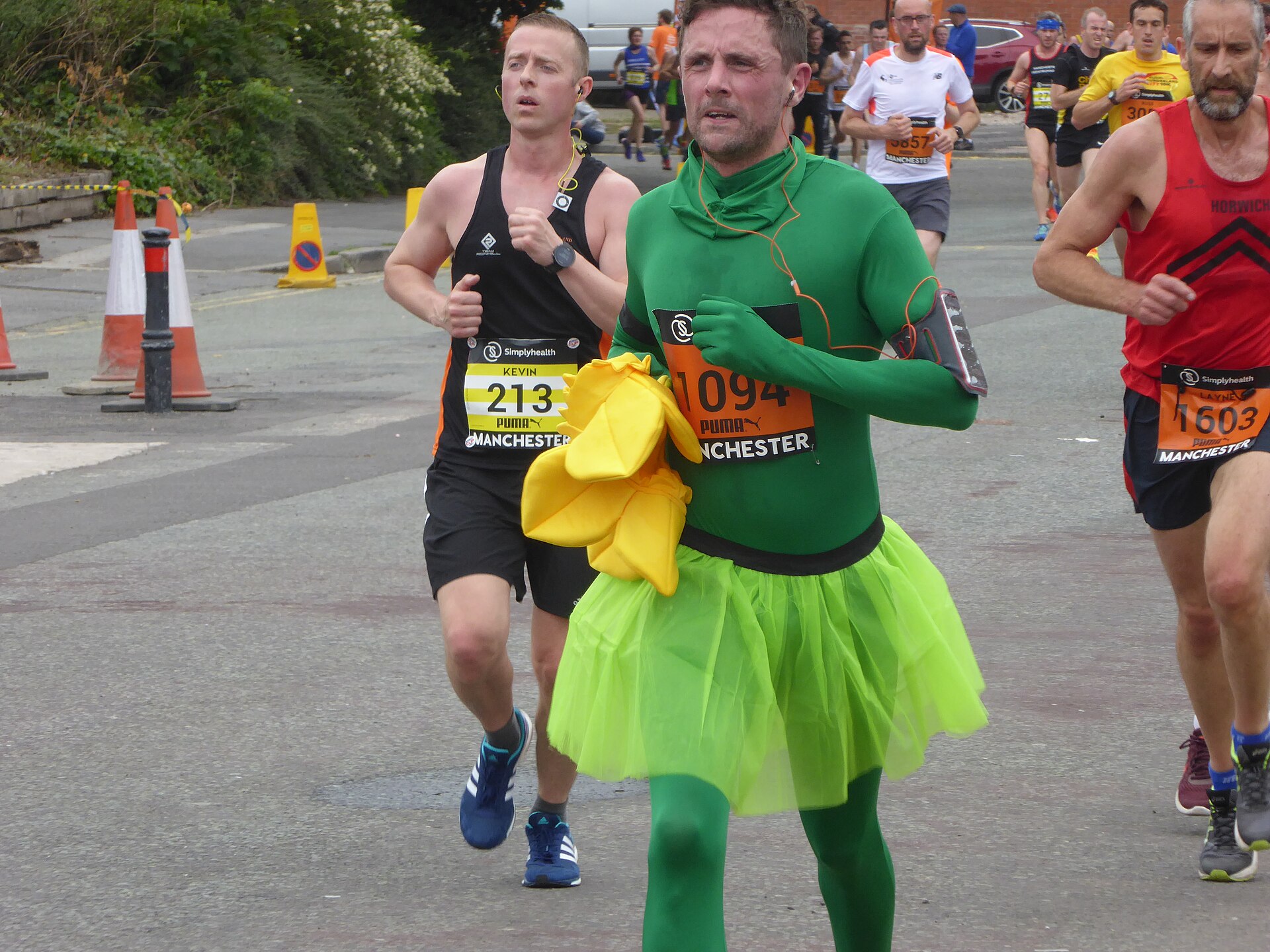
The Great Manchester Run is the older of the city’s big races, long billed as one of the biggest 10K races in Europe, and it now offers a half marathon as well. It is organised by the Great Run Company, which also runs the Great North Run, and the 2027 edition is on Sunday 23 May.
Both races start on Portland Street in the city centre and finish on Deansgate, which makes it the easiest of the three big events to watch. The half marathon sets off first, at around 08:30, and the 10K follows at around 11:30. The 10K heads out of the centre past Old Trafford and Imperial War Museum North before looping back into town; the half follows the same course with an extra loop via the Mancunian Way that takes runners out past the Etihad Stadium before rejoining the route.
General entry has typically cost between £41 and £48, with charity places available at a reduced or waived fee in return for a fundraising target. The 10K is the more relaxed of the two, with a big fun-run atmosphere, plenty of fancy dress and a lot of first-timers. The half is a serious race on a quick course, and a good tune-up for anyone thinking about the marathon the following spring.
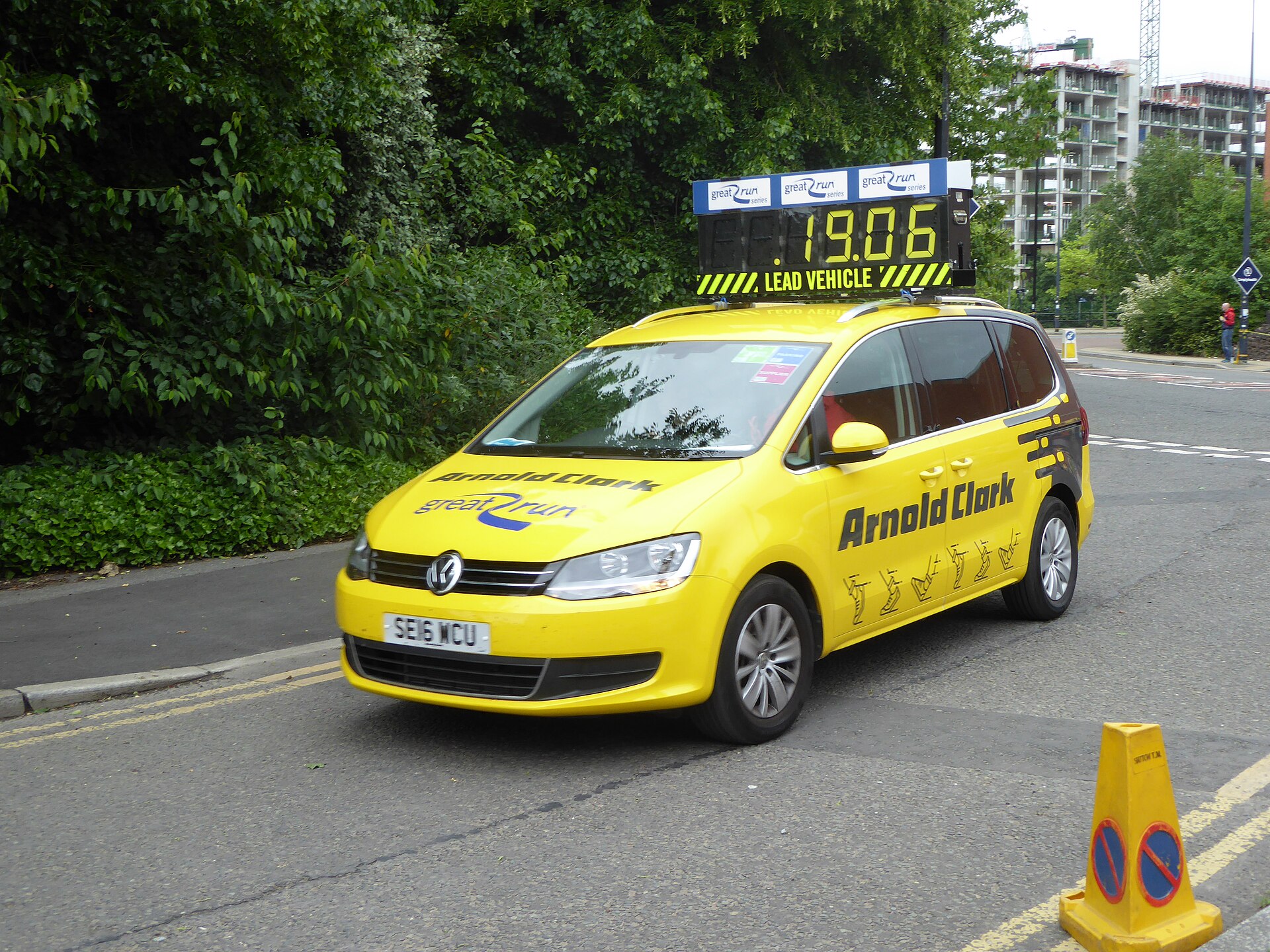
For spectators, the city-centre start and finish mean you can see the start on Portland Street, walk across town and still be on Deansgate for the finish, with coffee, toilets and trams all around you. Deansgate is packed by late morning; the stretches nearer the start are calmer.
The Manchester Half Marathon
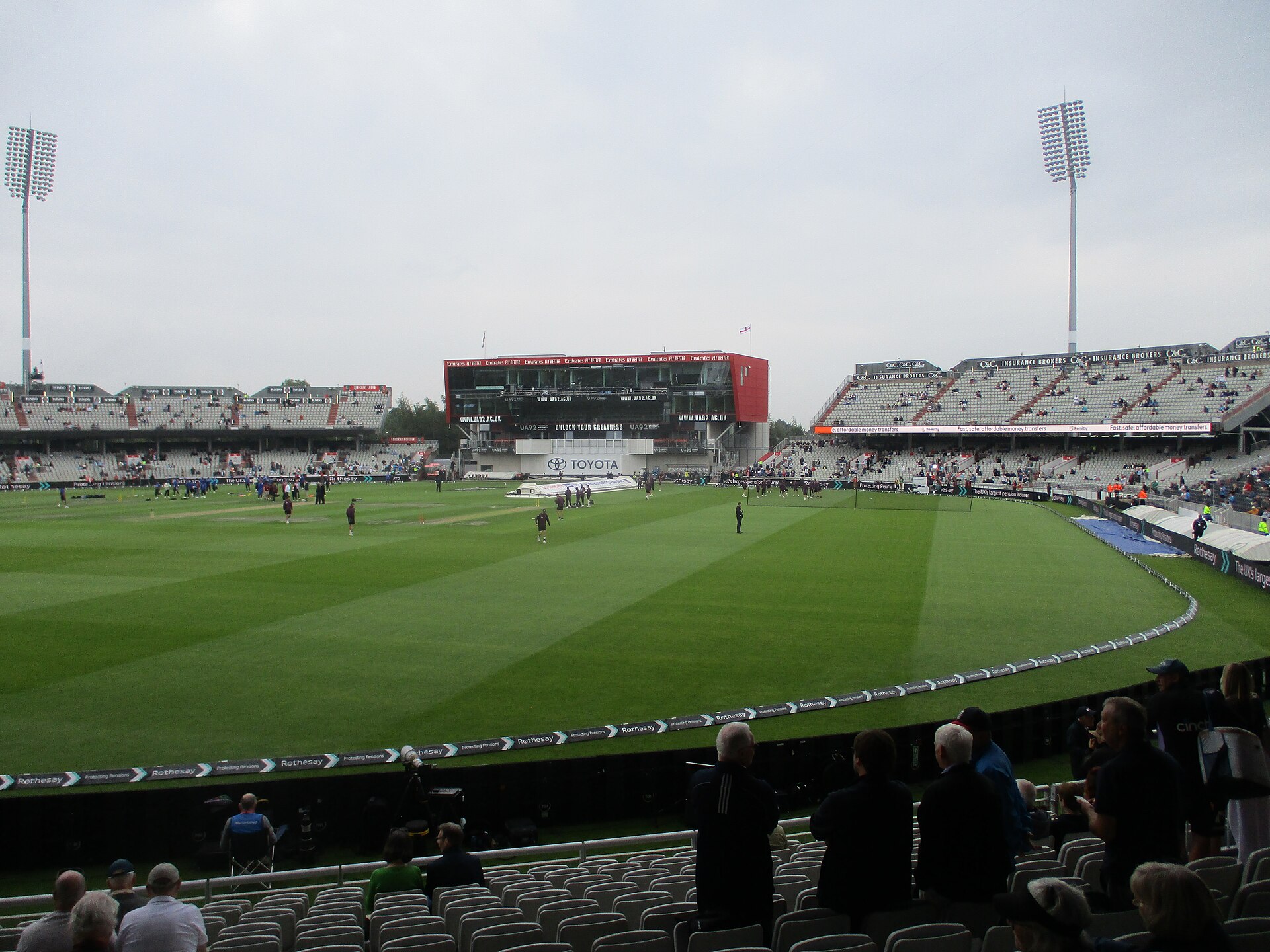
The Manchester Half Marathon is the autumn race: every October, starting and finishing at Emirates Old Trafford, the cricket ground, on a fast, mostly flat course through Old Trafford, Stretford and Brooklands. The 2026 race was on Sunday 4 October, with around 31,000 runners signed up, and general entries had sold out well in advance. It is the obvious race for anyone who has built up fitness over the summer, and, like the marathon, it is a very good course for a personal best.
The cricket-ground start makes it simple to reach: Old Trafford tram stop is right beside it. The same advice applies as for the marathon — take the tram, allow extra time, and agree a meeting point in advance.
Running for Charity
Charity places are the way in once general entry has sold out, and for many runners they are the point of the whole thing. The deal is simple: the charity buys the place, you get a reduced or waived entry fee, and in return you commit to raising a fundraising target, usually a few hundred pounds or more. The major Manchester charities, including local hospital and hospice charities, take places in the big races, and they tend to offer good support on the day — a cheering point on the course, sometimes a post-race tent. Read the fundraising commitment carefully before you sign up, because it is a pledge, not a hope.
Travelling to Manchester for a Race
Race weekends bring runners from across the country and beyond, and getting to the city is the easy part.
- By train — Manchester Piccadilly is a little over two hours from London, and connections from Leeds, Liverpool, Birmingham and Scotland are frequent. Book early for race weekends: the Saturday trains in are full of runners with kit bags. Our guide to getting to Manchester by train has the details.
- By air — the train from Manchester Airport to Piccadilly takes 17 to 25 minutes and costs around £5.50 to £6.50. See our airport to city centre guide.
- Race packs — check well in advance whether your number and timing chip are posted to you or collected in person, and plan the Saturday around it if you need to collect.
- Arrive the day before — for the marathon in particular, arriving on race morning is a gamble with early trams, crowds and nerves. Come the day before, eat well and get a proper night’s sleep.
Where to Stay for Race Weekend
Every one of these races fills the city’s hotels, and the marathon in particular pushes prices up across the centre for the Saturday night. Book as soon as you have a place.
- For the marathon, stay near the finish, not the start. A hotel within walking distance of Oxford Road or St Peter’s Square means a ten-minute tram ride to the start in the morning and a short walk to a hot shower afterwards, which is what you will care about at the time.
- For the Great Manchester Run, anywhere in the city centre works, because the start and finish are both there.
- For the Manchester Half, a hotel near the Altrincham tram line — Deansgate, Castlefield or Old Trafford itself — keeps the journey to the cricket ground simple.
Our guide to hotels near Old Trafford covers the options closest to the marathon and half-marathon start, and our city-centre hotels guide covers the rest. The hotel booking tips are worth reading too: a refundable rate booked early is the safest bet for any race weekend.
Eating Before and After
Every pasta and pizza restaurant in the city is full on the Saturday night before the marathon, so book your carb-loading dinner when you book your hotel. Our pick of the best city-centre restaurants is a good place to start, and our cheap eats guide covers the no-fuss options. After the race, the pubs around Oxford Road and the city centre are full of runners in foil blankets and medals by mid-afternoon — our guide to the best pubs in Manchester will find you a seat nearby.
Making a Weekend of It
The day before a race is for resting your legs, not walking ten miles of city streets. Manchester is good at low-effort sightseeing: the free museums, a stadium tour at Old Trafford or the Etihad, which involves more standing than walking, and the John Rylands Library, which involves almost none. Save the long wander round the Northern Quarter for the day after, when your legs will be telling you to stay close to a chair.
The day after is for celebrating. A proper Sunday roast is the traditional post-marathon meal in Manchester, and most pubs near the finish will be full of medal-wearers by mid-afternoon. If you want to soak your legs, bear in mind that Manchester has no destination spa; our guide to spa hotels and hot tubs is honest about which city hotels have a pool worth the name.
Running in Manchester the Rest of the Year
You do not need a race to run well in Manchester. The canal towpaths through Castlefield, Ancoats and out towards Sale are flat, traffic-free and full of runners on any given evening — our guide to Manchester’s canal routes maps the best of them. Salford Quays offers loops around the water with views of the Lowry and MediaCityUK, and several of the big parks host free, timed 5km parkruns on Saturday mornings, including Heaton Park, the largest of them.
What Is Not Worth It
- Driving to the marathon, as a runner or a supporter. The tram exists for mornings like this.
- Staying out by the start. For the marathon, the finish is where you will want to be when your legs stop working.
- Trying to see your runner at every mile. Two good spots beat five rushed ones.
- Waiting for the cheapest tier to come back. It will not. Enter early or plan on a charity place.
- Skipping the throwaway layer. Half an hour in a start pen on an April morning in Manchester is colder than any mile of the race.
Frequently Asked Questions
When is the Manchester Marathon 2027?
Sunday 18 April 2027.
How much does it cost to enter the Manchester Marathon?
Entry starts at around £40 plus a booking fee and rises in tiers as places sell. Once general entry is full, charity places are the main way in.
Where does the Manchester Marathon start and finish?
It starts beside Old Trafford in Trafford and, since 2025, finishes on Oxford Road outside the University of Manchester.
Is the Manchester Marathon flat?
Yes. It is one of the flattest big-city marathons in Europe, which is why it is so popular with runners chasing a personal best.
When is the Great Manchester Run 2027?
Sunday 23 May 2027, with a half marathon starting at around 08:30 and a 10K at around 11:30. Both start on Portland Street and finish on Deansgate.
When is the Manchester Half Marathon?
Every October, starting and finishing at Emirates Old Trafford. The 2026 race was on Sunday 4 October.
Is there a ballot for the Manchester Marathon?
No. Entry is first come, first served on tiered pricing, so the earlier you enter, the cheaper and more certain your place. Once general entry is full, charity places are the main option.
Is the Great Manchester Run good for beginners?
The 10K is ideal for a first race: a city-centre start and finish, huge crowds and a relaxed atmosphere, with plenty of runners in fancy dress. The half marathon is a bigger commitment but a quick course for a first attempt at the distance.
How many people run the Manchester Marathon?
More than 42,000 people took part in 2026, making it the second-largest marathon in the UK after London.
Planning the Rest of Your Trip
- Sport in Manchester beyond football — cricket, rugby league and more.
- Manchester month by month — where the race weekends sit in the year.
- Manchester events — festivals, gigs and sport this year.
- The Metrolink tram guide — the race-day lifeline.
- The Old Trafford stadium tour — for the day before, if your legs allow.
- Getting to Manchester by train — book early for race weekends.