
This article contains advertising. Our booking links are routed through a partner that adds commission tracking automatically, so if you book through one we earn a commission from the provider, at no extra cost to you. It never affects what we recommend. Affiliate disclosure
A Coronation Street tour is the only way to stand on the cobbles of the longest-running television soap opera in the world, and it is a genuinely strange experience — a full-size street built for cameras, with front doors that open onto nothing and a corner shop that has never sold a newspaper. It is also the anchor of a wider screen trail: Manchester and Salford have been the setting for Queer as Folk, It’s a Sin, Cold Feet, Peaky Blinders and a great deal else, and much of it happened in places you can walk to in an afternoon.
This guide covers the Coronation Street Experience in detail — every ticket, what you actually get, and whether it is worth £40 — then maps the rest of Manchester’s filming locations for anyone who wants to make a day of it.
The Coronation Street Experience
The set sits on Trafford Wharf Road at MediaCityUK in Salford Quays, where the programme moved in 2014 after more than fifty years at the old Granada Studios on Quay Street. The Experience opened to the public in 2023 and is run as a proper visitor attraction rather than a studio open day.
What you get on the standard guided tour: ninety minutes with a guide walking the external sets — the cobbles, the Rovers Return frontage, Roy’s Rolls, the Kabin, Victoria Street and the newer builds — followed by a permanent indoor exhibition with replica interior sets you can walk into, original props, a cinema and, inevitably, the gift shop.
Tickets and prices
| Ticket | Price | What it includes |
|---|---|---|
| Guided Tour | £40.00 per adult, weekends | 90-minute guided tour of the external sets, plus the exhibition, replica sets, cinema and shop |
| Star Tour | £57.00 per adult, weekends | The guided tour plus a meeting with a mystery cast member |
| Exhibition only | £7.50 per adult, weekdays | Monday to Friday. Exhibition, replica sets, cinema and shop — no access to the street |
| Flexi ticket | From £45.00 per person | Guided tour and exhibition, rebookable up to four hours before |
| Bundle | From £73.80 per adult | Coronation Street Experience plus the Emmerdale Village Tour |
| Gift voucher | From £40.00 | Valid twelve months |
Prices vary between weekdays and weekends, discounted late-afternoon slots appear at busy times, and seasonal promotions run through the summer — so treat these as the published rates and check coronationstreetexperience.co.uk for your date. Child and concession pricing is not shown on the same page and is worth confirming when you book.
Is it worth it?
The honest verdict depends entirely on who you are.
- If you watch the programme, or grew up with someone who did: yes, unreservedly. Forty pounds is a lot for ninety minutes, and you will not care. Standing outside the Rovers is a genuinely peculiar sensation and the guides are good at the detail — which houses are shells, where the cameras go, what happens in the gaps between the buildings.
- If you have never watched it: no. It is a street of facades and the pleasure is entirely recognition. Without that you are paying £40 to look at some brickwork.
- The Star Tour at £57 is £17 for a meeting with an unnamed cast member. If you are a serious fan and the mystery is part of the fun, fine. If you were hoping for someone specific, you cannot choose, and the honest advice is to save the money.
- The £7.50 weekday exhibition ticket is the value option and is badly under-publicised. You do not get the street, but you get the replica interiors, the props and the cinema for less than a fifth of the guided tour price. For a mildly curious visitor, or a family testing whether the children care, this is the right ticket.
- The Emmerdale bundle at £73.80 only makes sense if you are driving and prepared to spend a full day on it — the Emmerdale village is in Yorkshire, not Salford.
What you actually see
It helps to know what a television street is before you pay for one. The exterior set is a full-size row of terraced houses, shops and pubs built outdoors, in brick, at slightly less than true scale — close enough that the eye does not notice, small enough that the camera can fit more of it in. Most of the buildings are shells. The doors open onto empty frames or storage, and every interior you have ever seen on screen was shot somewhere else entirely, in a studio building behind the set.
The guides are good on exactly this sort of detail: which cobbles are original and which were cast, where the cameras sit for the standard shots, how the tram viaduct at the end of the street is used to disguise the boundary of the site, why the newer houses at the Victoria Street end look subtly different from the older terrace. It is the mechanics of television, and it is more interesting than the nostalgia.
The indoor exhibition is where the interiors live — walk-in replicas of the Rovers Return and Roy’s Rolls, cases of props and costumes, and a cinema running archive material. This is the part that works for people who are only mildly invested, and it is the part the £7.50 weekday ticket gets you.
A little history
Coronation Street first went out on 9 December 1960 from Granada’s Quay Street studios, was commissioned for thirteen episodes, and has run continuously ever since. For over half a century the exterior set stood on the Granada lot in the city centre, and from 1988 the Granada Studios Tour let the public walk it — for a generation of northern schoolchildren that was the day trip.
The production moved to a new, larger exterior set at Trafford Wharf Road in 2014, built to a fuller scale with more usable buildings and space for the tram viaduct and the newer streets that the programme had outgrown its old lot to accommodate. The current Experience opened in 2023 and is, in effect, the successor to the Granada tour after a gap of more than fifteen years.
Getting There
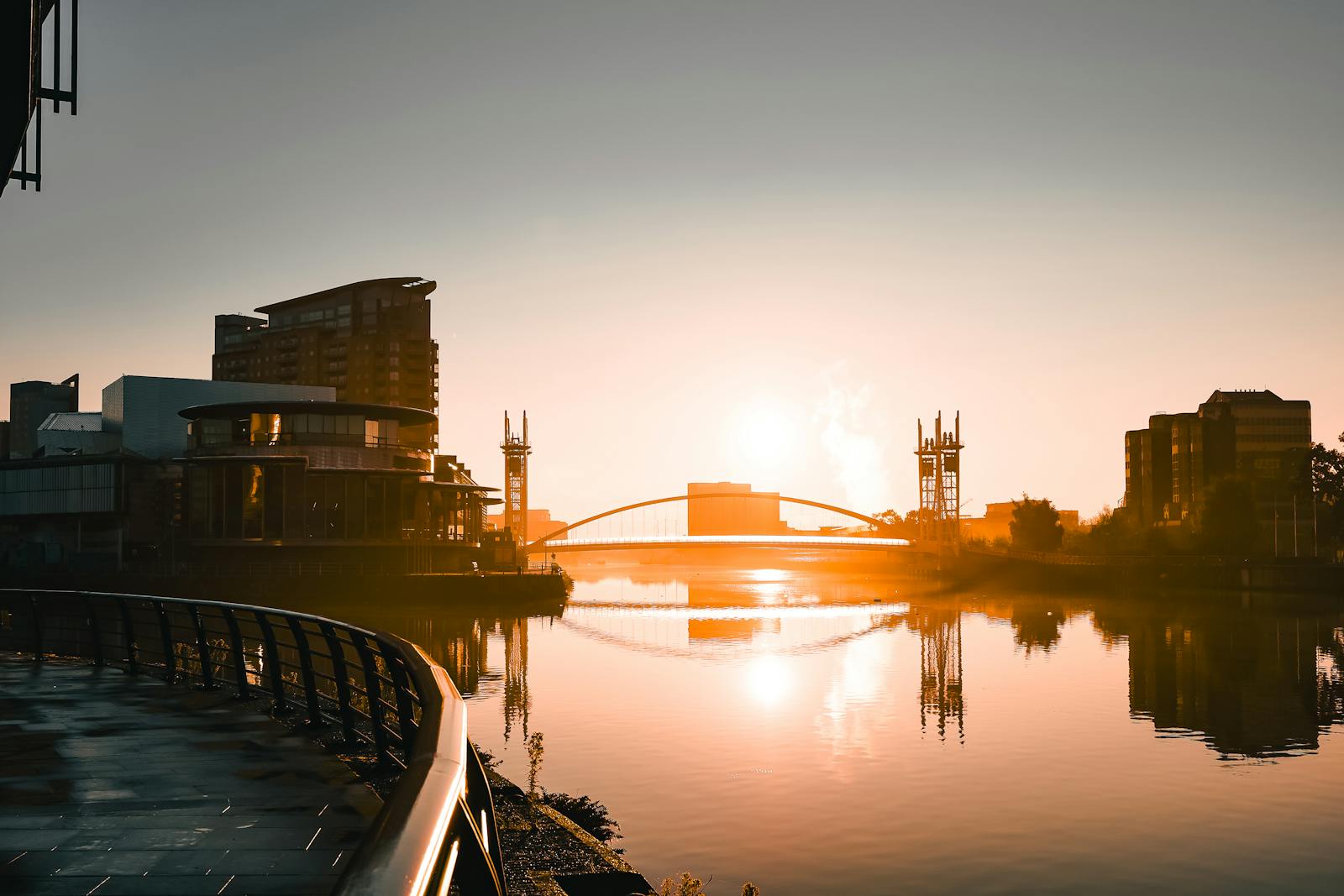
MediaCityUK has its own Metrolink stop on the Eccles line, roughly twenty minutes from the city centre, and the walk from the tram to Trafford Wharf Road takes another five to ten. Contactless caps apply — see our Metrolink guide for the zones and fares.
Driving is possible and rarely worth it. There is paid parking at MediaCityUK and the Quays, it fills on event days, and the tram drops you closer than most of the car parks do.
Build the visit into a Salford Quays day rather than treating it as a round trip: the Lowry, the Imperial War Museum North and Old Trafford are all within walking distance of each other here. Our Salford Quays and MediaCityUK guide has the full layout.
MediaCityUK Beyond Coronation Street

MediaCityUK is not a theme park with one attraction; it is a working broadcast campus. The BBC moved a substantial part of its operation here — sport, children’s programming, radio, Breakfast — and dock10’s studios produce a long list of entertainment shows. Which means that on any given weekday there are audiences queuing for recordings, and tickets for many of those are free.
That is the tip worth taking away from this section. Studio audience tickets for BBC and independent productions filmed at dock10 are distributed free through the broadcasters’ own ticketing sites, and demand varies enormously by show. It costs nothing, it is a genuinely different afternoon, and almost no visitors do it.
The Old Granada Studios
Before 2014, Coronation Street was made at Granada Studios on Quay Street, near Deansgate, and for years the Granada Studios Tour was one of Manchester’s biggest attractions. That site is now part of the St John’s development and the studios themselves have been repurposed — Aviva Studios and Factory International sit next to it, and the old buildings have found new uses in the arts quarter that grew up around them.
There is nothing to tour there now, which surprises visitors who remember the original attraction. But it is worth a five-minute detour if you are walking between Spinningfields and Castlefield, because the Granada name is still on the building and the whole history of northern television was made inside it.
Manchester’s Wider Screen Map
The city has been on screen more or less continuously since the 1960s, and it plays three distinct roles: itself, a generic northern city, and — surprisingly often — somewhere else entirely.
Canal Street and the Village

Manchester’s Gay Village is the most significant screen location in the city after the Corrie set. Queer as Folk, in 1999, was filmed on and around Canal Street and put the Village in front of a national audience for the first time; It’s a Sin filmed in Manchester and Bolton among other North West locations two decades later. Both are, in different ways, about this place.
You can walk the whole of Canal Street in five minutes, and it is free. Go in the early evening rather than at eleven at night if you are there to look rather than to drink. Our Gay Village guide has the history and the nightlife guide covers the venues.
Castlefield and the industrial city

Castlefield’s canal basin, railway viaducts and cobbled streets are the default answer whenever a production needs Victorian or Edwardian industrial Britain, and it is the most heavily filmed corner of the city.
The most famous of those productions has its own trail — see our Peaky Blinders filming locations guide for the full route.
Cold Feet and the city as itself
Cold Feet has been filming across central Manchester since 1997 and is the show that uses the city most straightforwardly as itself — recognisable streets, real bars, actual skyline. There is no set to visit and no trail to follow, which is rather the point: the locations are simply Manchester, and you will pass a dozen of them walking between Deansgate and the Northern Quarter.
That is true of a great deal of the city’s screen output. Manchester has been the setting for police dramas, hospital dramas, sitcoms and a long run of series about growing up here, most of them shot in ordinary streets that were never dressed and are not marked. The consequence for a visitor is liberating rather than disappointing — you do not need a tour to see these places, because you are already standing in them. The productions that need a dedicated trail are the ones set in another era, where the location had to be chosen for what it looks like rather than for what it is.
Manchester playing somewhere else

The city’s Victorian civic architecture is its most bankable screen asset. The Town Hall’s staircases and corridors have stood in for the Palace of Westminster in more than one period production, the neoclassical streets around King Street and St Ann’s Square play as central London or New York with minimal dressing, and Northern Quarter has doubled for 1960s and 1970s American cities in several major features — the painted advertisements on the brickwork there are not all as old as they look.
Our guide to Manchester’s historic buildings covers the architecture properly; the screen angle is a bonus.
A Self-Guided TV Locations Walk
If you want to do this on foot rather than on a tour, this route takes about two and a half hours at a walking pace and costs nothing.
- Start: Quay Street. The old Granada Studios building — where Coronation Street was made until 2014, and where Granada Television invented a great deal of British TV.
- Castlefield basin — ten minutes south. Canals, viaducts, cobbles. The most-filmed industrial landscape in the North West.
- Deansgate and St John’s — back north past Aviva Studios and Factory International.
- King Street and St Ann’s Square — the neoclassical streets that stand in for London.
- Northern Quarter — the American-city stand-in, and the painted brickwork.
- Canal Street — Queer as Folk and It’s a Sin. Fifteen minutes’ walk from the Northern Quarter.
- Finish: Albert Square and the Town Hall — the civic interiors that play Westminster.
- Optional add-on: tram to MediaCityUK for the Coronation Street Experience, which needs its own two hours and a pre-booked ticket.
Visit Manchester publishes a film and TV map that covers a wider set of locations, and it is free. Our walking tours guide covers the guided alternatives, several of which include film and TV among their themes.
Guided Screen Tours
Several operators run Coronation Street-adjacent and general film and TV tours of Manchester, typically £15–£30 per person for a walk of an hour and a half to two and a half hours. Two things to watch for when booking:
- An “external tour” is not the Experience. Some third-party tours walk you around the outside of MediaCityUK and describe the set rather than entering it. That may be exactly what you want at the price, but read carefully before booking.
- Book the Experience direct. Third-party resellers list it at a mark-up, and the operator’s own site has the flexi and weekday options that the resellers usually do not.
Our tours and experiences guide compares the operators.
Practical Notes
- Book ahead. Guided tour slots are timed and weekends sell out, particularly in school holidays.
- Allow two hours minimum at the Experience — ninety minutes for the tour plus the exhibition, and longer if you linger.
- The street is outdoors and uncovered. Dress for Manchester weather; the tour runs in the rain.
- Photography is allowed on the external sets, which is most of the point for most visitors.
- With children: the tour is aimed at adults who watch the programme. Younger children will be bored on the cobbles and happier in the exhibition. Our Manchester with kids guide has better options nearby, including the Imperial War Museum North.
- Accessibility: the set is a real street with kerbs and cobbles. Contact the Experience in advance about step-free routes and mobility support rather than turning up hoping.
What Is Not Worth It
- The guided tour if you have never seen the programme. There is no independent spectacle here — the pleasure is recognition, and without it there is very little.
- The Star Tour at £57 unless the mystery is genuinely part of the appeal. You cannot request a particular cast member.
- Booking through a reseller. The mark-up is real and you lose access to the operator’s own ticket options.
- Driving to MediaCityUK. The tram stops closer than the car parks and costs a fraction as much.
- Looking for the Granada Studios Tour. It closed years ago and the site has been redeveloped. There is nothing to visit on Quay Street beyond the building itself.
- Treating the Emmerdale bundle as a Manchester activity. The village is in Yorkshire and it is a separate day out.
Frequently Asked Questions
How much is the Coronation Street tour?
£40 per adult at weekends for the 90-minute guided tour, £57 for the Star Tour with a cast member, and £7.50 on weekdays for the exhibition only, which does not include the street. A flexi ticket starts at £45. Prices vary by day and season, so check before booking.
Where is the Coronation Street set?
Trafford Wharf Road at MediaCityUK in Salford Quays, about twenty minutes from central Manchester on the Metrolink Eccles line. The programme moved here from the old Granada Studios on Quay Street in 2014.
How long does the Coronation Street tour take?
The guided tour is 90 minutes, and the indoor exhibition adds at least another 30. Allow two hours in total, and longer if you want to spend time in the replica sets.
Can you visit the Coronation Street set without a tour?
Not the street itself. The weekday exhibition-only ticket at £7.50 gives you the replica interiors, the props and the cinema, but access to the external sets is guided-tour only.
Can you meet the cast on the Coronation Street tour?
On the Star Tour, yes — a mystery cast member, which you cannot choose in advance. On the standard tour, no, though the set is a working production and there is always a chance of seeing filming.
What else has been filmed in Manchester?
Queer as Folk and It’s a Sin around Canal Street and the Gay Village, Cold Feet across the city centre since 1997, Peaky Blinders in Castlefield and the Northern Quarter, and a long list of features that use Manchester’s Victorian architecture to stand in for London and New York.
Can you visit the old Granada Studios?
Not as an attraction. The Quay Street site has been redeveloped as part of St John’s, alongside Aviva Studios and Factory International. The building is still there and still carries the name, but the Granada Studios Tour closed long ago.
Is the Coronation Street Experience suitable for children?
It is aimed at people who watch the programme, which mostly means adults. Younger children generally prefer the indoor exhibition to the street, and the Imperial War Museum North a few minutes away is a better bet for a family afternoon.
Planning the Rest of Your Trip
- Salford Quays and MediaCityUK — everything else within walking distance of the set.
- The Lowry — theatre and galleries, five minutes away.
- Imperial War Museum North — free, remarkable, and across the footbridge.
- Manchester tours and experiences — the wider guide to organised days out.
- The Gay Village and Canal Street — the city’s other great screen location.
- Manchester walking tours — including the film and TV themed ones.
- The Metrolink tram guide — how to get to MediaCityUK.
- The best attractions in Manchester — where this ranks against everything else.