This article contains advertising. Our booking links are routed through a partner that adds commission tracking automatically, so if you book through one we earn a commission from the provider, at no extra cost to you. It never affects what we recommend. Affiliate disclosure
Manchester sits at the heart of Northern England, making it one of the best bases in the country for day trips from Manchester to stunning countryside, historic cities, and coastal towns. Within two hours of the city centre, you can be hiking through the Peak District, cruising across Lake Windermere, walking Roman walls in Chester, or breathing in sea air on Blackpool‘s golden sands.
This guide to day trips from Manchester covers the destinations that are genuinely worth your time — with practical information on travel times, transport options, costs, and what to prioritise when you arrive. Whether you have a car or prefer to travel by train, every destination here is accessible for a full and rewarding day out from Manchester.
Manchester’s position on the rail network is a particular advantage. Two major stations — Piccadilly and Victoria — connect to destinations across the North of England, North Wales, and beyond. Many of the best day trips from Manchester require no car at all, with regular direct services that make planning straightforward.
What makes day trips from Manchester especially appealing is the extraordinary variety of landscapes and experiences within a compact area. Few cities in Britain can match Manchester for having both mountainous national parks and historic cathedral cities within such easy reach. The destinations in this guide range from 30-minute train hops to two-hour drives, ensuring there is something achievable for every schedule and preference.
The Peak District: Manchester’s Countryside on the Doorstep
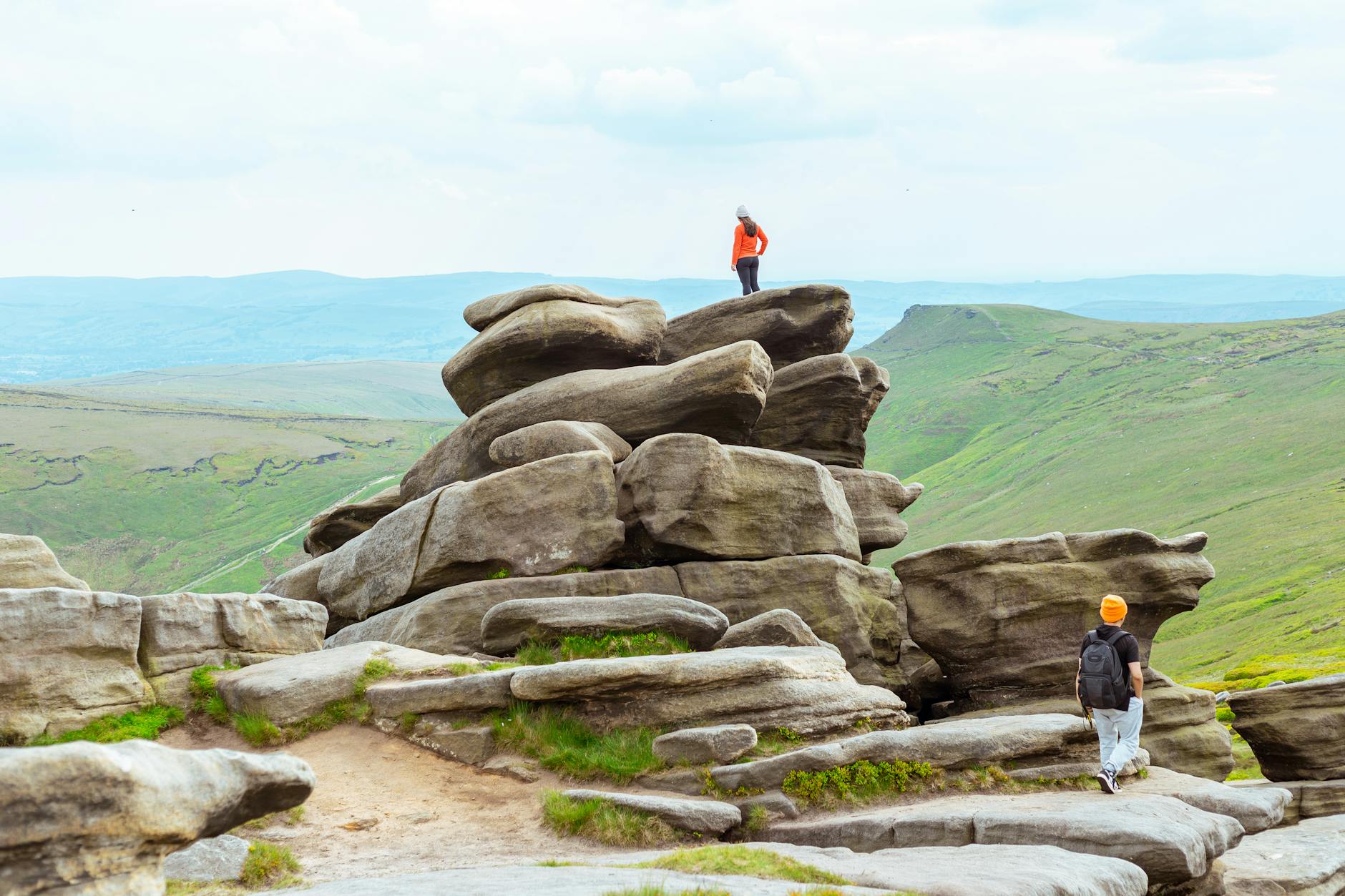
The Peak District National Park is the closest major day trip from Manchester and arguably the most rewarding for nature lovers. Britain’s first national park begins just 12 miles east of the city centre, making it possible to be standing on open moorland within 30 minutes of leaving Manchester Piccadilly station.
Edale is the classic Peak District day trip from Manchester. A direct train takes just 35 minutes from Piccadilly, delivering you to the foot of Kinder Scout — the Peak District’s highest point at 636 metres. From Edale, the most popular route follows the path up to Mam Tor, then along the Great Ridge to Back Tor and Lose Hill, offering panoramic views across the Hope Valley. The full circular walk takes around four to five hours and is suitable for confident walkers with reasonable fitness.
Castleton, just one stop further along the Hope Valley line, offers a different kind of Peak District experience. This picturesque village sits beneath the dramatic ruins of Peveril Castle and is famous for its show caves — Blue John Cavern, Treak Cliff Cavern, Peak Cavern, and Speedwell Cavern, where you take an underground boat ride through flooded tunnels. The village itself has excellent tearooms, pubs, and gift shops selling jewellery made from Blue John stone, a mineral found nowhere else on earth.
For those with a car, Bakewell makes a wonderful day trip from Manchester. This charming market town — home of the famous Bakewell Pudding — sits on the River Wye and serves as a gateway to Chatsworth House, one of England’s grandest stately homes. The drive takes around an hour, and you can combine Bakewell with a stop at the stunning Monsal Trail, a former railway line converted into a walking and cycling path that passes through several Victorian-era tunnels.
Buxton, accessible by direct train in just over an hour, is the Peak District’s highest market town and has been a spa destination since Roman times. The restored Buxton Crescent — modelled on Bath’s Royal Crescent — houses a luxury thermal spa hotel, while the Pavilion Gardens offer a relaxing spot for a stroll. Buxton Opera House, a stunning Edwardian theatre, hosts a packed programme of live events year-round.
The Roaches, a dramatic gritstone escarpment near Leek, offers some of the Peak District’s most spectacular scenery and is accessible by car from Manchester in about 75 minutes. The ridge walk along the top provides views across the Staffordshire moorlands, and you may spot the colony of wild wallabies that has inhabited the area since escaping from a private zoo during the Second World War — one of the most unusual wildlife encounters on any day trip from Manchester.
For a gentler Peak District experience, the Tissington Trail follows a disused railway line through the White Peak limestone plateau, with gentle gradients perfect for cycling or family walks. Bikes can be hired at several points along the route. The trail connects the pretty estate village of Tissington with Ashbourne, known as the gateway to Dovedale — a limestone gorge that Izaak Walton made famous in The Compleat Angler.
The Lake District: England’s Most Beautiful National Park
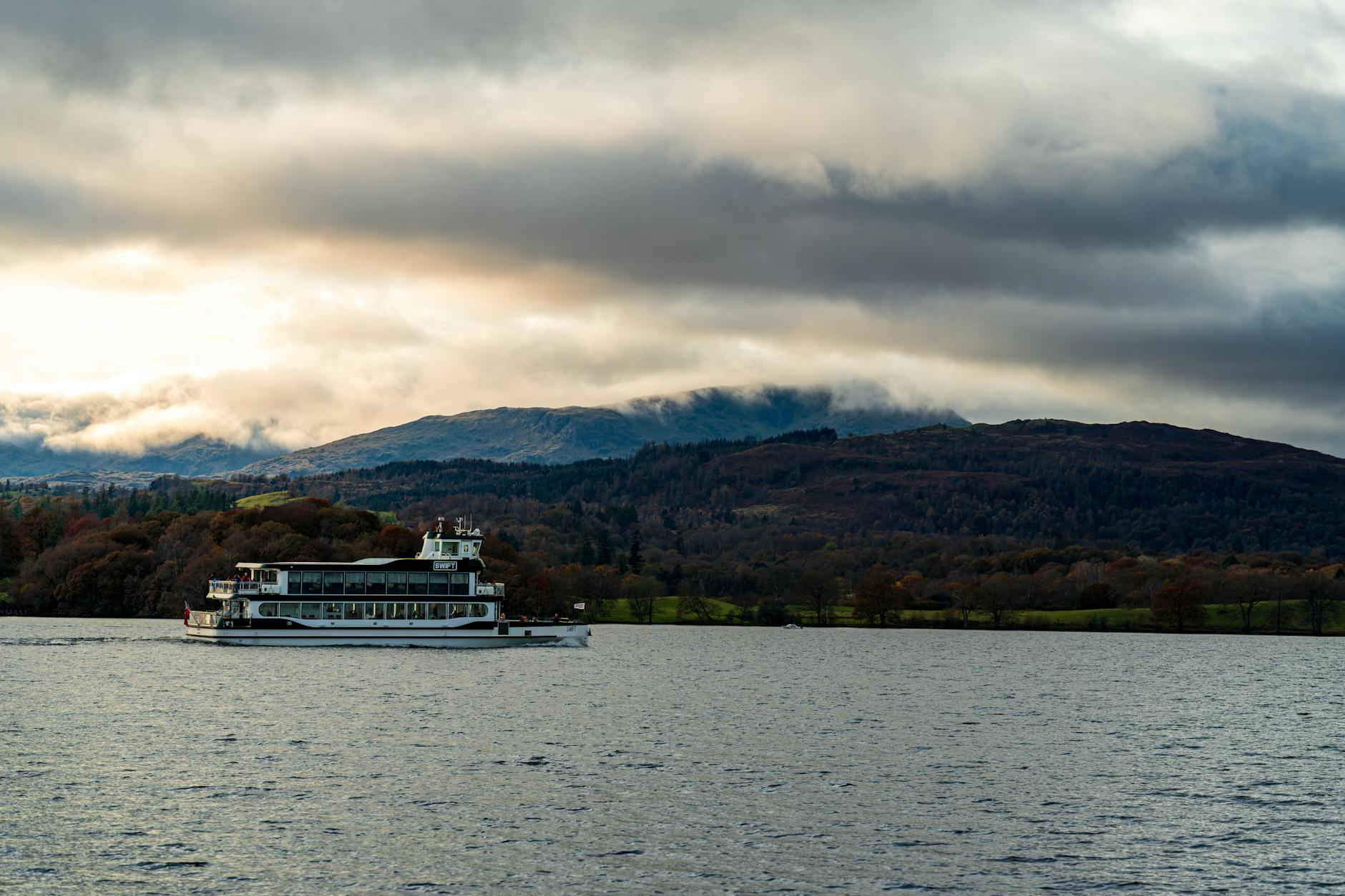
The Lake District is England’s largest national park and one of the most spectacular landscapes in Britain. For day trips from Manchester, the southern lakes — particularly Windermere and its surroundings — are the most practical choice, with travel times of around 90 minutes by car or just under two hours by train to Windermere station.
Windermere and its lakeside settlement of Bowness-on-Windermere are the natural starting points. Lake Windermere itself is England’s longest lake at over 10 miles, and cruises operated by Windermere Lake Cruises offer everything from 45-minute loops to full-day passes connecting Bowness with Ambleside at the northern end and Lakeside to the south. The views from the water — wooded islands, fell backdrops, Victorian boathouses — are among the most photographed in England.
From Bowness, it is a short bus ride or pleasant walk to Ambleside, a bustling town at the head of the lake that serves as a gateway to some of the Lake District’s most famous walks. The route up to Loughrigg Fell is a manageable half-day hike with extraordinary views, while the more ambitious can tackle Helvellyn via Striding Edge — one of England’s most famous mountain ridges — though this requires an early start and strong experience.
Grasmere, a few miles north of Ambleside, is forever associated with William Wordsworth, who lived at Dove Cottage from 1799 to 1808. The Wordsworth Museum provides fascinating insight into the poet’s life and work, while the village itself is famous for Sarah Nelson’s Grasmere Gingerbread — a unique recipe that has been baked to the same formula since 1854. Allow time to walk around Grasmere lake, a gentle three-mile circuit that captures the essence of the Lake District’s tranquil beauty.
Practical considerations for a Lake District day trip from Manchester include the traffic congestion that plagues the A591 between Windermere and Ambleside during peak summer weekends. Starting early makes a significant difference — arriving before 10am not only avoids the worst traffic but also gives you first pick of car parks, many of which fill by midday in July and August. Alternatively, the Lakes Connect bus service runs frequently between key locations and removes the parking headache entirely.
For something different, consider taking the Lakeside and Haverthwaite Steam Railway from the southern tip of Windermere. This heritage railway runs through the beautiful Leven Valley and connects with the lake cruises at Lakeside, where the Lakes Aquarium provides an engaging rainy-day alternative. The combination of steam train and lake cruise makes for a particularly memorable day trip from Manchester with children.
Chester: Two Thousand Years of History in One Day
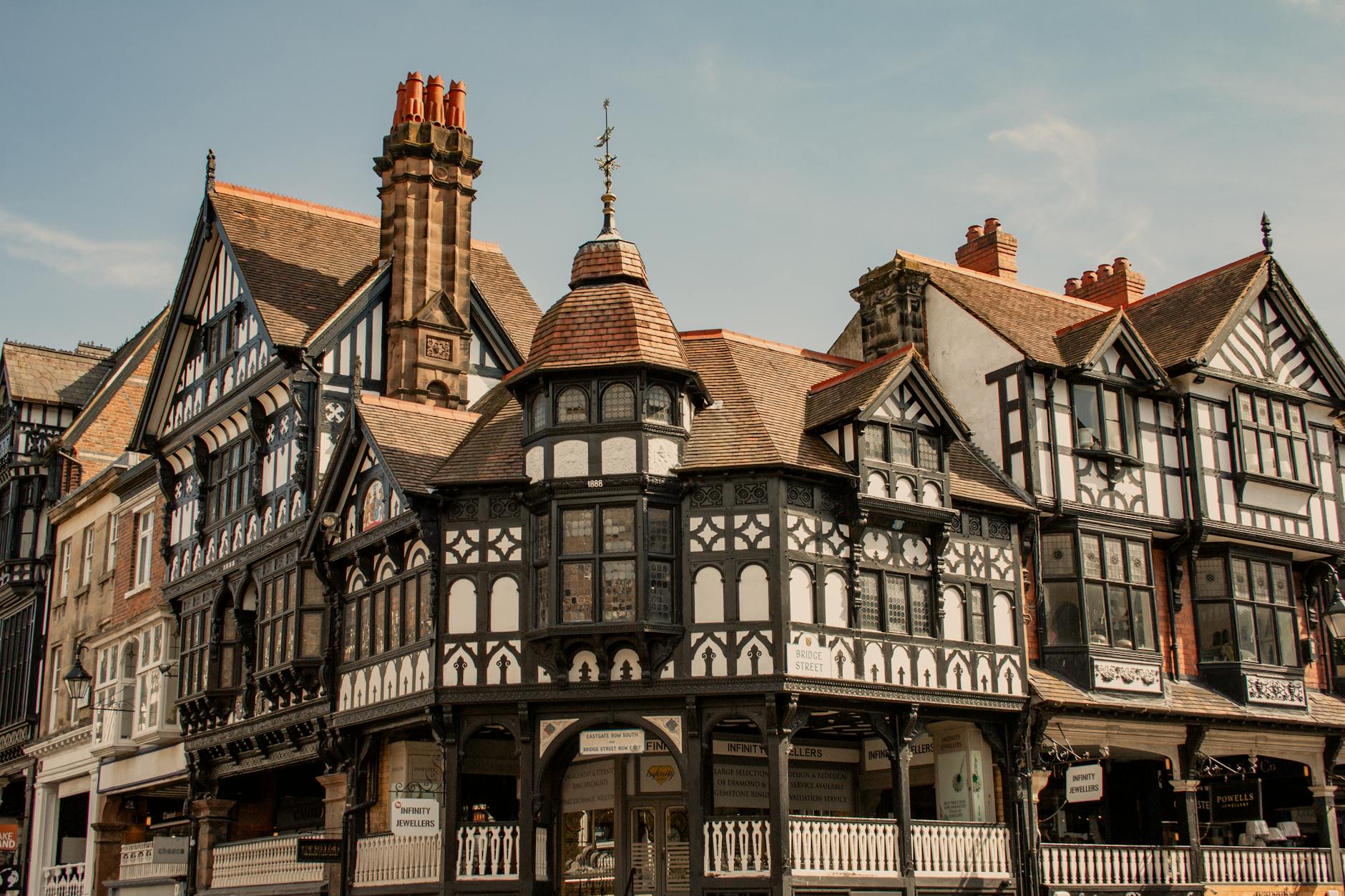
Chester is one of the most historically rewarding day trips from Manchester, with a heritage stretching back to its founding as the Roman fortress of Deva Victrix in AD 79. A direct train from Manchester Piccadilly reaches Chester in under an hour, making it one of the quickest and most satisfying escapes from the city.
The single best thing to do in Chester is walk the city walls. Chester is the only city in England with a complete circuit of medieval walls, and the two-mile walk takes around 90 minutes at a leisurely pace, offering elevated views over the city, the River Dee, and into Wales on clear days. Along the way you pass the Eastgate Clock — the most photographed clock in England after Big Ben — and the ruins of the Roman amphitheatre, the largest yet discovered in Britain.
The Rows are Chester’s other unique feature — a series of two-level medieval shopping galleries that line the main streets. The ground-level and first-floor walkways create a covered shopping experience that has no parallel anywhere else in the world. The architecture is a striking mix of genuine medieval timber frames and Victorian reconstructions, all creating a streetscape that feels centuries removed from modern Manchester.
Families visiting Chester should consider Chester Zoo, consistently rated one of the best zoos in Europe. Home to over 35,000 animals and 500 species across 128 acres, the zoo is a full day out in itself. The zoo is located just north of the city centre and is accessible by bus from Chester station in around 15 minutes.
York: Medieval Streets and Viking Heritage

York is among the finest day trips from Manchester for history enthusiasts. Direct trains from Manchester Piccadilly reach York in around 80 minutes via the TransPennine Express, delivering you to one of Europe’s best-preserved medieval cities.
York Minster is the natural starting point — this Gothic cathedral took over 250 years to build and contains more medieval stained glass than any other church in England. The Great East Window, the largest expanse of medieval stained glass in the country, underwent a decade-long restoration completed in 2018 and is breathtaking in its scale and detail. Climbing the central tower’s 275 steps rewards you with panoramic views across the city’s rooftops and the Yorkshire countryside beyond.
The Shambles, often cited as one of the best-preserved medieval streets in Europe, is a narrow lane of overhanging timber-framed buildings that has changed remarkably little since the fourteenth century. Once lined with butchers’ shops — the name comes from the Old English word for the shelves on which meat was displayed — it now houses independent shops, cafes, and the Harry Potter-themed shop that draws inevitable comparisons to Diagon Alley.
JORVIK Viking Centre brings York’s Norse heritage to life with a ride through a reconstructed Viking-age streetscape, complete with authentic smells and sounds based on archaeological evidence from the Coppergate dig. The National Railway Museum, free to enter, houses the world’s largest collection of railway objects including Mallard — the fastest steam locomotive ever built. York’s city walls, like Chester’s, are walkable and provide a wonderful way to see the city from a different perspective.
York’s food scene has developed considerably in recent years, and eating well is easy on a day trip from Manchester. The Shambles Market, located behind the famous street, offers an excellent range of street food vendors alongside artisan producers. For a sit-down meal, the Fossgate area has become York’s dining quarter, with independent restaurants ranging from traditional Yorkshire fare to contemporary Asian fusion. York is also home to several independent chocolate makers — the city’s confectionery heritage dates back to the Rowntree and Terry’s factories that once employed thousands.
If time allows, a walk along the River Ouse provides a peaceful counterpoint to York’s busy streets. River cruise operators offer short sightseeing trips, and during summer evenings the riverside bars and restaurants create a lively atmosphere. The Bar Walls walk — York’s equivalent of Chester’s city wall circuit — takes around 45 minutes and offers views of the Minster, the river, and the medieval street plan that makes York such a fascinating city to explore.
Liverpool: Culture, Music, and Maritime Heritage
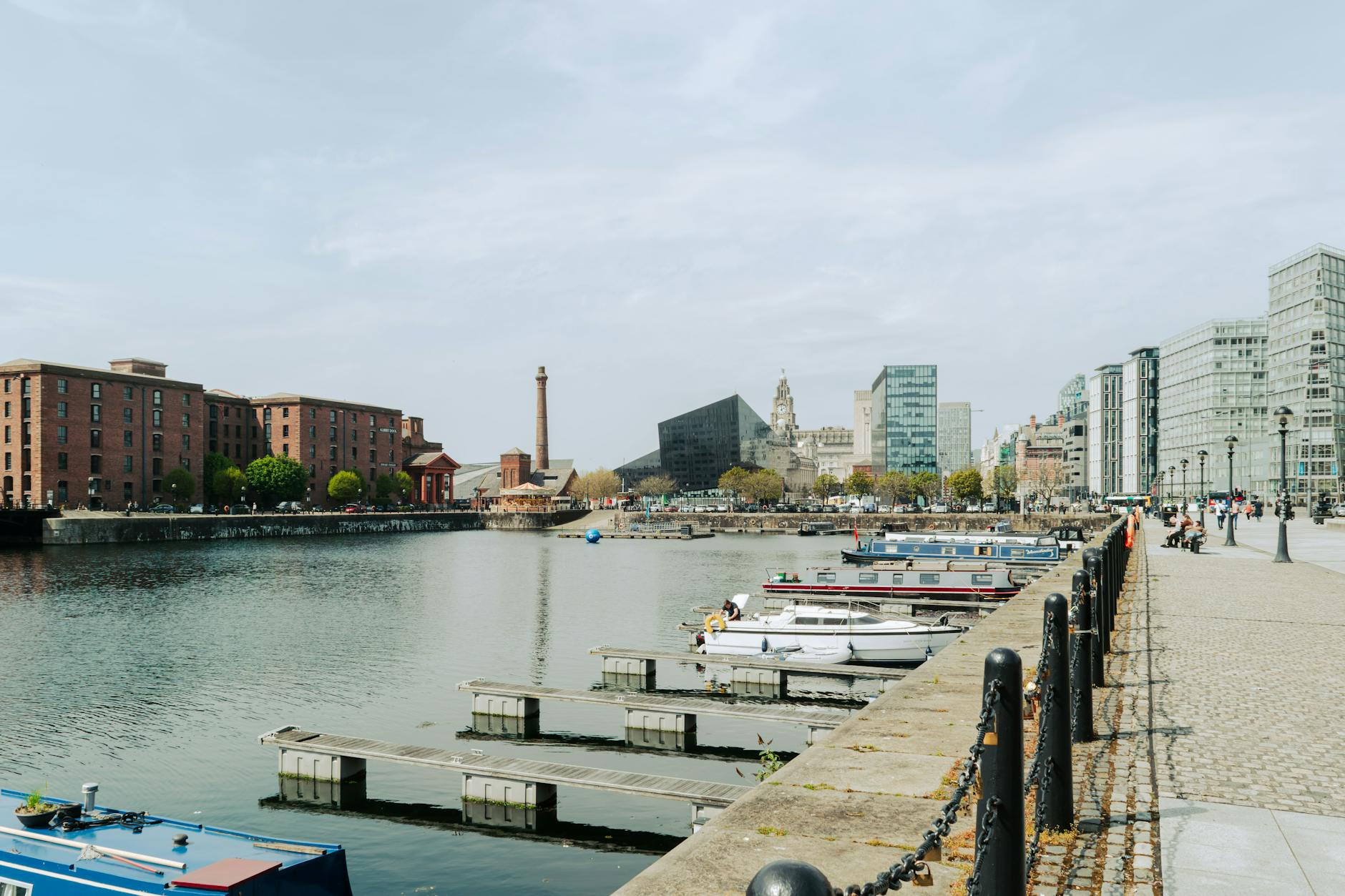
Liverpool and Manchester share a deep historical rivalry and a rail connection that dates back to 1830 — the world’s first inter-city passenger railway. Today, direct trains cover the journey in under an hour, making Liverpool one of the most convenient day trips from Manchester and one of the most culturally rich.
The Albert Dock is Liverpool’s centrepiece for visitors, a complex of Grade I listed warehouse buildings that now houses Tate Liverpool, the Merseyside Maritime Museum, the International Slavery Museum, and The Beatles Story — an immersive exhibition tracing the Fab Four from their Cavern Club beginnings to global superstardom. The dock itself, with its cast-iron columns and brick arches reflected in the water, is one of the most photographed locations in Northern England.
Beyond the Beatles, Liverpool’s cultural offering runs deep. The Liverpool Cathedral is the largest cathedral in Britain and the fifth largest in the world, with a tower offering views that stretch across the Mersey and out to the Welsh mountains. At the other end of Hope Street stands the Metropolitan Cathedral — nicknamed Paddy’s Wigwam for its distinctive conical shape — creating one of the most architecturally contrasting walks in any British city.
Football fans can visit Anfield, home of Liverpool FC, or cross Stanley Park to Goodison Park (Everton’s historic ground before their 2024 move to the new Bramley-Moore Dock stadium). The stadium tours offer behind-the-scenes access to dressing rooms, the players’ tunnel, and pitchside — a must for any football enthusiast making the day trip from Manchester.
Blackpool: Classic British Seaside Fun
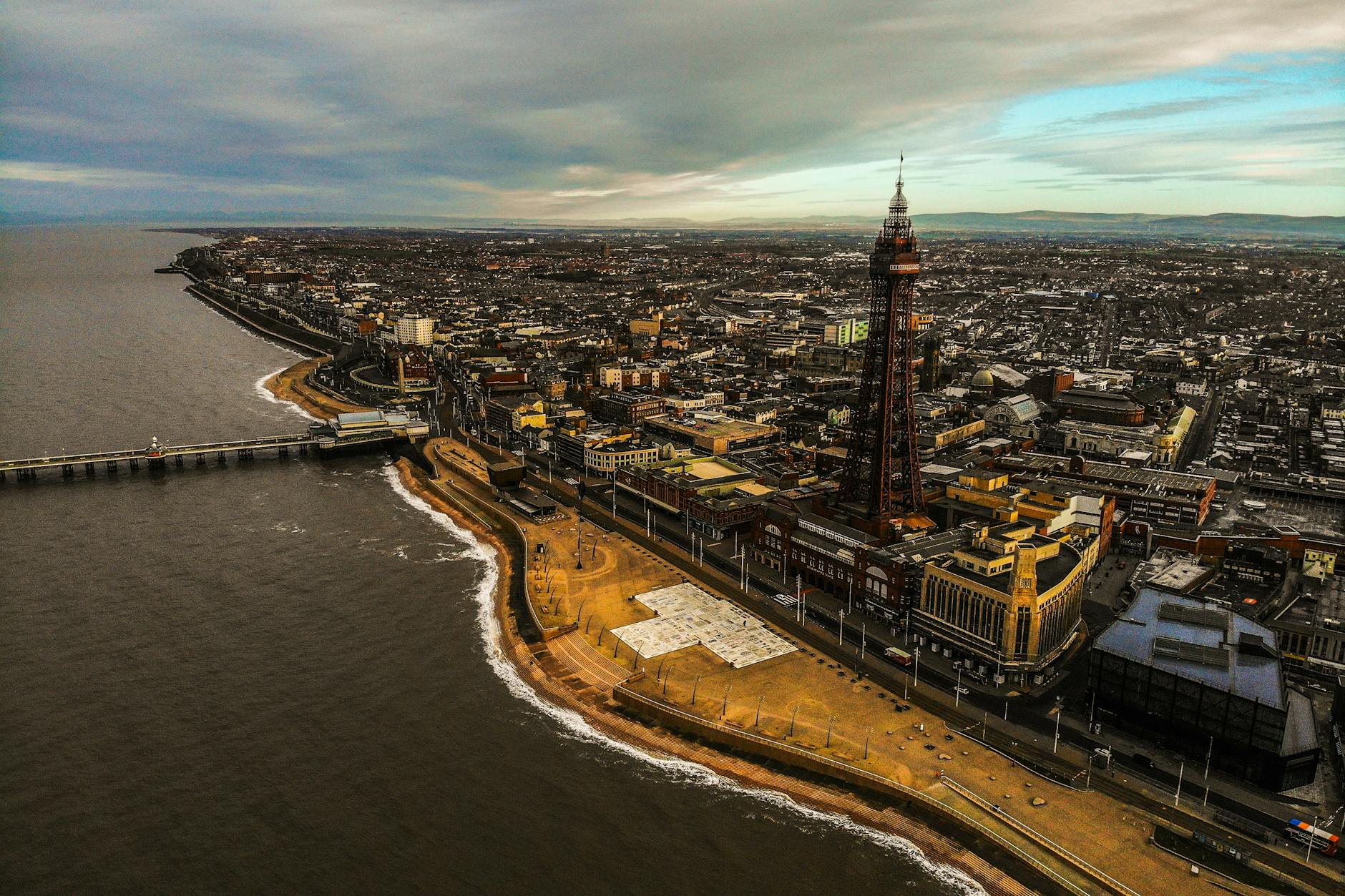
Blackpool represents a completely different kind of day trip from Manchester — a full-throttle seaside experience with rollercoasters, fish and chips, arcades, and seven miles of sandy beach. Direct trains from Manchester take around 90 minutes, and the journey itself passes through some attractive Lancashire countryside.
Blackpool Pleasure Beach is the main event for thrill-seekers. This iconic amusement park features over 30 rides including the Big One — once the world’s tallest rollercoaster at 235 feet — and Icon, one of the UK’s first double-launch rollercoasters. The park operates on a pay-per-ride or wristband system, with advance online tickets offering significant savings over gate prices.
The Blackpool Tower, modelled on Paris’s Eiffel Tower and opened in 1894, remains the town’s defining landmark. The Tower Eye observation deck offers views stretching to the Lake District, the Isle of Man, and North Wales on clear days, while the Tower Ballroom below is one of the most ornate dance halls in the world — its sprung dance floor and gilded ceiling have featured on Strictly Come Dancing. Between September and November, the famous Blackpool Illuminations transform six miles of seafront into a dazzling light display that attracts millions of visitors each year.
Beyond the rides and the tower, Blackpool has a surprisingly good food scene for a seaside town. The traditional fish and chip shops along the Golden Mile remain a rite of passage, but newer restaurants have raised the standard considerably. The Promenade also offers donkey rides, trampolining, and some of the country’s last surviving seaside variety shows at the Grand Theatre and Winter Gardens — venues that have hosted performances since the Victorian era.
Families making the day trip from Manchester to Blackpool should consider SEA LIFE Blackpool, located at the base of the tower, and Madame Tussauds, which occupies the former Palace nightclub on the seafront. The Blackpool Heritage Tram service runs vintage trams along the promenade during summer months, providing a nostalgic way to travel between attractions while soaking up the atmosphere.
North Wales: Mountains, Castles, and Coastal Beauty
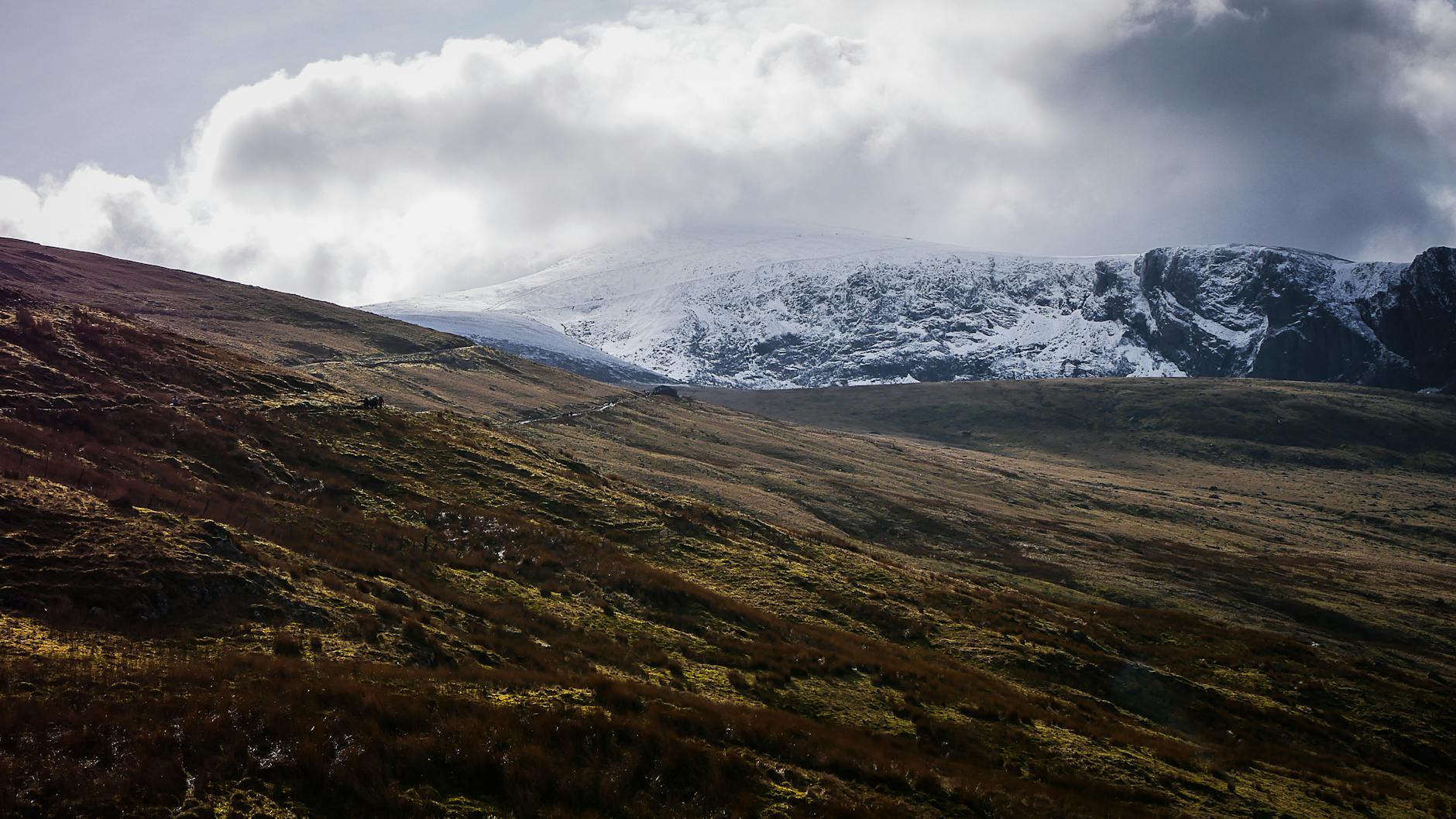
North Wales is surprisingly accessible for day trips from Manchester, with the A55 expressway and regular train services putting destinations like Conwy, Llandudno, and the fringes of Snowdonia within a two-hour reach.
Conwy is the standout destination for a first visit. This medieval walled town is dominated by Conwy Castle, a UNESCO World Heritage Site built by Edward I in the 1280s as part of his Iron Ring of fortresses designed to subdue Wales. The castle’s eight massive towers and great hall are remarkably well preserved, and the views from the battlements encompass the Conwy estuary, the town walls, and the Snowdonia mountains beyond. The town itself has excellent independent shops, galleries, and Aberconwy House — the oldest surviving medieval merchant’s house in Wales.
Llandudno, just a few miles further along the coast, is the finest Victorian seaside resort in Wales. The sweeping curve of the North Shore, the Great Orme headland with its cable car and tramway, and the elegant pier create a genteel atmosphere that contrasts sharply with Blackpool’s raucous energy. The Great Orme is home to wild Kashmir goats — descendants of a pair gifted by the Shah of Persia to Queen Victoria — and offers breathtaking coastal views.
For walkers, Betws-y-Coed in the Snowdonia foothills serves as a gateway to numerous trails ranging from gentle riverside walks to challenging mountain routes. Swallow Falls, the most visited waterfall in Wales, is a short walk from the village centre. The Snowdon Ranger path or Llanberis path to the summit of Yr Wyddfa (Snowdon) — Wales’s highest peak at 1,085 metres — is achievable on a long day trip from Manchester, though you will need an early start and should check weather conditions carefully.
Portmeirion, the Italianate fantasy village created by architect Sir Clough Williams-Ellis between 1925 and 1975, is one of the most unusual and photogenic day trips from Manchester. Perched on its own private peninsula on the Dwyryd estuary, this collection of colourful buildings, subtropical gardens, and Mediterranean piazzas feels impossibly exotic for North Wales. Most famous as the filming location for the cult 1960s television series The Prisoner, Portmeirion charges an admission fee but rewards visitors with an unforgettable experience. The drive from Manchester takes around two hours.
For a shorter Welsh excursion, the historic market town of Llangollen in the Dee Valley sits just 90 minutes from Manchester by car. The town straddles the River Dee, with a medieval bridge offering views of the rapids below, while the Llangollen Canal — a UNESCO World Heritage Site — passes through the town on its way to the spectacular Pontcysyllte Aqueduct, where narrowboats cross a valley 126 feet above the river. Horse-drawn canal boat trips and steam railway rides along the valley add to the charm.
Charming Towns and Hidden Gems Near Manchester
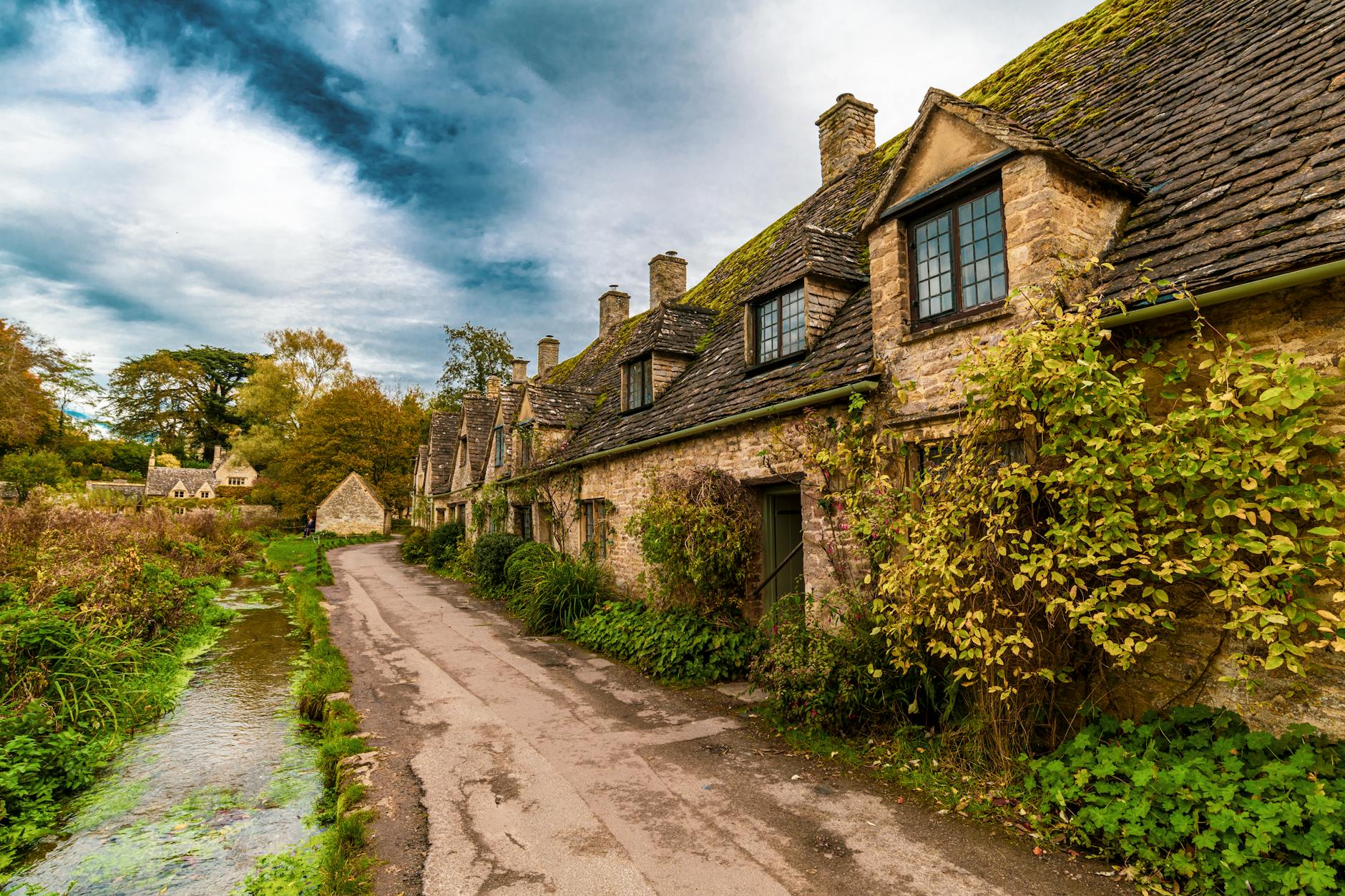
Not every day trip from Manchester needs to involve a major city or national park. Some of the most memorable excursions are to the smaller towns and villages that sit within easy reach of the city — places where the pace slows, the scenery delights, and you can explore without following a tourist trail.
Hebden Bridge, reached by direct train in under an hour, is a creative haven nestled in the Calder Valley. This compact town of independent bookshops, vintage stores, organic cafes, and galleries sits alongside the Rochdale Canal, with the surrounding hills providing excellent walking. The ruined Heptonstall village above Hebden Bridge offers atmospheric medieval remains and the grave of the poet Sylvia Plath. Hebden Bridge has a thriving LGBTQ+ community and hosts regular arts and music festivals.
Knutsford, in the Cheshire countryside just 40 minutes south of Manchester, is an elegant market town associated with the novelist Elizabeth Gaskell, whose observations of local society inspired her novel Cranford. The town’s King Street features attractive independent shops and restaurants, while Tatton Park — a magnificent National Trust estate with a neoclassical mansion, Japanese garden, medieval Old Hall, and 1,000-acre deer park — sits on the town’s edge and makes for a full day of exploration.
Haworth, accessible by train via Keighley and the preserved Keighley and Worth Valley Railway, is a pilgrimage site for literature lovers. This steep West Yorkshire village was home to the Brontë sisters, and the Brontë Parsonage Museum — their actual home — preserves their manuscripts, personal possessions, and the rooms where Wuthering Heights and Jane Eyre were written. The cobbled Main Street has changed little since the Brontës’ era, and the moorland walks behind the village lead to Top Withens, the ruined farmhouse said to have inspired Wuthering Heights.
Saddleworth, technically within Greater Manchester but feeling entirely rural, offers the Pennine moorland on your doorstep. Dovestone Reservoir is a popular spot for walking, with the surrounding hills providing dramatic views. The villages of Delph, Uppermill, and Greenfield each have excellent pubs, and the area hosts the famous Saddleworth Whit Friday Brass Band Contest every spring.
For a day trip that combines nature with history, Skipton in North Yorkshire — known as the Gateway to the Dales — is reachable by direct train from Manchester in around 75 minutes. Its well-preserved medieval castle, bustling high street market (held four days a week), and position at the southern end of the Yorkshire Dales National Park make it an excellent alternative to busier destinations. The Leeds-Liverpool Canal runs through the town, and boat trips along the scenic stretch towards Gargrave are a relaxing way to spend an afternoon.
Practical Tips for Day Trips from Manchester
Getting the most from your day trips from Manchester comes down to smart planning. Here are the essentials to know before you set off.
By Train
Manchester Piccadilly is the main hub for day trips from Manchester, with services operated by Northern, TransPennine Express, and Avanti West Coast reaching most destinations covered in this guide. Book advance tickets through the Trainline or National Rail websites for the best fares — it is common to save 50% or more compared to buying on the day. An Off-Peak Day Return is often the most flexible option, allowing travel on any off-peak service.
By Car
Manchester’s motorway connections — the M60 ring road linking to the M62, M56, and M6 — make driving straightforward for destinations not well served by rail. The Peak District, North Wales, and some Lake District locations are easier to explore with a car, giving you flexibility to stop at viewpoints and visit multiple spots. Be aware that parking can be limited and expensive in popular locations during summer weekends, particularly in the Lake District and Peak District. Consider arriving early — before 10am — to secure parking at honeypot sites.
Best Seasons
Spring and early summer (April to June) offer the best conditions for most day trips from Manchester, with longer daylight hours, wildflowers, and fewer crowds than the July–August peak. Autumn brings spectacular foliage to the Lake District and Peak District. Winter is quieter but rewarding — York’s Christmas markets are among England’s best, and the Blackpool Illuminations run through November. Always check weather forecasts before heading to mountainous areas, as conditions can change rapidly.
Budget Tips
Day trips from Manchester need not be expensive. Many of the best experiences — walking in the Peak District, exploring Chester’s walls, wandering York’s streets — are completely free. For train travel, a Northern Day Ranger ticket offers unlimited off-peak travel across the Northern network for a fixed daily price, covering many of the destinations in this guide. Families should look into the Family and Friends Railcard, which offers a third off adult fares and 60% off children’s tickets across the national rail network.
Packed lunches save a small fortune at tourist-heavy destinations where cafe prices can be steep, particularly in the Lake District and York. Many National Trust properties, including Tatton Park and several Lake District locations, offer free entry to members — the annual membership pays for itself after just a few visits. English Heritage membership covers Chester’s Roman amphitheatre exhibits and numerous castles and historic sites across the region.
Start Planning Your Day Trips from ManchesterManchester’s location makes it one of the finest starting points in England for day trips. Within two hours, you can reach two national parks, several UNESCO World Heritage Sites, some of England’s most historic cities, the Welsh mountains, and the Lancashire coast. This guide to day trips from Manchester has covered the highlights, but each destination deserves deeper exploration — and many will tempt you to return for a second visit.
For more help planning your time in Manchester, explore our guides to things to do in Manchester, where to stay, the best restaurants, Manchester nightlife, and Manchester neighbourhoods. With so many day trips from Manchester to choose from, the hardest part is deciding where to go first.