
This article contains advertising. Our booking links are routed through a partner that adds commission tracking automatically, so if you book through one we earn a commission from the provider, at no extra cost to you. It never affects what we recommend. Affiliate disclosure
Thirty-seven minutes east of Manchester Victoria on the Calder Valley Line, the train slows through a steep wooded gorge, the houses start climbing the hillsides on stilts, and you arrive at Hebden Bridge — a former cotton mill town in West Yorkshire that has reinvented itself into one of the most distinctive small towns in Britain. Bohemian, independent, queer-friendly, fiercely creative, surrounded by Pennine moors, and home to one of the great small music venues in the country. The South Pennines are quietly the best day trip Manchester has, and Hebden Bridge is the centre of it.
This is the 2026 guide to Hebden Bridge and the Pennines from Manchester: the 37-minute Calder Valley train, the bohemian-and-queer history (Hebden has the UK’s highest proportion of LGB+ residents per capita), the Sylvia Plath grave at Heptonstall, the Ted Hughes birthplace at Mytholmroyd, Hardcastle Crags, Stoodley Pike, the Trades Club, Incredible Edible at Todmorden, and Happy Valley Pride. For more day-trip ideas see our day trips from Manchester hub and the walks and hikes near Manchester guide.
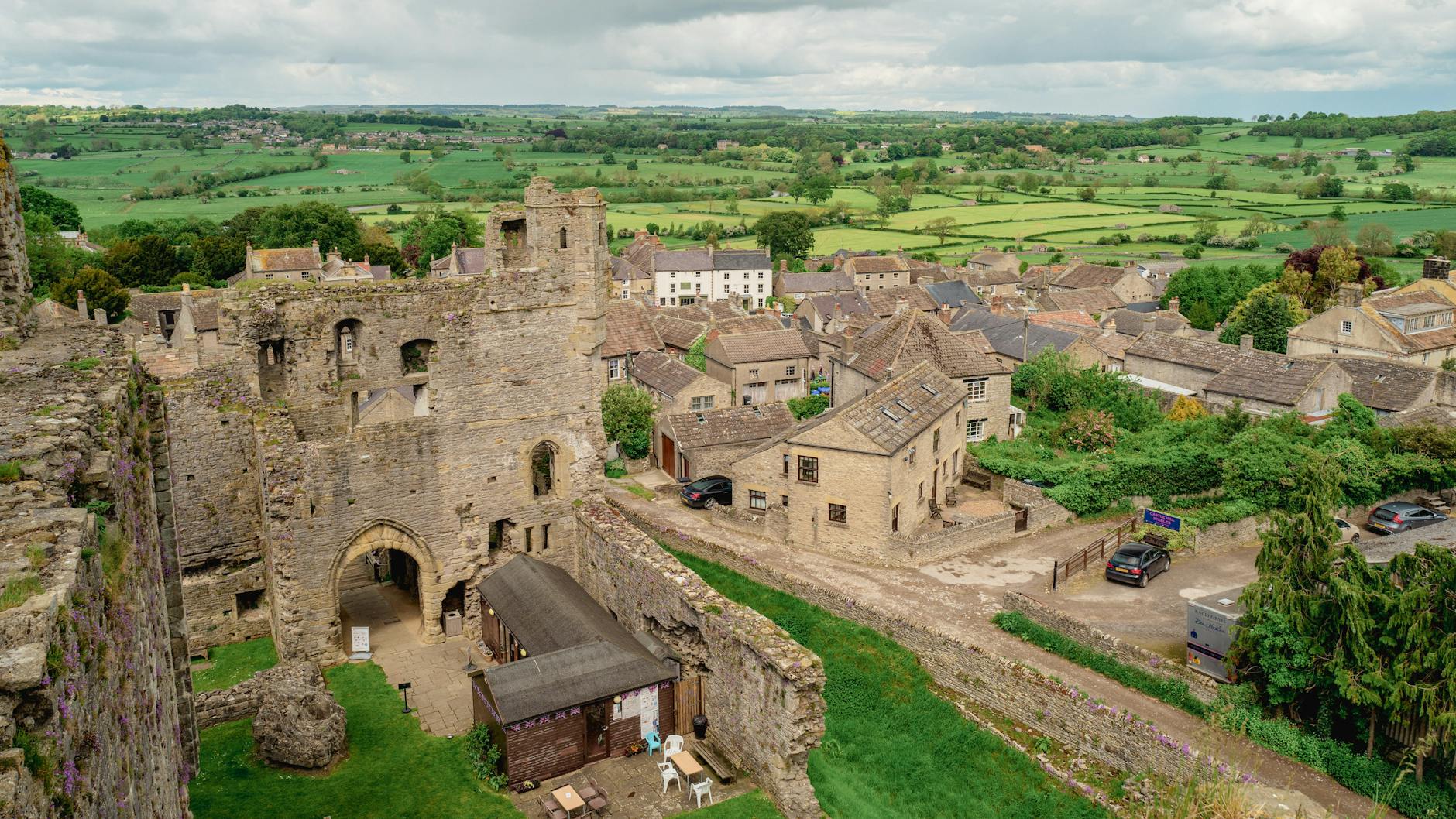
Why Hebden Bridge is Manchester’s best-kept day-trip secret
The 37-minute escape
Northern’s Calder Valley Line runs direct from Manchester Victoria to Hebden Bridge in approximately 37 minutes, with trains roughly every half-hour. You can be on Bridge Gate having coffee at 9.30am, walking up to Heptonstall by 11, having a pint at the Fox and Goose at 1, and back in Manchester for dinner. The journey itself is properly scenic — through Rochdale, Littleborough (Hollingworth Lake), Walsden, Todmorden, into the wooded Upper Calder Valley.
Quick comparison with other Manchester day trips
Hebden is closer than the Lake District (2 hours each way), more bohemian than the Peak District, less touristy than York, and at half the train time of Chester. It pairs the South Pennines countryside with a properly distinctive small town, and gives you literary and music heritage you cannot get anywhere else.
What you’ll find
Mill heritage (the town was a cotton-weaving and corduroy-making hub through the 19th century), an Art Deco picture house, a thriving Thursday-Sunday market, independent shops, a co-operative music venue, the Sylvia Plath grave on the hilltop next door, a National Trust mill in a wooded glen 2 miles upstream, and a 4-mile circular walk to the top of the Stoodley Pike monument.
How to get from Manchester to Hebden Bridge
By train
Northern runs the Calder Valley Line direct from Manchester Victoria to Hebden Bridge. Journey time approximately 37 minutes. Trains run every 30 minutes (sometimes every 15 at peak), 7 days a week. Single fares from £2–3.70; off-peak day returns around £10–12. Important note: trains from Manchester Piccadilly require a change at Manchester Victoria — plan an extra 10–15 minutes if starting from Piccadilly.
By car
About 50 minutes via the A646 (the scenic route through Todmorden) or via the M62 east to junction 22 then A646 down the valley. Pay car parks in the town centre fill quickly on weekends — a small Bridgegate car park and a slightly larger Valley Road car park are the main options.
From Manchester Airport
About 1 hour 30 minutes total — train from the airport into Piccadilly, then change at Victoria for the Calder Valley line. Driving via the M60 and M62 is faster (about 1 hour 5 minutes).
A potted history: mills, hippies and “Britain’s lesbian capital”
Hebden Bridge grew rapidly in the 19th century as one of the cotton-weaving and corduroy (“fustian”) capitals of Britain — at its peak the town had over 20 mills running, employing thousands. The double-decker houses you see climbing the valley sides are a Hebden Bridge invention: two-storey “top” houses built up the hill, with separate two-storey “bottom” houses underneath, accessed by streets at different levels. Pragmatic, characteristic, photogenic.
When the cotton industry collapsed in the 1960s and 1970s, Hebden Bridge looked like a textbook northern decline story — derelict mills, falling property values, depopulation. What changed it: cheap empty housing started attracting Manchester art students, alternative-living types, hippies, squatters. The town developed a 1970s counterculture that never really left, and by the 1980s an established LGBTQ+ community had formed around it. By the 2010s, 8.95% of Hebden Bridge residents over 16 identified as LGB+ — the highest concentration anywhere in the UK. The town has been repeatedly nicknamed “the lesbian capital of the UK” in headlines, although locals generally prefer “alternative”, “queer-friendly”, or just “Hebden”.
The town won Best Small Market Town at the Great British High Street Awards 2016, and remains one of the most thoroughly independent retail-and-hospitality economies in Britain — almost no chains, almost everything family-owned, almost all of it walkable in twenty minutes.
Happy Valley Pride — 10th anniversary in 2026
Happy Valley Pride (the local Pride festival) celebrates its 10th anniversary in 2026. The festival runs 17–26 July 2026, with the headline “Big Day Out” on Saturday 25 July 2026 at Calder Holmes Park — DJs, drag, comedy, RuPaul’s Drag Race stars, the Pink Pooch dog parade, and the usual Hebden community joy. Free entry. The 10th-anniversary celebrations will be the biggest in the event’s history.
Exploring Hebden Bridge town
Hebden Bridge Market (Thursday–Sunday)
The town’s covered market on St George’s Square, 9am–4pm Thursday to Sunday. Local produce, vintage clothing, bric-à-brac, vegan food, independent crafts. Brilliant browsing; properly atmospheric on a wet Saturday afternoon.
Independent shops and vintage
Hebden is one of the great independent retail towns in the North. Highlights: Mooch (homewares and gifts), The Snug (vintage and bric-à-brac), Innovation Café (the long-running counterculture café), Browntown (traditional sweets), Hebden Bridge Antiques Centre, and a dozen vintage boutiques scattered along Bridge Gate, Crown Street and Market Street. Almost no chain stores.
Hebden Bridge Picture House (1921 Art Deco)
One of the last surviving civic-owned cinemas in Britain, opened on 12 July 1921, designed by local architect John Thomas Cockcroft. The Art Deco vestibule and original box office are intact; the auditorium seats 470 (down from the original 954). Grade II listed. Owned and run by Hebden Royd Town Council. Mix of mainstream, art-house, classic and live-event programming. Single-screen, not-for-profit, properly characterful.
Canal and marina
The Rochdale Canal runs through the town and is now mostly used by leisure narrowboats. The Hebden Bridge Marina sits at the eastern end of the town centre with permanent moorings, a small café scene, and the Stubbing Wharf pub (mentioned in Ted Hughes’s poem of the same name) on the towpath nearby.
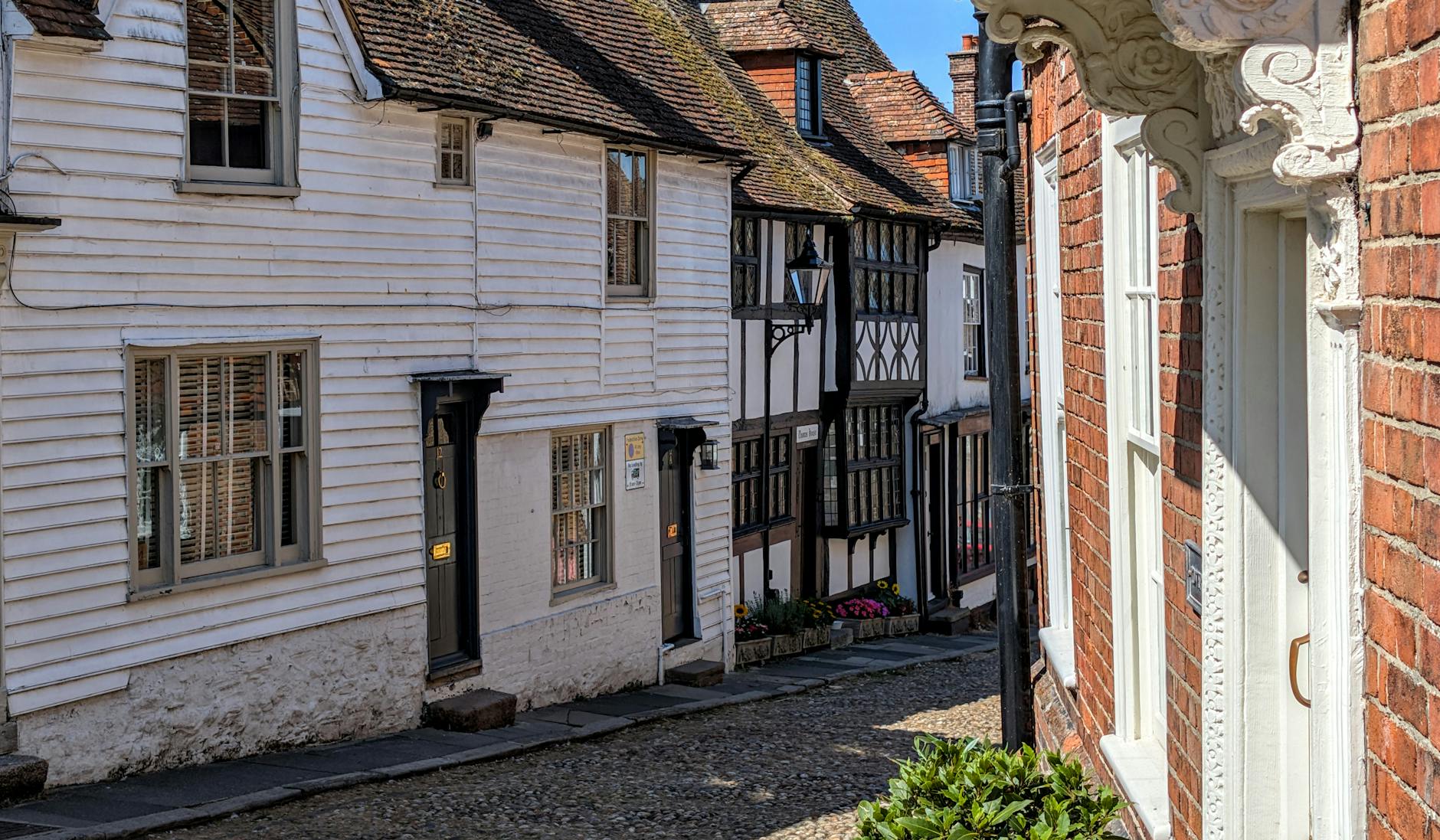
Walks from the station — no car required
Rochdale Canal towpath (5.5 miles to Sowerby Bridge)
The flattest, easiest, most photogenic walk from town. Follow the Rochdale Canal towpath east from Hebden Bridge through Mytholmroyd (Ted Hughes country) to Luddenden Foot and on to Sowerby Bridge — 5.5 miles, mostly flat, with woodland and viaduct views. About 2 hours, and the train back from Sowerby Bridge to Manchester Victoria (changing at Hebden Bridge if needed) takes 50 minutes. Pushchair/wheelchair-friendly.
Hardcastle Crags and Gibson Mill (NT, free)
About 2 miles north of Hebden Bridge town centre, in a wooded glen of the River Hebden. Hardcastle Crags is 400+ acres of National Trust woodland with 15+ miles of footpaths, the spectacular Lumb Hole Waterfall, and Gibson Mill — an 1803 water-powered cotton mill restored as the National Trust’s flagship sustainable building (completely off-grid, with solar, hydro, and a composting loo). Café on site (the Weaving Shed). FREE admission, open dawn to dusk year-round. Easily combined with the town as a half-day trip.
Stoodley Pike Monument circular (10.4 km, 3.5–4 hours)
The Hebden Bridge classic. The Stoodley Pike Monument is a 37-metre obelisk on top of a 400-metre hill, designed by James Green and completed in 1856 to commemorate the end of the Crimean War. The 10.4 km circular walk goes from Hebden Bridge Station → through Calder Holmes Park → over the River Calder → up through pastures → along the Pennine Way to the summit → back via the Rochdale Canal towpath. About 350m of total ascent, 3.5–4 hours, and you pass under the photogenic Whiteley Arches railway viaduct on the way down.
The walk up to Heptonstall
Up the steep stone-stepped Buttress lane from the town centre, about 30–40 minutes climbing. Photogenic the whole way — the old packhorse trail used by mill workers in the 19th century. Heptonstall sits 200 m above the town with cobbled streets and a 12th-century medieval village core. The walk down is much easier.
Heptonstall — the hilltop village above Hebden Bridge
Heptonstall is the medieval village on the hilltop directly above Hebden Bridge. Cobbled streets, stone cottages, a population of about 1,400, and two churches side by side: the ruined St Thomas à Becket (built 1256–1260, tower collapsed in an 1847 storm) and the new St Thomas the Apostle (completed 1854, cost £7,000). The ruined church was used as a filming location for Danny Boyle’s 1993 film Mr Wroe’s Virgins.
Sylvia Plath’s grave
Sylvia Plath (1932–1963), the American poet and novelist, is buried in the extension churchyard adjacent to the new St Thomas — not in the main churchyard. To find the grave: turn right off Church Lane onto Back Lane, walk about 100 metres, and the grave is in the second extension on the right. The flat black headstone reads “Sylvia Plath Hughes” and bears an epitaph from the Bhagavad Gita: “Even amidst fierce flames, the golden lotus can be planted.” The “Hughes” surname is frequently scratched out by visitors (Plath’s marriage to Ted Hughes is contentious for many readers); the church and family have repeatedly restored it.
The walk up from Hebden Bridge is steep but short; the village has two pubs (the White Lion and the Cross Inn) for a pint at the top.
The literary trail — Plath and Hughes
The strange coincidence that almost no other Hebden guide capitalises on: Sylvia Plath’s grave at Heptonstall and Ted Hughes’s birthplace at Mytholmroyd are 3 miles apart, easily combined in a half-day literary pilgrimage.
Heptonstall (Plath)
Covered above. The grave, the ruined church, the medieval village.
Mytholmroyd — Ted Hughes’s birthplace
Ted Hughes (1930–1998) was born on 17 August 1930 at 1 Aspinall Street, Mytholmroyd, and lived there until he was seven. The house has been restored to its 1930s style and is owned by The Elmet Trust; it is available as a holiday let and runs guided tours. Mytholmroyd is about 2 miles east of Hebden Bridge by train (1 stop) or via the canal towpath walk. The wider area has walking trails as part of the “Discovering Ted Hughes’s Yorkshire” project — Redacre Wood, Wicken Hill, Churn Milk Joan.
Todmorden and Incredible Edible
Todmorden is the next valley town east of Hebden Bridge, 7 minutes further on the Calder Valley line, and is home to the brilliant Incredible Edible urban food-growing movement.
The global pioneer of urban food growing
Incredible Edible was founded in Todmorden in 2008 by Pam Warhurst and Mary Clear, with the simple idea that public spaces should grow free food for the community. The first plantings were “propaganda gardening” — raised beds and herb tubs popping up in unexpected places without permission (the railway station, the health centre, the police station). Within five years the model had spread to 100+ towns in the UK, then internationally. There are now over 1,000 Incredible Edible communities worldwide.
The Green Route walking circuit
A self-guided 2-mile circuit through Todmorden taking in 30+ Incredible Edible plantings: the herb beds at the railway station, the orchards in the cemetery, the apothecary garden at the health centre, the orchards by the Hippodrome Theatre, the productive raised beds in the market square. Free, signposted, walkable in 90 minutes. The guided walking tour (about 90 minutes, £6 per person; £10 with a presentation) runs by arrangement — book ahead via incredible-edible-todmorden.co.uk.
Community gardening and Foodie Fortnight
Community gardening sessions run on the 1st and 3rd Sundays of every month, 10am — anyone can join. The annual Todmorden Incredible Foodie Fortnight celebrates local producers and the Incredible Edible model.
The Trades Club — Hebden Bridge’s legendary music venue
The Trades Club is the headline reason serious music fans make a Hebden Bridge pilgrimage. Built in 1924 by six local trade unions, revived as a music venue in 1982/84, reconstituted as a members’ co-operative in May 2016, it remains one of the most ideologically and aesthetically distinctive small venues in Britain — explicitly socialist, member-owned, with a capacity of about 200.
Who has played here:
- Patti Smith (the patron saint of the Trades Club — she has played multiple times)
- Nico, The Fall, Idles, Stereolab
- Mark Lanegan, Doves, Laura Marling, Chrissie Hynde
- Mac DeMarco
The Club has been a multiple-year finalist for the NME Small Venue of the Year and won the Northern Music Awards 2025 — Best Venue Under 2000 Capacity. Tickets typically sell within minutes when they release. Worth checking the schedule at thetradesclub.com and timing a Hebden day around a gig.
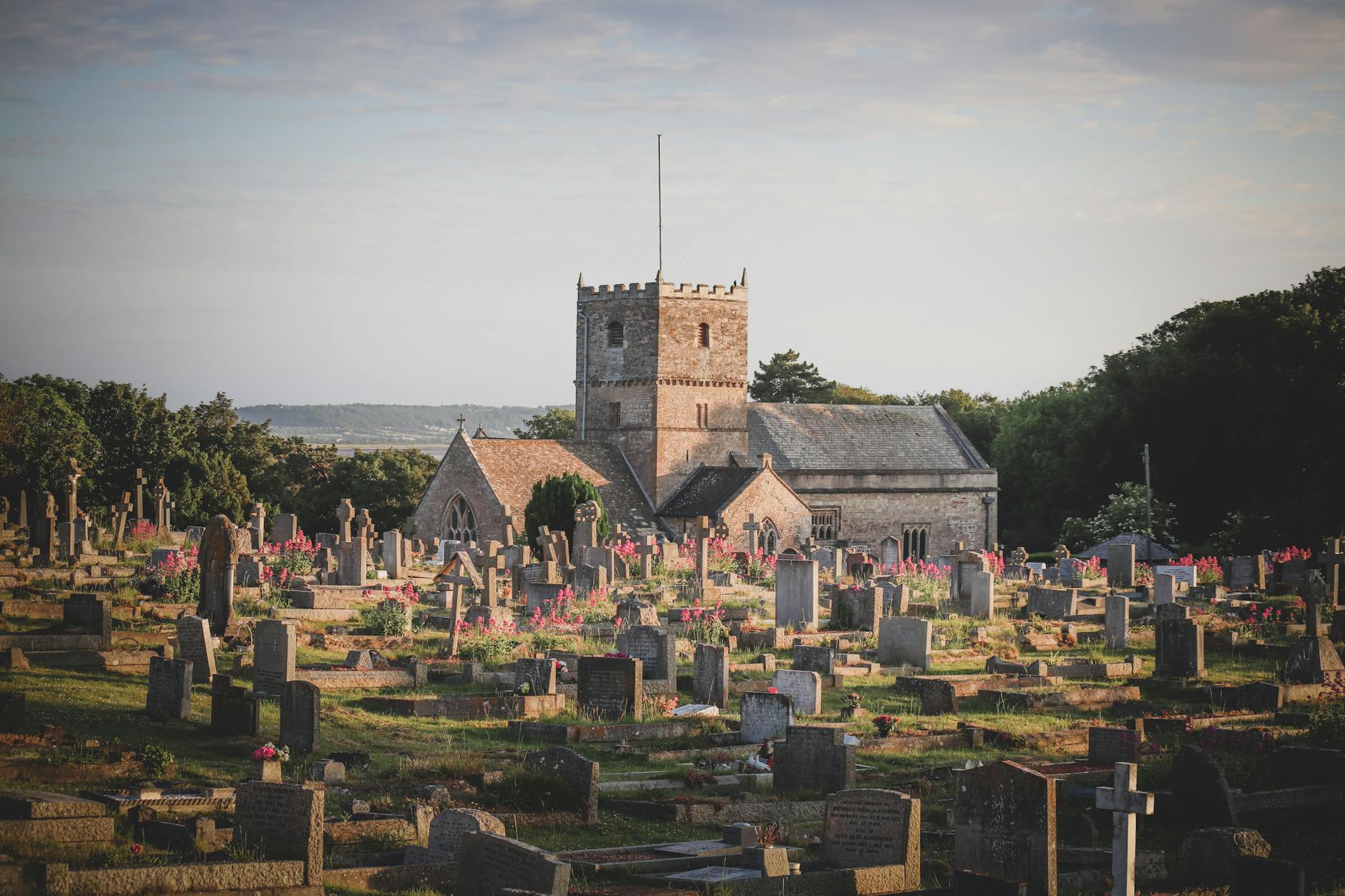
Where to eat and drink
Pubs
The Fox and Goose — the UK’s first community-owned cooperative pub (bought by 1,200+ local shareholders in 2014). Real ales, friendly atmosphere, the heart of Hebden’s hospitality culture. The Old Gate Bar & Restaurant — local seasonal British food, well-regarded for dinner. The Robin Hood Inn — 17th-century coaching inn with four hand-pulled ales. The White Lion — pub classics and a few rooms upstairs. Stubbing Wharf — canalside, mentioned in Hughes’s poem of the same name.
Independent cafés
Innovation Café — the long-standing alternative-culture café in the town centre. Mooch doubles as a café. Bear Café for brunch. The Hole in the Wall for proper coffee.
Dinner
The Olive Branch — Turkish and Mediterranean, Tripadvisor Travellers’ Choice. COIN Hebden — cocktails and small plates. The People’s Pizzeria at Old North — wood-fired Neapolitan.
When to visit — festivals and events
- Happy Valley Pride 2026 — 17–26 July 2026 (10th anniversary). Big Day Out: Saturday 25 July, Calder Holmes Park, free.
- Hebden Bridge Arts Festival — annual June arts festival; visual art, theatre, talks, music, walks.
- Hebden Bridge Vintage Weekend — 1–2 August 2026 at Calder Holmes Park. Saturday: classic and vintage vehicles 1979–2005; Sunday: veteran and vintage vehicles up to 1980. Combined with the town-wide Steampunk Weekend. Running since 1982; raises ~£50,000 annually for local charities.
- Hebden Bridge Picture House programme — year-round film, livestreams, special events.
- Trades Club gig schedule — check thetradesclub.com; tickets release weekly.
After the floods — visiting in 2025–2026
Hebden Bridge has a long, difficult history with flooding — the town sits in a steep valley where the Calder, Hebden Water, and Rochdale Canal converge, and serious floods hit in 2012, 2015, 2020 (Storm Ciara), and again November 2024 (Storm Bert). Visitors sometimes worry about the practical impact: the town has fully recovered for visitors and most businesses are open as normal, although you may see ongoing construction along the riverside as part of the £81m Hebden Bridge Flood Alleviation Scheme. Environment Agency pre-construction works began late 2025; the full scheme will protect ~400 homes when complete.
Visit confidently — the businesses, the walks, the train all work normally. Local community groups have done extraordinary work in flood resilience and recovery over the past decade.
Sample one-day itinerary from Manchester
9.15am — Train from Manchester Victoria. 9.55am — Arrive Hebden Bridge. Coffee at Innovation Café or Bear Café. 10.30am — Wander the canal towpath into town, the market, Mooch, the bookshop. 12.00pm — Lunch at The Olive Branch or The Fox and Goose. 1.00pm — Walk up the Buttress steps to Heptonstall (30–40 minutes). Visit the ruined St Thomas à Becket church, the new St Thomas, and Sylvia Plath’s grave. Tea or pint at the White Lion or Cross Inn at the top. 3.30pm — Walk back down to Hebden Bridge. 4.00pm — Pick one: the Picture House if there’s something on, or the Trades Club if there’s a gig, or a slow drift around the canal basin. 6.00pm — Dinner at Old Gate or COIN. 8.30pm — Train back to Manchester Victoria.
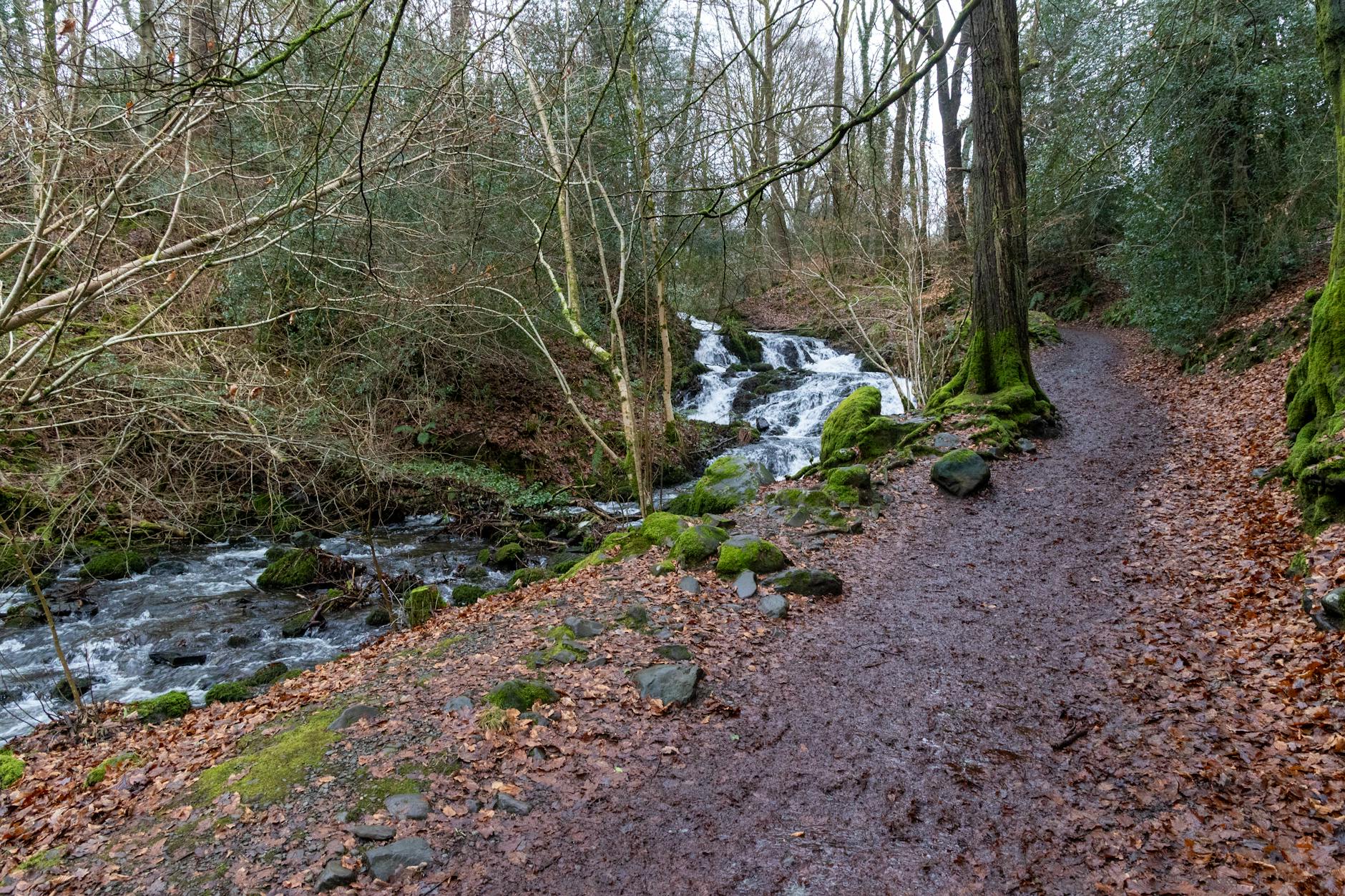
Extending the trip — beyond a day
If you have a weekend, the obvious extensions are:
- Stay overnight at the White Lion in Heptonstall (cosy, on the hilltop), at the 1 Aspinall Street holiday let (Hughes’s birthplace; run by the Elmet Trust), or at one of the many Hebden Bridge holiday-let apartments.
- Day 2: Train to Todmorden for the Incredible Edible Green Route, lunch at the Bear Inn, walk along the canal back through Walsden, optional climb up to Stoodley Pike.
- Or do Hardcastle Crags as a full day — Gibson Mill, Lumb Hole Waterfall, lunch at the Weaving Shed Café, longer woodland trails.
FAQ — Hebden Bridge from Manchester
How do I get to Hebden Bridge from Manchester?
Northern’s Calder Valley Line runs direct from Manchester Victoria — 37 minutes, every 30 minutes. Single fares from £2–3.70. From Piccadilly, change at Victoria.
How long is the train from Manchester to Hebden Bridge?
About 37 minutes direct from Manchester Victoria.
Is Hebden Bridge worth visiting?
Yes — one of the most distinctive small towns in Britain, with bohemian/queer-friendly identity, independent shops, mill heritage, the Trades Club, easy walks to Heptonstall and Stoodley Pike, and the National Trust’s Hardcastle Crags nearby. Manchester’s most underrated day trip.
What is Hebden Bridge famous for?
Its bohemian/LGBTQ+ community (highest concentration of LGB+ residents in the UK), Sylvia Plath’s grave at Heptonstall above the town, the Trades Club music venue, the Picture House, Hardcastle Crags, and a thoroughly independent local economy.
Why is Hebden Bridge called the lesbian capital of the UK?
Around 8.95% of over-16 residents identify as LGB+ — the highest concentration of any UK town. The reputation goes back to the 1980s, when the town’s cheap housing and counterculture roots drew an established lesbian community.
Is Hebden Bridge LGBT-friendly?
Emphatically yes. Happy Valley Pride celebrates its 10th anniversary in July 2026.
What are the best things to do in Hebden Bridge?
The market (Thu–Sun), the independent shops, the Picture House, the Trades Club (check gig listings), walk up to Heptonstall and Sylvia Plath’s grave, Hardcastle Crags, the Rochdale Canal towpath, Todmorden’s Incredible Edible.
Can you walk from Hebden Bridge to Heptonstall?
Yes — about 30–40 minutes up the steep stone Buttress steps from the town centre. Much easier coming down.
Where is Sylvia Plath buried?
In the extension churchyard adjacent to St Thomas the Apostle Church in Heptonstall — turn right off Church Lane onto Back Lane and the grave is in the second extension on the right.
How long is the Stoodley Pike walk from Hebden Bridge?
A 10.4 km circular walk taking 3.5–4 hours, with 350m of total ascent. Starts from Hebden Bridge station.
What is the best pub in Hebden Bridge?
Depends what you’re after — The Fox and Goose for the community-owned co-op vibe, The Old Gate for dinner, the White Lion (Heptonstall) for the hilltop view, Stubbing Wharf for canalside.
Is Hardcastle Crags free to visit?
Yes — National Trust admission is free; open dawn to dusk year-round. Gibson Mill is 2 miles into the woodland; the Weaving Shed café is on site.
Where was Ted Hughes born?
1 Aspinall Street, Mytholmroyd — 2 miles east of Hebden Bridge. The house is owned by the Elmet Trust, restored to 1930s style, and available as a holiday let with guided tours.
What is Incredible Edible Todmorden?
A global pioneer of urban food-growing, founded in Todmorden in 2008 by Pam Warhurst and Mary Clear. Public spaces planted with free food for the community. Now in 1,000+ towns worldwide.
Has Hebden Bridge flooded recently?
The town was affected by Storm Bert in November 2024. It has fully recovered for visitors — all major attractions and businesses are open. Construction of the £81m Flood Alleviation Scheme began late 2025 and may be visible in places along the riverside.
What is the Trades Club Hebden Bridge?
A members’ co-operative music venue built in 1924 by local trade unions, capacity ~200. Patti Smith, Idles, Stereolab and Mac DeMarco have all played here. Won Northern Music Awards 2025 Best Venue Under 2000.
Plan more of your Manchester visit
If Hebden Bridge has whetted your appetite for the Pennines, our other day-trip guides cover the wider region. The Peak District day trip guide covers Britain’s first national park 44 minutes south by Hope Valley line; the walks and hikes near Manchester guide covers shorter-day options; the York day trip guide covers the medieval city an hour further east. For the bohemian and music context closer to home, our Northern Quarter Manchester guide covers the city’s own creative quarter. The full day trips from Manchester hub has the lot.