
This article contains advertising. Our booking links are routed through a partner that adds commission tracking automatically, so if you book through one we earn a commission from the provider, at no extra cost to you. It never affects what we recommend. Affiliate disclosure
We love Manchester. Obviously. But the great gift of living here is that thirty-five minutes down the M62 there is another world-class city — louder, friendlier, more musical, with a UNESCO-listed waterfront, the most-played songs in human history written along its streets, two Premier League stadiums (one of them brand new for 2025), more free museums than any UK city outside London, and a Catholic cathedral that locals affectionately call Paddy’s Wigwam. Liverpool deserves a day, and the train ride is so short there is no excuse not to give it one.
This is the 2026 guide to a Liverpool day trip from Manchester — train and driving options, the perfect one-day itinerary, the full Beatles pilgrimage, the Albert Dock museums, Everton FC’s new Hill Dickinson Stadium (opened August 2025), the food scene from Baltic Triangle to Bold Street, and the friendly Manchester-vs-Liverpool verdict at the end. For more day-trip options see our Chester day trip guide and the full day trips from Manchester hub.
Why Liverpool from Manchester?
A few reasons it’s the easiest big day out:
- It’s quick. 31–52 minutes on direct trains, every 15–30 minutes from Piccadilly or Oxford Road.
- It’s cheap. Advance singles from £7.50; off-peak returns often under £15.
- There’s more free stuff than anywhere outside London. Maritime Museum, International Slavery Museum, Museum of Liverpool, Walker Art Gallery, World Museum — all free.
- You can walk everywhere. Lime Street to the Albert Dock is 15 minutes; the dock to the cathedrals 20 minutes; everything fits inside a manageable city core.
- The Beatles thing is real. The Cavern Club where they played 292 times is still there, the childhood houses are run by the National Trust, and there is no other city in the world where you can do a proper Beatles pilgrimage in an afternoon.
At a glance — Liverpool day trip snapshot
Distance from Manchester: 31–35 miles. Train time: 35 minutes typical. Driving: 50 minutes via M62 (toll-free). Train cost: £7.50–£25 return. Free things to do: half the city. Best base: Pier Head / Albert Dock. Best for: Beatles fans, music lovers, football tourists, architecture nerds, anyone who likes a friendly city.
How to get from Manchester to Liverpool
By train (the obvious choice)
Northern and TransPennine Express run direct trains from Manchester Piccadilly and Manchester Oxford Road to Liverpool Lime Street. Journey time is 31 minutes (fastest), typically 35 minutes; trains run every 15–30 minutes from early morning until late evening. Advance singles from £7.50; off-peak day returns from £10–15 depending on the day. Book on Trainline or Northern Railway. Lime Street station drops you 10–15 minutes’ walk downhill (via Church Street and James Street) from the Pier Head and the Albert Dock — perfect for day-trippers.
By car
M62 westbound — 31 miles, about 50 minutes, no tolls. Drop the car at one of the city-centre car parks (Liverpool ONE, Q-Park Liverpool, the Albert Dock car park) for £10–20 a day, or use the cheaper outer Q-Parks and walk in.
By coach
National Express runs Manchester Coach Station to Liverpool ONE Coach Station from £4 — the cheapest option but slower (about 1 hour 10) and the timings are restrictive.
One perfect day in Liverpool (sample itinerary)
8.30am — Train from Piccadilly (or 8.40 from Oxford Road). 9.10am — Arrive Lime Street. Coffee at the Crown Hotel opposite. 9.45am — Walk down Bold Street, through Church Street, to the Pier Head. 10.15am — Mersey Ferry 50-minute cruise (the National Geographic top pick). 11.30am — Beatles statue at Pier Head, photo at the Royal Liver Building. 12.00pm — Walk across to Albert Dock. 12.15pm — Lunch at one of the dock restaurants or Maray inside the dock. 1.30pm — Choose your museum: Merseyside Maritime Museum (free) for Titanic and Lusitania, International Slavery Museum (free) for the city’s hardest history, or The Beatles Story (£20) for the headline act. 3.30pm — Walk to Mathew Street. The Cavern Club, John Lennon statue, Beatles bars. 5.00pm — Cathedral Quarter — walk up to the Anglican Cathedral (UK’s largest, free entry). 6.00pm — Pre-train pint at the Philharmonic Dining Rooms (the most ornate Victorian pub in Britain). 7.00pm — Dinner at Maray Bold Street or Bundobust. 8.30pm — Train home from Lime Street. 9.30pm — Back in Piccadilly.
Royal Albert Dock and the waterfront
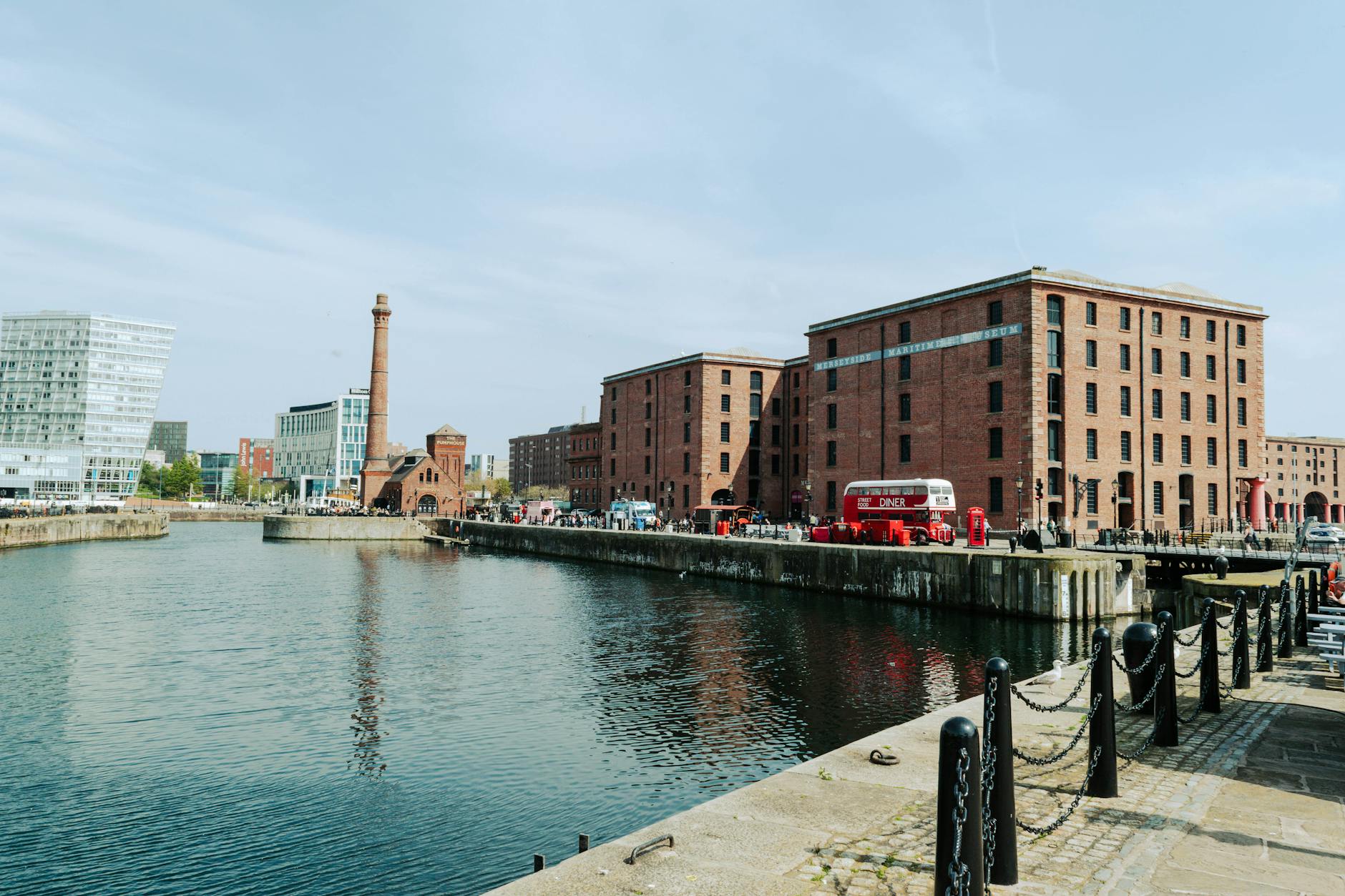
The Royal Albert Dock was the Liverpool waterfront’s beating heart from 1846 onwards and was part of the Liverpool Maritime Mercantile City UNESCO World Heritage Site until 2021, when it was stripped of the designation following waterfront redevelopment that UNESCO judged incompatible. It is still architecturally extraordinary — five connected red-brick warehouses built around a working dock, now home to four major museums, restaurants, bars, and a public art installation by Ugo Rondinone (the 10-metre Liverpool Mountain).
Merseyside Maritime Museum (free)
Tells the story of Liverpool as the great trans-Atlantic port — Titanic, Lusitania, the emigration story (9 million people left Europe through Liverpool in the late 19th and early 20th centuries), the smuggling history. The “Seized!” gallery on customs is unexpectedly brilliant. Allow 1.5 hours.
International Slavery Museum (free)
On the third floor of the same building. Liverpool’s slave-trading history is uncomfortably central to the city’s wealth — at one point in the late 1700s, around 40% of European slave-trading voyages departed from Liverpool. The museum is the most uncompromising institutional treatment of the trans-Atlantic slave trade in the UK. Currently going through a transformation programme; some galleries may be relocated within the building.
Museum of Liverpool (free)
At the Pier Head end of the dock. The largest museum dedicated to a single city in the UK. “People’s Republic” and “Wondrous Place” galleries are the highlights — Liverpool football, music, working-class history, the Toxteth uprisings, the Beatles, Cilla Black. Allow 2 hours.
Tate Liverpool — closed for redevelopment
Important 2026 update: the main Tate Liverpool gallery is closed for redevelopment. The collection is currently displayed at RIBA North on Mann Island, adjacent to the dock, with a reduced programme. The main building is expected to reopen in 2027.
The Beatles Story (~£20)
The dedicated Beatles museum at the Albert Dock. About 90 minutes inside. Replica Cavern, walk-in yellow submarine, Lennon’s white piano, the full chronological story. Pre-book online for a small saving and to skip the queue.
Three Graces and Pier Head
The Three Graces are the trio of Edwardian buildings at the Pier Head: the Royal Liver Building (1911, with the two Liver Birds on top — they apparently watch over the city and over the sailors coming home), the Cunard Building (1917, Italianate), and the Port of Liverpool Building (1907, baroque). Genuinely one of the best urban skylines in the UK.
Royal Liver Building 360 Tour
£17.50 adult / £12.50 child (7–15). The hour-long tour includes the spiral staircase climb (124 steps) and a 360-degree viewing platform between the two Liver Birds (each 18ft tall, 4 tonnes). Runs Thursday–Sunday, hourly 9am–4.30pm. Tickets at liverbuildingtour.com.
Mersey Ferry
The 50-minute sightseeing cruise on the 12th-century ferry route across the Mersey (yes, that ferry — the one in the Gerry & The Pacemakers song). National Geographic calls it “if you only do one thing in Liverpool, do this.” Departs from the Pier Head terminal. Buy tickets at merseyferries.co.uk. The boat is heated and roofed in bad weather. Combined ticket with the U-Boat Story across the river adds £4.
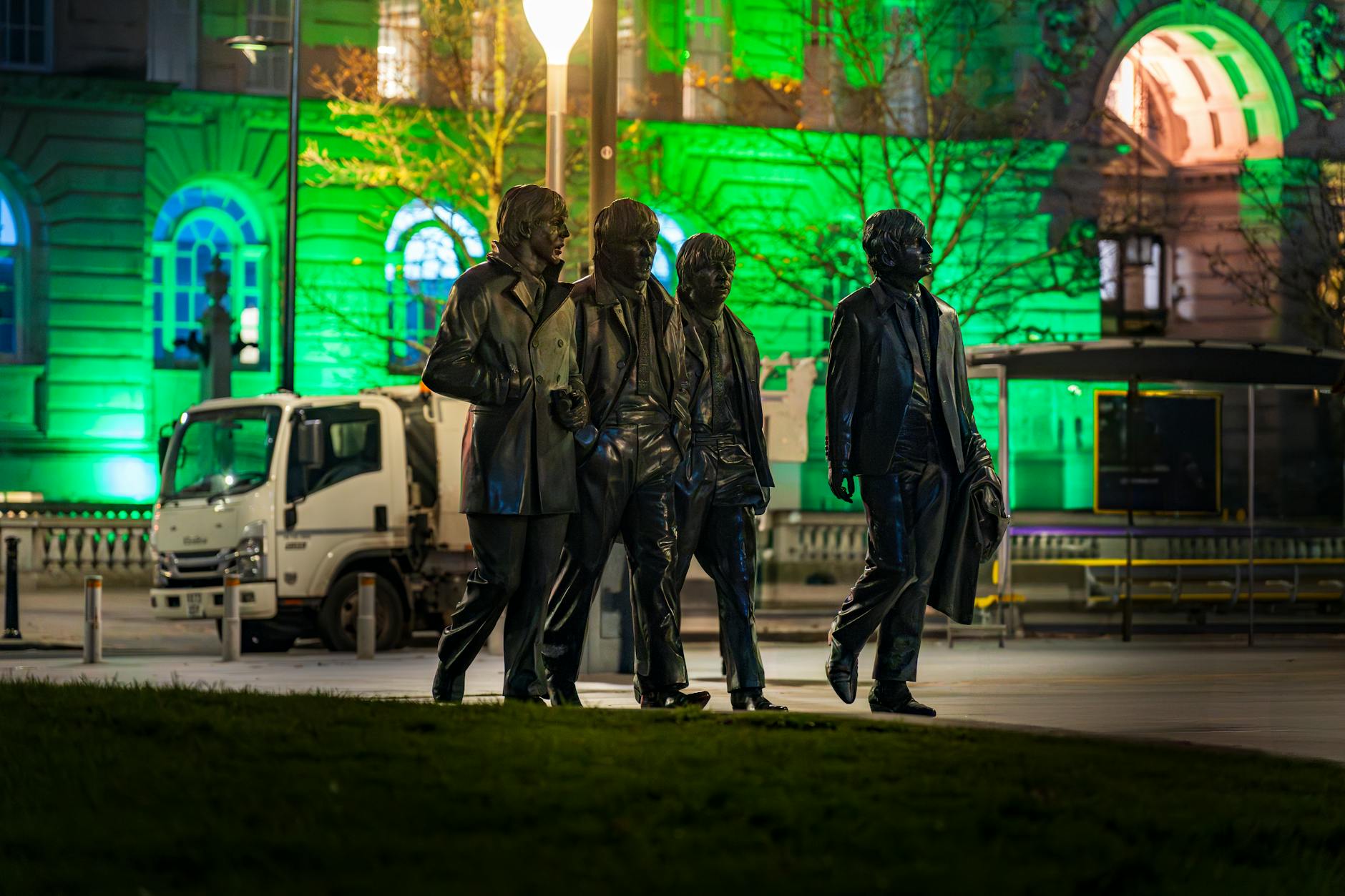
Beatles Statue at Pier Head
Free, always available, the most-photographed photo opportunity in Liverpool. Unveiled in December 2015 as a gift from the Cavern Club to the city.
The Beatles pilgrimage
Liverpool is genuinely the global Beatles destination — there is nowhere else in the world that does this anywhere near as well.
The Cavern Club
10 Mathew Street, in the city centre. The Beatles played at the Cavern 292 times between 1961 and 1963. The original Cavern was filled in for a railway in the 1970s; the current venue is a faithful rebuild on the same site using many of the original bricks. Live music every night of the week, free entry until 8pm most nights, small cover after. Worth visiting for a lunchtime pint just to stand in the room.
Mathew Street
The Cavern is the anchor; the street around it is wall-to-wall Beatles-themed bars, statues (the John Lennon leaning-against-the-wall statue outside the Cavern Pub is the photo), and the Wall of Fame with every act ever to have played the Cavern. Touristy but irresistible.
Magical Mystery Tour
The official 2-hour bus tour, run since 1983. Picks up at the Albert Dock; loops via Penny Lane, Strawberry Field, John and Paul’s childhood homes, the Eleanor Rigby grave at St Peter’s Church Woolton, ending at the Cavern. Named in TripAdvisor’s Top 10 “Best of the Best” tours in 2024. Adult around £20. The cheapest and easiest way to see all the major Beatles sites in one go.
Penny Lane and Strawberry Field
Penny Lane is a real street in south Liverpool, with a now-famous shelter mural and a road sign signed by Paul McCartney (re-signed every time it gets stolen, which is often). Strawberry Field is the former Salvation Army children’s home that inspired the John Lennon song; the visitor centre and exhibition opened in 2019 (the Salvation Army runs it; tickets ~£15). The famous red gates are free to visit and photograph from outside.
Childhood homes — Mendips and 20 Forthlin Road
The National Trust runs guided minibus tours that visit John Lennon’s childhood home Mendips in Woolton and Paul McCartney’s 20 Forthlin Road in Allerton — both preserved as they were in the late 1950s, with original family furniture in places. No interior photos allowed. Book ahead at nationaltrust-tickets.org.uk; tours run from Albert Dock and from Speke Hall (the NT property south of the city). About £30 adult.
Two cathedrals and Hope Street
Liverpool has the only city in the UK with two cathedrals on the same street. Hope Street connects them: half a mile of Georgian terraces, restaurants, the Philharmonic Hall and the Philharmonic Dining Rooms.
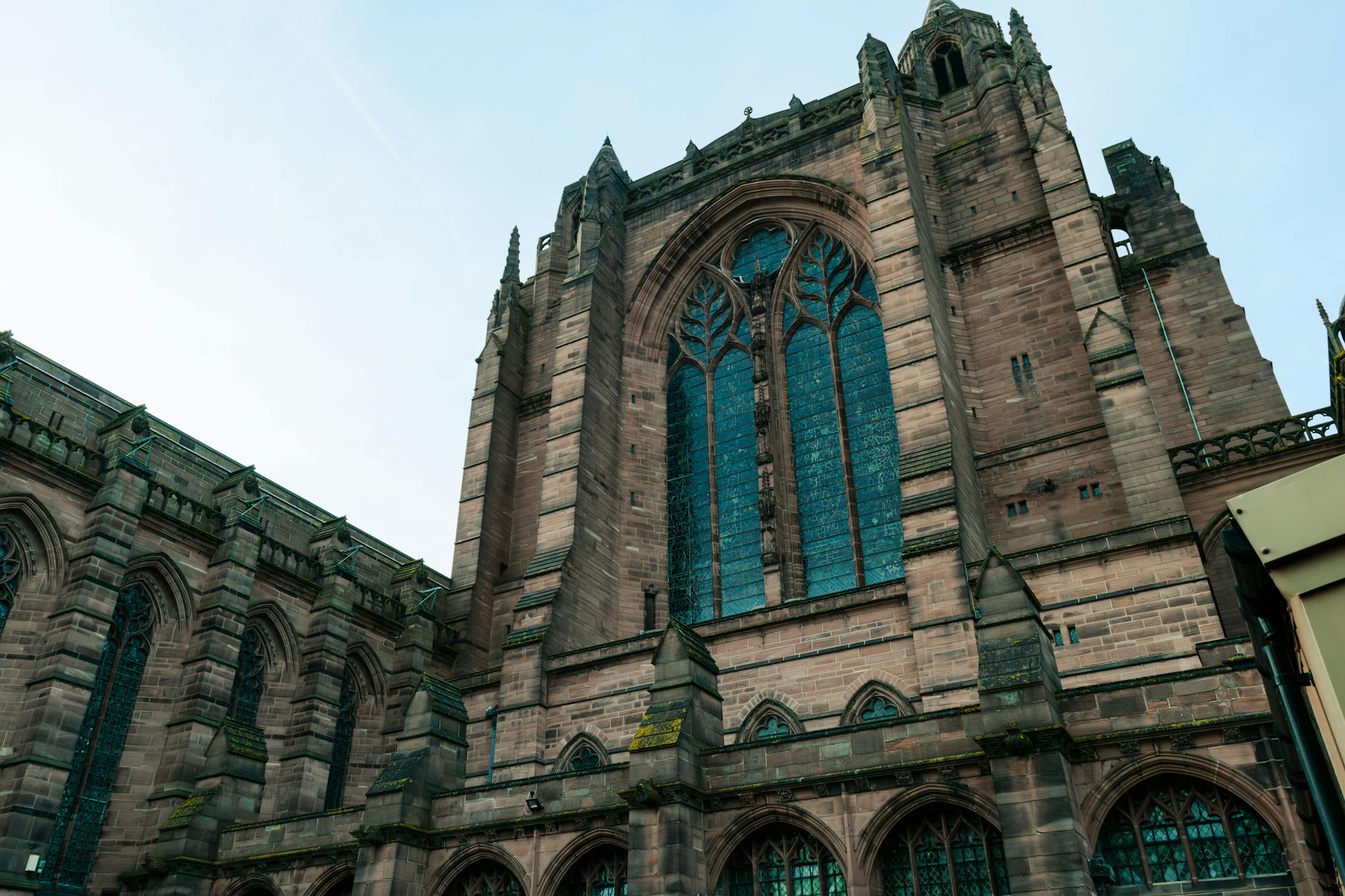
Liverpool Anglican Cathedral
The largest cathedral in the UK, the fifth-largest in the world. Built in red sandstone between 1904 and 1978, mostly designed by Giles Gilbert Scott (who was 22 when he won the design competition). Free entry. The 100-metre tower climb (~£7) gives views across all of Merseyside on a clear day. The cathedral runs an excellent café in the undercroft.
Metropolitan Cathedral of Christ the King (“Paddy’s Wigwam”)
The Catholic cathedral at the other end of Hope Street. Designed by Frederick Gibberd, opened 1967 — a modernist concrete cone topped with a coronet of stained glass. Locally affectionately called Paddy’s Wigwam for its tepee-like shape. Free entry to the main cathedral; the Lutyens Crypt and Treasury are £5 adult / £12 family. Open Mon–Sat 10am–4pm.
Football: Anfield and Hill Dickinson Stadium
Anfield (Liverpool FC)
Anfield Stadium Tour and LFC Story — about £25 adult for the standard tour, £35 for the legends tour with a former player. Walk through the changing rooms, the tunnel, the dugouts. The Anfield Origins Tour (a free outdoor walking tour of the historic streets around the ground) is excellent value. Tours run most days; book at liverpoolfc.com.
Hill Dickinson Stadium (Everton FC’s new home — opened August 2025)
Critical 2026 update: Everton moved out of Goodison Park (their home since 1892) and into the brand new Hill Dickinson Stadium at Bramley-Moore Dock on the historic waterfront for the start of the 2025–26 Premier League season. 52,888 capacity. The first competitive fixture was vs Brighton on Sunday 24 August 2025. The stadium won Project of the Year at the StadiumBusiness Design & Development Awards 2025. The Everton Way public walkway around the ground opened August 2025. Stadium tours started during the 2025–26 season — check evertonfc.com for current tour availability. Goodison Park is now home to Everton Women’s matches and is preserved as a heritage site.
Free museums and culture
Beyond the Albert Dock cluster, the city centre has several more free museums:
- Walker Art Gallery (William Brown Street) — the “National Gallery of the North”. Free. Pre-Raphaelites, contemporary British painting, a brilliant sculpture hall.
- World Museum (William Brown Street, next door) — free. Natural history, ancient Egypt, a planetarium.
- Liverpool Central Library — between the Walker and World Museum. The Picton Reading Room (1879) is one of the most photogenic interiors in the city.
Where to eat and drink in Liverpool
Bold Street
Liverpool’s foodie spine. Indian, Italian, vegan, Israeli, Caribbean, Argentinian, Iranian — all on one street that runs from the bombed-out church up towards Lime Street. Highlights: Maray (Middle-Eastern small plates), Bundobust (Indian-Gujarati street food and craft beer), Mowgli (the Manchester-founded street-food chain’s Liverpool flagship), Free State Kitchen (American grill).
Baltic Triangle
The creative quarter south of the centre. Baltic Market is a converted brick warehouse with 15+ independent food traders (Thursday–Sunday). Cains Brewery Village has the brewery’s taps, a roller-disco, a botanical garden, and a fire-engine bar. Picante (Mexican, opened March 2025) is the latest hit. A new Liverpool Baltic Merseyrail station is planned for 2027.
Liverpool ONE shopping
The UK’s largest open-air shopping centre — 170 stores, restaurants and bars, with a top-floor terrace facing the river.
Off-the-beaten-track Liverpool
Bombed Out Church (St Luke’s)
At the top of Bold Street. Built 1811–1832; bombed by an incendiary on 6 May 1941 during the Liverpool Blitz; the clock stopped at 3.36am and the roof was destroyed but the walls survived. Now an evocative roofless venue used for theatre, music, film screenings and pop-up events. Free to walk into. Particularly atmospheric at dusk.
Chinatown
On Nelson Street, with Europe’s tallest Chinese ceremonial arch (a 1999 gift from Shanghai). The oldest Chinese community in Europe — Chinese sailors first settled in Liverpool in the 1830s.
Sefton Park Palm House
A Victorian glasshouse (1896) in the middle of Sefton Park, 2 miles south of the centre. Free, open 10am–5pm daily, with 200+ plants and the Liverpool Botanical Collection. Reach via Merseyrail train to St Michaels (20-min walk) or bus 75/80/80A from the city centre.
What’s on in Liverpool in 2026
- Liverpool European Festival — 9 May to 5 July 2026. The legacy programme from Liverpool’s Eurovision year (2023), expanded to a 10-week celebration of European culture across the city. Major outdoor events, music, food.
- Liverpool Music Month — May 2026. City-wide music programme.
- On the Waterfront at Pier Head — summer 2026 concert series. Paul Weller, Snow Patrol among the announced headliners.
- Anfield concerts — June 2026: Zach Bryan (12 June), Foo Fighters (25 and 27 June), My Chemical Romance with Echo & The Bunnymen (30 June).
- International Slavery Museum transformation programme continues — some galleries may be reorganised.
Manchester vs Liverpool — the friendly verdict
Look, the two cities have a rivalry that goes back to the Manchester Ship Canal (Liverpool was furious about losing the trade in 1894) and runs through to two Premier League derbies every season. But honestly: they are genuinely complementary cities. Manchester is bigger, busier, more international, with more shopping and a stronger restaurant scene. Liverpool is more compact, walkable, music-rich, friendlier on first acquaintance, and unbeatable on culture for the size of the population.
The smart play if you’re a tourist is to base in one and day-trip to the other. From Manchester, the Lime Street train makes Liverpool the easiest big day out in the North. Reciprocally, anyone visiting Liverpool can be at the Northern Quarter for breakfast in 50 minutes.

FAQ — Liverpool day trip from Manchester
How far is Liverpool from Manchester?
31–35 miles west of Manchester via the M62.
How long does it take to get from Manchester to Liverpool?
Train: 31–52 minutes (fastest 31). Driving: 50 minutes on the M62 (toll-free). Coach: about 1 hour 10.
Manchester or Liverpool — which is better?
They’re complementary — Manchester is bigger and more international; Liverpool is more compact, friendlier, with stronger music heritage. They’re 35 minutes apart; do both.
Is Liverpool worth visiting?
Yes — more free museums than any UK city outside London, the world’s best Beatles destination, a UNESCO-quality waterfront, two cathedrals, two Premier League grounds.
Best things to do in Liverpool?
Royal Albert Dock, Beatles Story, Cavern Club, Royal Liver Building 360, Liverpool Cathedral, Walker Art Gallery, Mersey Ferry, Anfield or Hill Dickinson Stadium tour.
Best Beatles tour Liverpool?
The Magical Mystery Tour (2 hours, ~£20) covers Penny Lane, Strawberry Field, childhood homes and the Cavern. National Trust runs separate minibus tours of John and Paul’s childhood homes.
Albert Dock things to do?
Free: Merseyside Maritime Museum, International Slavery Museum, Museum of Liverpool, the Liverpool Mountain sculpture, waterfront views. Paid: The Beatles Story (~£20).
How much is the train from Manchester to Liverpool?
Advance singles from £7.50; off-peak day return often under £15. Book at Trainline or Northern Railway.
Where does the train arrive in Liverpool?
Lime Street station — 10–15 minutes’ walk from the Pier Head and the Albert Dock.
Is there a new Everton stadium?
Yes — the Hill Dickinson Stadium at Bramley-Moore Dock opened in August 2025. 52,888 capacity. Stadium tours running during the 2025–26 season.
Is Liverpool good for a day trip with kids?
Excellent — Museum of Liverpool, the Beatles Story, Sea Life (in the city), the Mersey Ferry, and the Albert Dock are all family-friendly.
What’s the difference between the two Liverpool cathedrals?
The Anglican Cathedral (1904–1978) is the largest in the UK in red sandstone, traditional Gothic style. The Metropolitan (“Paddy’s Wigwam”) is a 1967 modernist Catholic cathedral. Both are free to enter, both on Hope Street.
Is Liverpool a friendly city?
Reputationally and actually — yes. The accent is famous, the humour is sharper, and visitors regularly comment on how easy it is to start conversations.
Plan more of your Manchester visit
If you have enjoyed Liverpool, the rest of our day-trip cluster is well worth exploring. Our Chester day trip guide covers the Roman city an hour west; our York day trip guide covers the medieval city east; our Peak District guide covers Britain’s first national park 44 minutes south; our Blackpool guide covers the seaside resort 1 hour 15 north-west. The full day trips from Manchester hub has the lot.