This article contains advertising. Our booking links are routed through a partner that adds commission tracking automatically, so if you book through one we earn a commission from the provider, at no extra cost to you. It never affects what we recommend. Affiliate disclosure
In May 2025, in front of a hall in Białystok, Poland, the European Museum Forum announced that the best museum in Europe — out of 41 shortlisted institutions — was the Manchester Museum. It is the first UK university museum to win the European Museum of the Year award. The judges singled out the museum’s “new spaces to foster deeper community connections and promote intercultural dialogue” and praised how the institution had “reimagined its mission, acknowledging and addressing its complex history.” This is the museum that, two years earlier, reopened after a £15m redevelopment and put two genuinely original new galleries in front of the British public — the Lee Kai Hung Chinese Culture Gallery (the UK’s first permanent gallery dedicated to Chinese culture) and the South Asia Gallery (co-curated with 30 community members, in partnership with the British Museum).
This is the complete 2026 visitor guide to Manchester Museum: what to see across 16 galleries, how to plan a visit, the post-2023 reopening detail, and how the European Museum of the Year is also the UK’s largest university museum, free, and a 10-minute walk from Manchester Oxford Road station. For wider cultural context see our museums and culture pillar.
Manchester Museum at a glance
- Address: The University of Manchester, Oxford Road, Manchester M13 9PL
- Phone: 0161 275 2648
- Hours: Tuesday 10am–5pm; Wednesday 10am–9pm (late); Thursday/Friday 10am–5pm; Saturday 8am–5pm (Quiet Time 8–10am); Sunday 10am–5pm. Closed Mondays. Last admission 30 minutes before closing.
- Admission: Free, no booking for permanent galleries.
- How long: 2–4 hours minimum; easy half-day; full day for all 16 galleries plus a temporary exhibition.
- Nearest transport: Manchester Oxford Road train station (14 min walk); St Peter’s Square tram (17 min walk); Oxford Road bus corridor on the doorstep.
The story of Manchester Museum
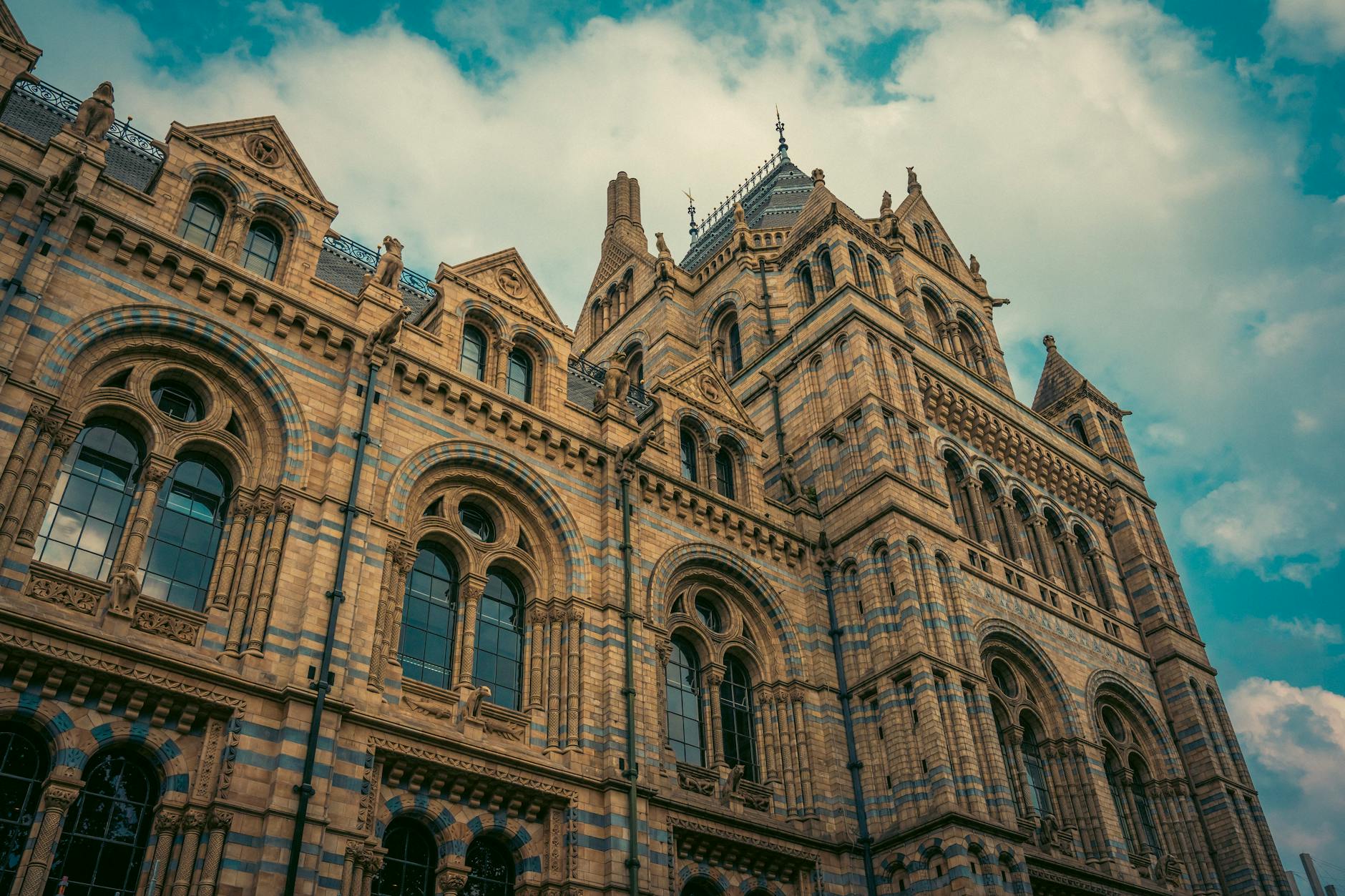
The collections were assembled by the Manchester Natural History Society from 1821 and handed to Owens College (the predecessor of the University of Manchester) in 1867. Alfred Waterhouse — who also designed the Natural History Museum in London — was commissioned to build a purpose-built museum, which opened to the public in 1888. The Egyptology wing was added in 1912, funded by the Manchester textile millionaire Jesse Haworth, to house the finds of Sir Flinders Petrie’s excavations. Further extensions and refurbishments followed in the 20th century, but the headline transformation came when the museum closed in August 2021 for the final phase of a two-year, £15m “hello future” redevelopment.
It reopened on Saturday 18 February 2023 at 10am. 52,000 people visited in the first week alone. Two years later, in May 2025, it won European Museum of the Year — beating 41 shortlisted institutions, the first UK university museum ever to take the main prize. The judges’ praise focused on the new community-led galleries and the museum’s willingness to confront its colonial collecting history.
What’s new since 2023
The 2023 reopening added three major new permanent galleries and a substantial new temporary exhibition hall:
The South Asia Gallery
The first permanent gallery in the UK celebrating the experiences, contributions and histories of the South Asian diaspora. A British Museum partnership, co-curated by the South Asia Gallery Collective — 30 community members spanning leaders, artists, educators, historians, scientists and students. Lead curator: Nusrat Ahmed.
The gallery is organised around six themes — Past & Present, Lived Environments, Science & Innovation, Sound Music & Dance, British Asian, Movement & Empire — and ranges from a Mughal-era emerald Cartier brooch to a Dhaka rickshaw, from Subedar Mohammed Ali’s WWI uniform to Dr Furqan Ali Siddiqui’s “Qur’an cube” Covid response. It won European Museum of the Year 2024 as a single gallery; the museum overall then won the main prize in 2025.
The Lee Kai Hung Chinese Culture Gallery
The first permanent gallery dedicated to Chinese culture in any UK museum. Funded by Dr Lee Kai Hung (retired Hong Kong businessman and honorary University of Manchester graduate). 300+ artefacts on display, including a 24-metre Emperor Kangxi birthday scroll (on loan from the John Rylands Library), Dr Yan Wang Preston’s “Here and Now” portrait series, a firefighter’s uniform developed at the University of Manchester, a Milu deer specimen, and an Imperial dragon robe on loan from Bolton Libraries.
The Belonging Gallery
Created by Alexandra Alberda, the museum’s inaugural curator of Indigenous perspectives. Explores what it means to belong — through personal objects donated by Manchester communities, alongside items from the museum’s existing collections recontextualised. Genuinely affecting.
The new Exhibition Hall
A large temporary exhibition space on the ground floor. Current shows: Human Natures (22 April – 1 November 2026) and Artefacts of Prediction: Imagining Tomorrow (2 December 2025 – 4 October 2026 in the Research Gallery). Both free; ticketed entry slot recommended for popular times.
Gallery-by-gallery walkthrough
Ground Floor
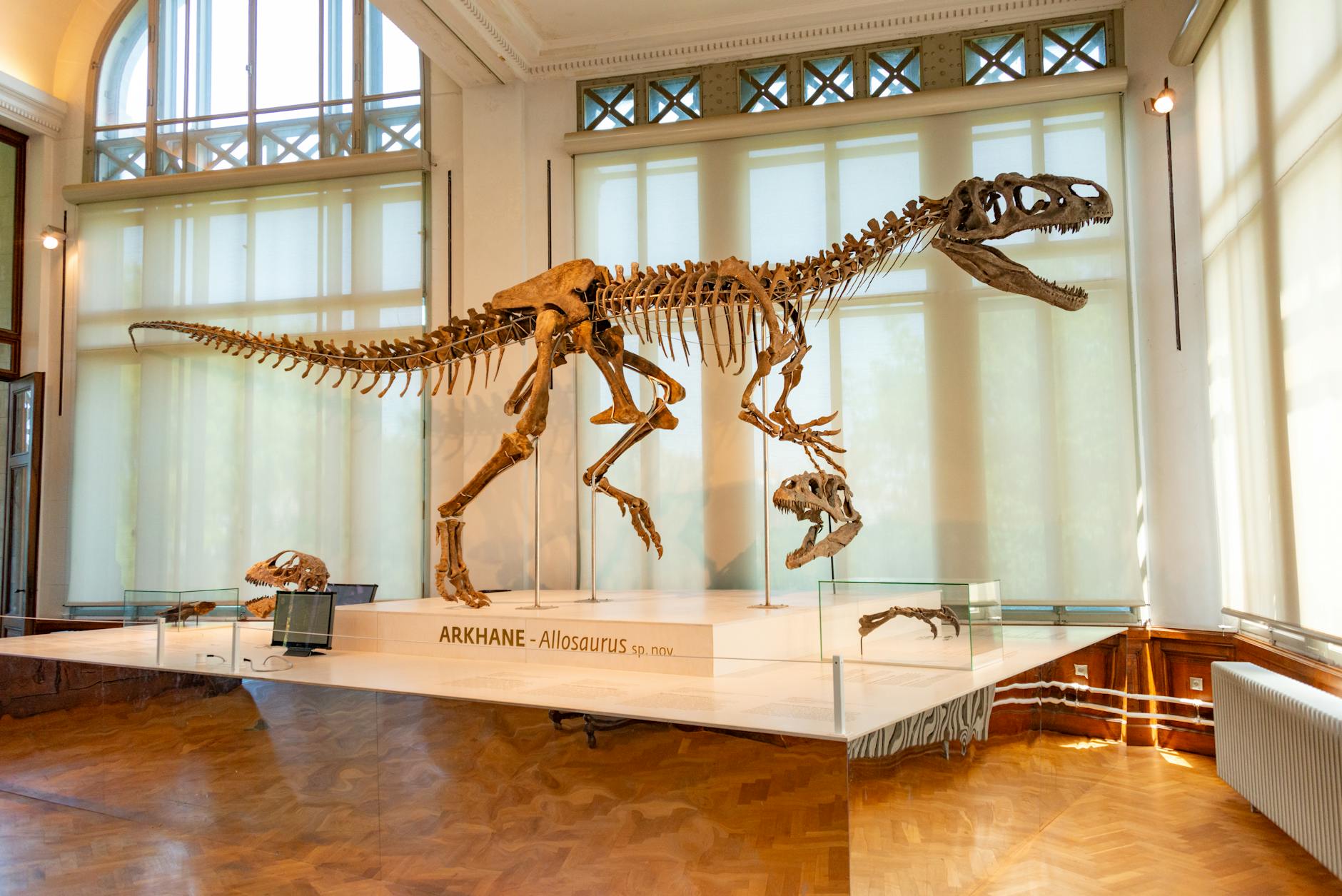
Welcome Area with the main shop and café entrance; Exhibition Hall (current temporary shows); Fossils and Dinosaurs — home to Stan the T-Rex (a full cast of the second-most-complete T. rex skeleton ever found, acquired 2004), plus April the Tenontosaurus and a 130-year-old sperm whale skeleton hanging overhead.
Mezzanine
Minerals — 9,000+ specimens, with a focus on hard-rock petrology and locally significant Lancashire and Derbyshire mineralogy.
Floor 1
Belonging Gallery · Lee Kai Hung Chinese Culture Gallery · South Asia Gallery · Archaeology (questions about who narrates the past) · Egypt and Sudan · Living Worlds (the natural-history gallery; opened 2011, design by villa eugenie, encouraging reflection on attitudes to nature).
Floor 2
Africa Hub (co-developmental space inviting visitor input on the future of African collections); Research Studio & Gallery (active research and rotating temporary shows); Nature’s Library (Gothic-Revival natural-history room, opened 2013); The Vivarium (live amphibians and reptiles, including critically endangered neotropical frogs; active breeding and conservation programmes; operates under Zoo Licence standards).
Floor 3
The Top Floor — flexible community programme space.
Ancient Egypt deep-dive
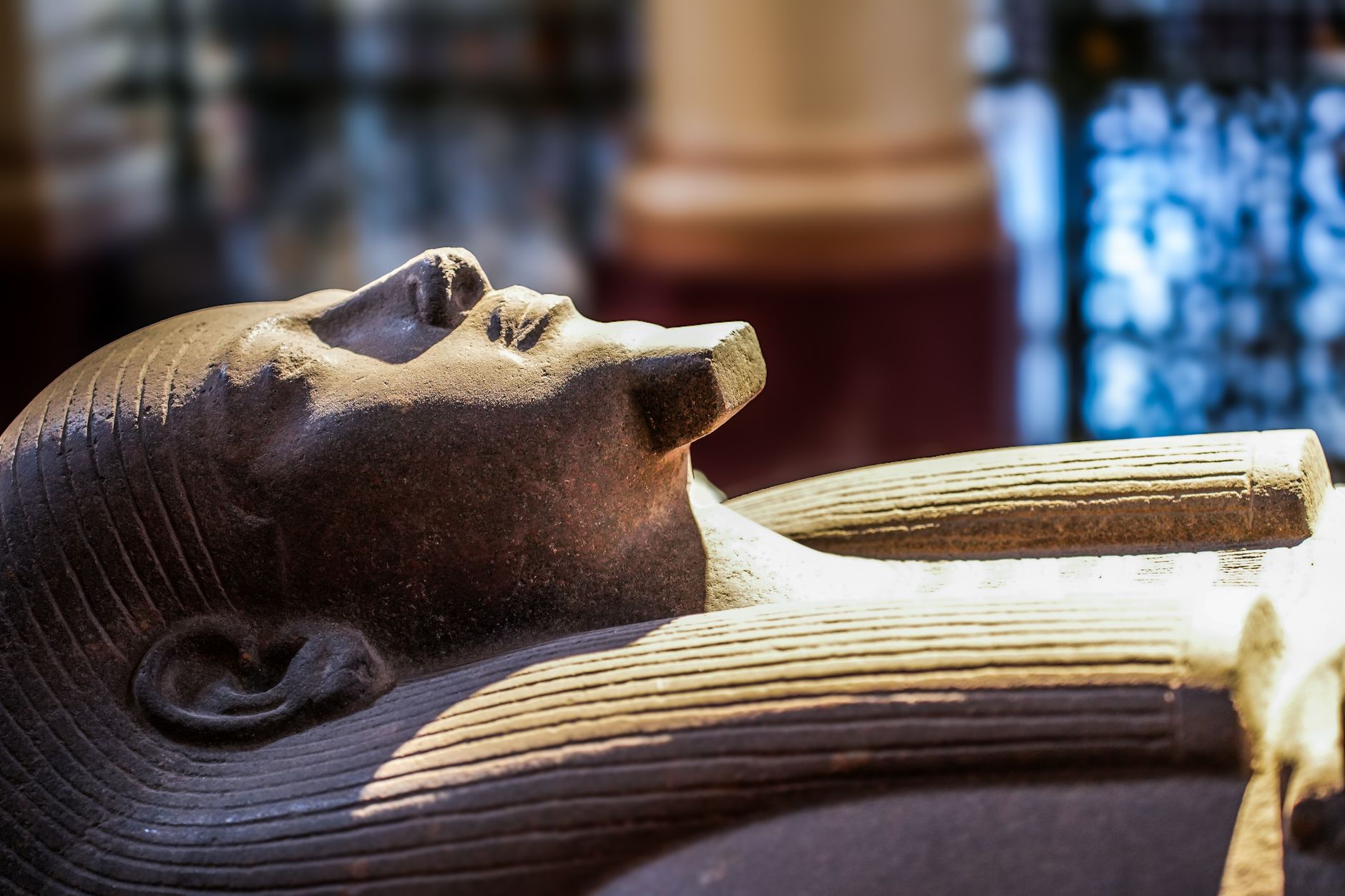
Manchester’s Egypt and Sudan collection is one of the largest of its kind in the UK, with around 18,000 objects, including roughly 20 human mummies and 50 animal mummies plus Roman mummy masks and painted panel portraits. The collection grew under the patronage of Jesse Haworth, the Manchester textile magnate who funded much of Sir Flinders Petrie‘s excavation work — a substantial proportion of Petrie’s finds came to Manchester rather than London.
Star objects to seek out:
- The Two Brothers (Nakht-Ankh and Khnum-Nakht) — 12th Dynasty, from a single tomb at Deir Rifeh. DNA analysis in 2014 confirmed they shared a mother but had different fathers, which slightly explained the family-tree puzzle they had presented since 1907.
- Asru — Theban temple chantress, late 25th Dynasty. Unwrapped by Manchester Natural History Society in April 1825. The museum is currently consulting on whether to continue displaying her remains, with a decision due in April 2026 — a decision that has wider implications for ethical display of human remains in UK museums.
- The Riqqeh Pectoral — gold and inlaid jewellery, 12th Dynasty, recovered from a noble’s tomb by Petrie.
- The “spinning statue” — a small serpentine figure that became a global news story in 2013 when CCTV footage appeared to show it rotating spontaneously inside its display case. Vibrations from outside traffic turned out to be the explanation; the museum has had fun with the story.
South Asia and Chinese Culture galleries deep-dive
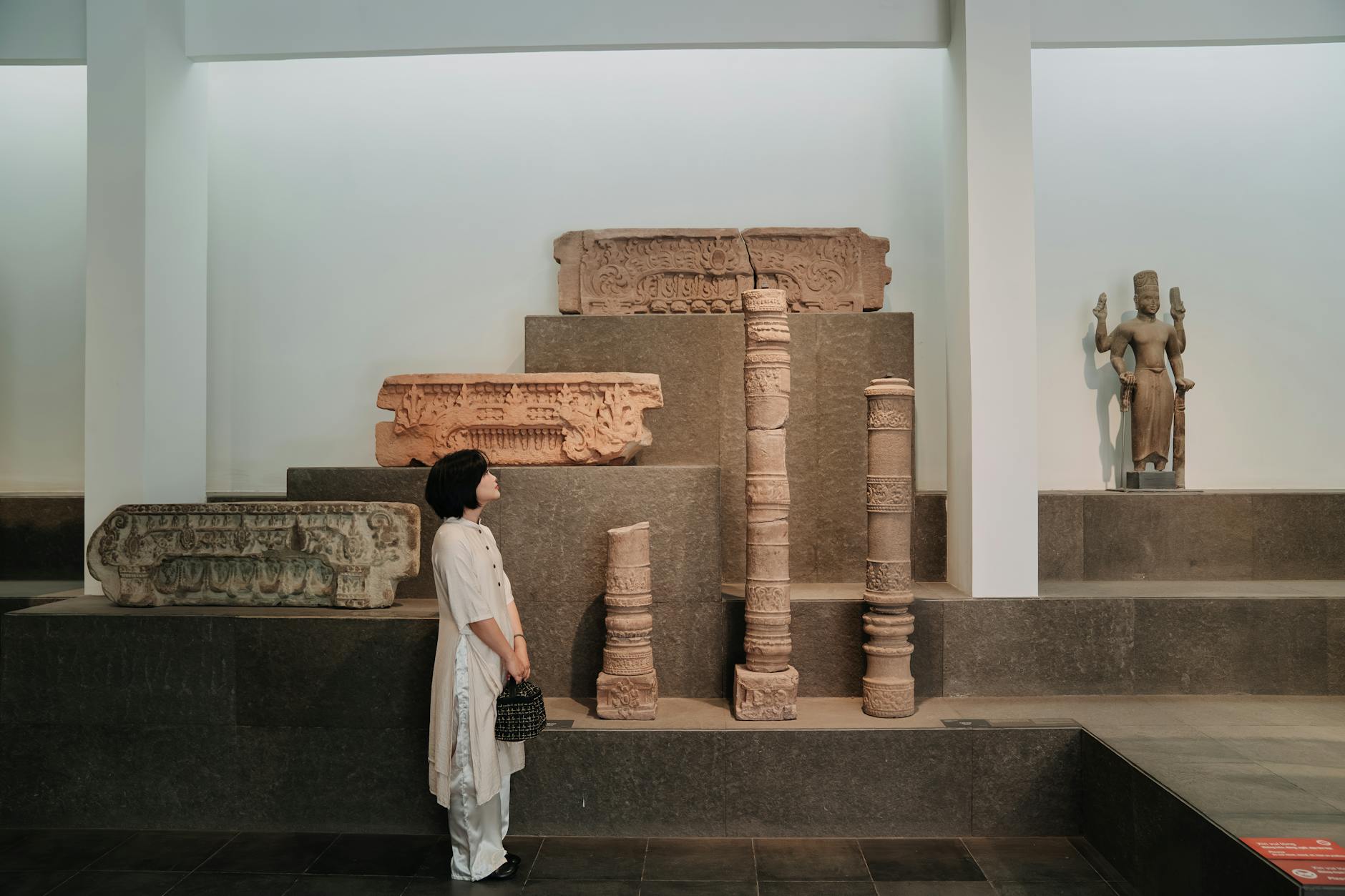
Both new galleries deserve a slow, considered visit — they are quietly the most innovative things Manchester Museum has done. The South Asia Gallery succeeds because the curators stepped back and let the South Asia Gallery Collective build the framing themselves; the result is six themes that cut across colonial-era museum-display conventions and present the diaspora’s story on its own terms. The Lee Kai Hung Chinese Culture Gallery takes a similar collaborative approach with Manchester’s substantial Chinese community (Manchester’s Chinatown is one of the UK’s largest), pairing classical objects (Imperial robes, calligraphy) with contemporary works that speak to British Chinese identity in 2026.
Both galleries have been cited as examples of how to do community-led curation properly — the EMYA 2024 win for South Asia Gallery and the EMYA 2025 main prize for the museum as a whole are direct recognition of this approach.
The Vivarium and natural history
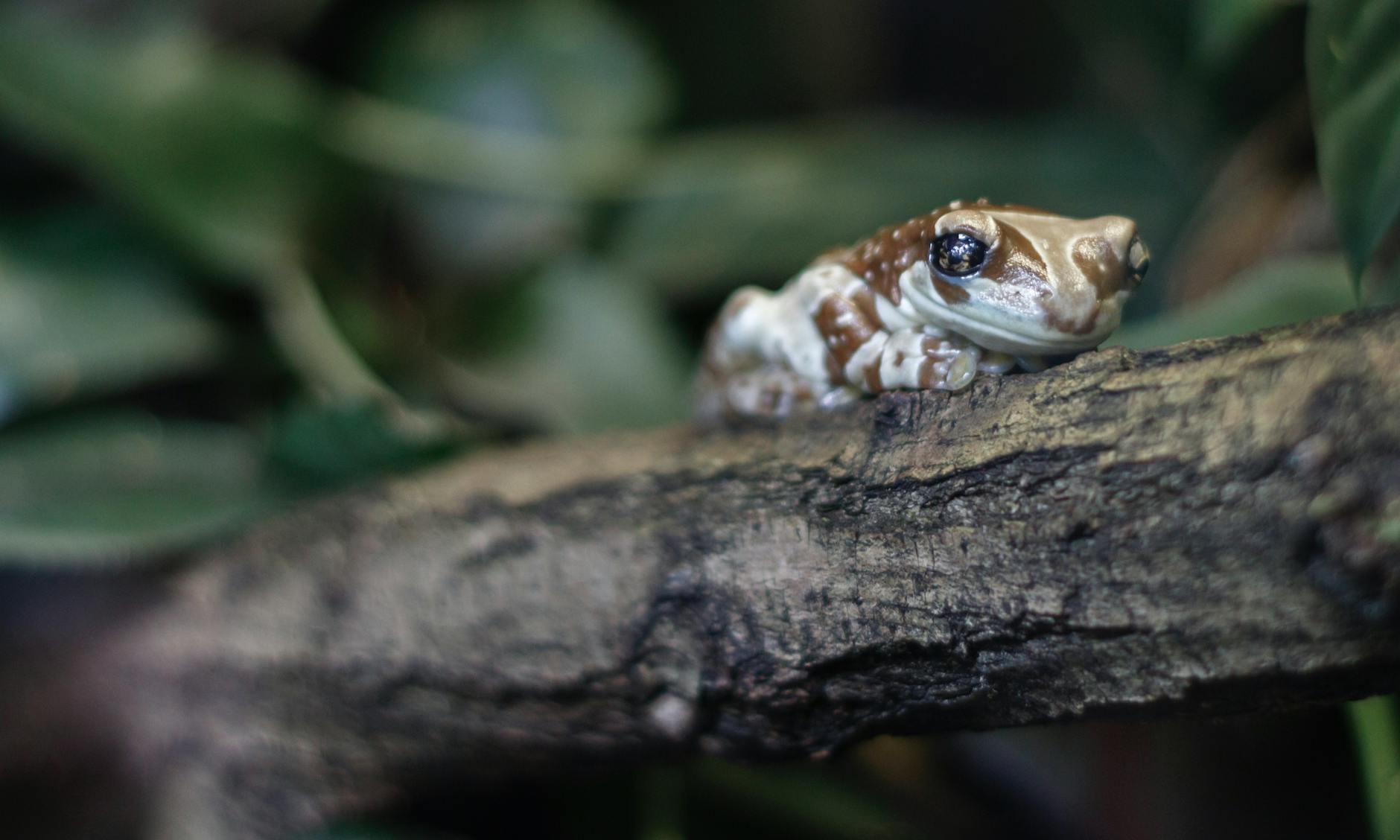
The Vivarium on Floor 2 is the museum’s most unusual feature — a working collection of live amphibians and reptiles, including some of the world’s most critically endangered neotropical frog species (Lemur Leaf Frog, Yellow-eyed Leaf Frog, Splendid Leaf Frog). The museum runs active breeding and conservation programmes, working with international partners to maintain genetic diversity for species that are near-extinct in the wild. It operates under formal Zoo Licence standards. Brilliantly atmospheric — and kids love it.
Living Worlds (Floor 1, opened 2011) and Nature’s Library (Floor 2, opened 2013) cover the wider natural-history collections, with the Gothic-Revival display style of Nature’s Library a particular highlight.
Practical visit info
Hours and Quiet Time
The museum is closed Mondays. Wednesday late opening to 9pm is brilliant for after-work culture. Saturday includes an 8am–10am “Quiet Time” — only the Belonging, Archaeology, Egypt & Sudan and Chinese Culture galleries are open, plus the shop and café, with reduced sound and lighting for sensory-sensitive visitors. Last admission is 30 minutes before closing.
Accessibility
Manchester Museum has invested significantly in accessibility. Step-free access throughout; lifts to all floors; accessible toilets including a Changing Places facility; an Easy Read Guide available; sensory backpacks; the Saturday Quiet Time; pre-visit social stories on the website. Staff are properly trained in welcoming visitors with diverse access needs.
Families
Dinosaurs, mummies and the Vivarium are the standard family draws. The museum runs regular family activities, holiday workshops, and SEND-friendly programmes. Baby-changing on every floor.
Café and shop
The new café opens at 8.30am (Saturday) and 10am other open days, serving hot lunches until 3pm and snacks and coffee through to closing. Allergen menus available. The shop is curated to support the museum’s mission — fair trade, sustainable, locally made wherever possible, with books, jewellery, ceramics and Manchester-themed gifts.
How to get there
Train: ~14 minutes walk from Manchester Oxford Road station; ~21 minutes from Manchester Piccadilly. Both stations have onward bus and tram connections.
Tram: ~17 minutes walk from St Peter’s Square Metrolink stop (all lines).
Bus: The Oxford Road bus corridor (officially the busiest bus corridor in Europe) is directly outside the museum. Bee Network routes 15, 18, 41, 42, 42A, 42B, 43, 53, 111, 142, 143, 147, 191, 197, V1, V2 all stop at “Manchester Museum, Oxford Road.” Single fare £2; daily cap £5 with contactless.
Driving / parking: No on-site parking. Nearest car park is the University of Manchester’s Car Park D, Booth Street West, M15 6FH (access via Higher Cambridge Street) — about 2 minutes’ walk via Bridgeford Street. The Aquatics Centre car park is another option. Important: parts of Oxford Road are bus-gate restricted to buses, black cabs and bikes 6am–9pm. PCN risk for private cars.
Cycling: The museum is on the Oxford Road Cycleway, with Dutch-style segregated cycle lanes. Public cycle racks at the main entrance.
Pair your visit
Manchester Museum sits at the heart of the University of Manchester’s Oxford Road cultural corridor. Within 15 minutes’ walk:
- The Whitworth — sister University of Manchester venue, free, contemporary art and Sarah Price-designed Art Garden.
- Royal Northern College of Music (RNCM) — opposite; brilliant programme.
- Manchester Met University Holden Gallery and MMU Special Collections.
- HOME on First Street (15 minutes’ walk).
- BrewDog Manchester and the University Green food/drink hub.
For wider Manchester museum context, see our free museums in Manchester guide.
FAQ — Manchester Museum
Is Manchester Museum free?
Yes — free entry to all permanent galleries. Some major temporary exhibitions may require free advance booking for timed slots.
What are Manchester Museum opening times?
Closed Mondays. Tuesday, Thursday, Friday, Sunday 10am–5pm. Wednesday 10am–9pm (late). Saturday 8am–5pm (with 8–10am Quiet Time).
What is there to see at Manchester Museum?
Stan the T-Rex; Egypt and Sudan Gallery (the Two Brothers, Asru, the Riqqeh Pectoral, the “spinning statue”); South Asia Gallery; Lee Kai Hung Chinese Culture Gallery; the Vivarium with live amphibians and reptiles; Living Worlds; Nature’s Library; Belonging Gallery; the Exhibition Hall.
Does Manchester Museum have mummies?
Yes — around 20 human mummies and 50 animal mummies, plus painted Roman mummy portraits and masks. One of the largest collections of Egyptian and Sudanese objects in the UK. Famous mummies include the Two Brothers and Asru.
What is the South Asia Gallery?
The first permanent gallery in the UK celebrating the South Asian diaspora’s experiences, in partnership with the British Museum, co-curated by the South Asia Gallery Collective of 30 community members. Won European Museum of the Year 2024.
What is the Lee Kai Hung Chinese Culture Gallery?
The first permanent gallery dedicated to Chinese culture in any UK museum, funded by Dr Lee Kai Hung. 300+ artefacts including the 24-metre Emperor Kangxi birthday scroll.
How long should I spend at Manchester Museum?
2–4 hours minimum; an easy half-day; a full day if you visit all 16 galleries and the temporary exhibitions.
Is Manchester Museum good for children?
Excellent. The dinosaurs, Egyptian mummies and Vivarium are the standard family draws; the museum runs regular family workshops; SEND-friendly programmes and the Saturday Quiet Time make it particularly accessible for neurodivergent visitors.
Did Manchester Museum win an award?
Yes — it was named European Museum of the Year 2025, the first UK university museum ever to win the main prize. The South Asia Gallery had previously won EMYA 2024 as a single gallery.
Where is Manchester Museum?
Oxford Road, Manchester M13 9PL — on the University of Manchester campus, 14 minutes’ walk from Manchester Oxford Road train station.
Is there parking at Manchester Museum?
No on-site parking. The University of Manchester Car Park D (Booth Street West, M15 6FH) is the nearest — about 2 minutes’ walk. Oxford Road has bus-gate restrictions for private cars between 6am and 9pm.
Plan more of your Manchester visit
For the wider museum scene, our free museums in Manchester guide has the citywide list; our art galleries guide covers the Whitworth and Manchester Art Gallery; our John Rylands Library guide covers the other major university cultural asset. For the full picture, see our museums and culture pillar.