This article contains advertising. Our booking links are routed through a partner that adds commission tracking automatically, so if you book through one we earn a commission from the provider, at no extra cost to you. It never affects what we recommend. Affiliate disclosure
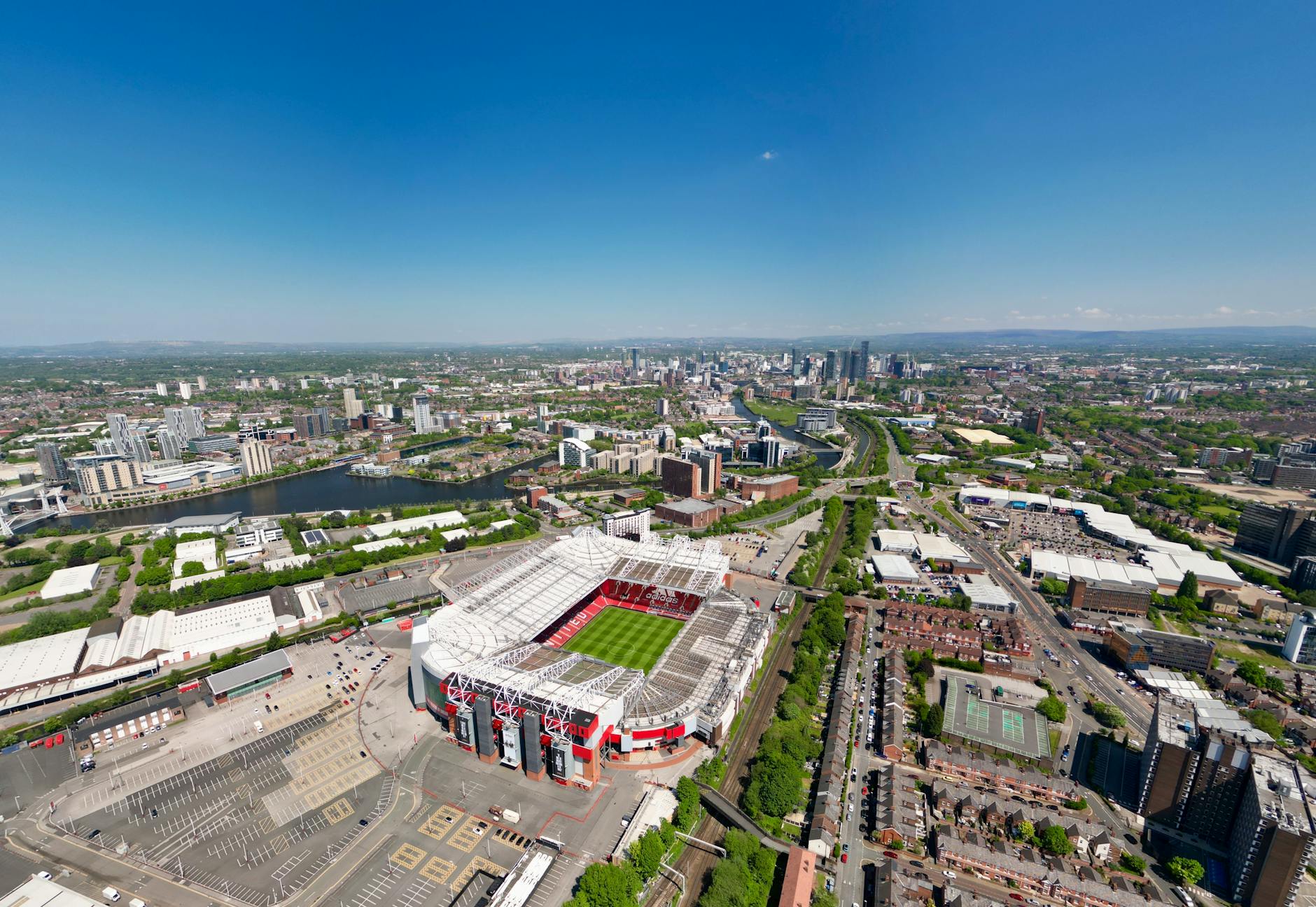
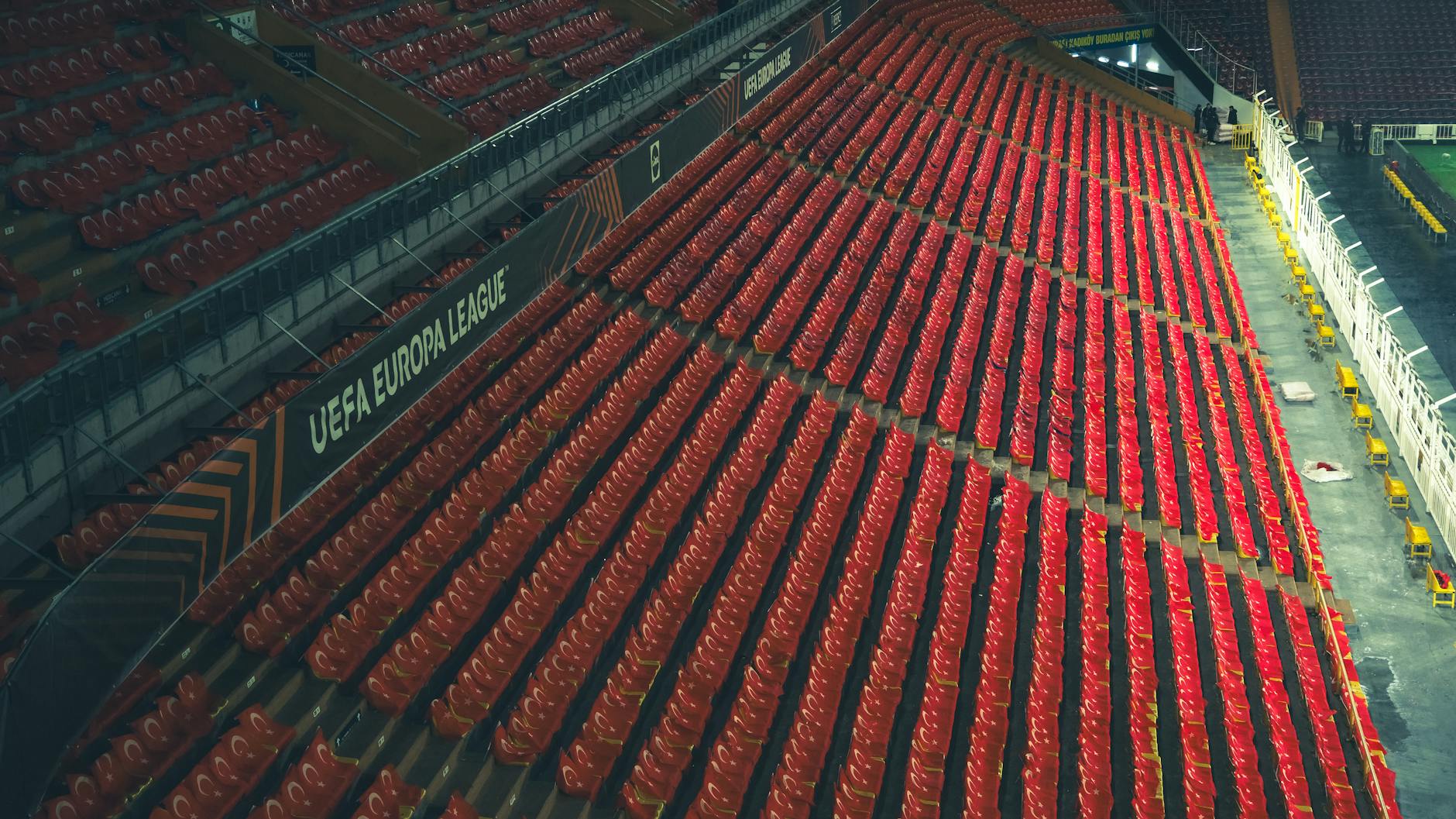
Whatever your feelings about Manchester United — and people have feelings — the Old Trafford stadium tour is one of those experiences that overrides them. You walk down the actual tunnel the players walk down. You sit on the substitutes’ bench Sir Alex Ferguson sat on for 27 years. You stand on the centre spot of the largest club stadium in the United Kingdom and look up at 74,000 empty red seats and the Stretford End and the bit of the South Stand they’re about to rip down and rebuild as a 100,000-seat super-stadium. Then you go and look at the actual European Cup the actual Manchester United Boy Babes won in 1968, ten years after most of them had died in the snow at Munich. Even if you support Liverpool you’ll find something here.
This is the 2026 guide to the Old Trafford Stadium Tour and Museum — how to book, what’s included, the Take to the Pitch experience (back in 2026), the Legends Tour, the New Trafford plans that make 2026–2030 the right window to visit the original, and how to combine with Salford Quays and Lancashire cricket next door. For wider context see our Manchester football and sports pillar.
Old Trafford Stadium Tour at a glance
- Address: Sir Matt Busby Way, Old Trafford, Manchester M16 0RA
- Phone: 0161 676 7770
- Standard Tour + Museum: Adult £28 / Child (5–15) £18 / Under-3 free
- Tour duration: ~70 minutes guided; allow 2.5–3 hours total with museum
- Museum: 3 floors, self-guided, 60–90 minutes
- Hours: Sunday–Thursday 9.30am–4pm; Friday–Saturday 9.30am–5pm. Closed on home match days.
- Nearest tram: Wharfside (closest, ~5 min walk) or Old Trafford (Altrincham line, ~10 min walk)
- Parking: Free E2 car park non-match days (sat-nav M16 0SZ via Wharfside Way West); paid options elsewhere
- Capacity: ~74,244 (largest club stadium in the UK)
Why visit Old Trafford? The Theatre of Dreams story
A potted history from 1910 to today
Manchester United were founded in 1878 as Newton Heath LYR Football Club, the works team of the Lancashire and Yorkshire Railway. The club nearly went bankrupt in 1902, was rescued by local brewer John Henry Davies, renamed Manchester United, and started winning. By 1908 they’d won their first league title; by 1910 they needed a bigger stadium. Old Trafford opened on 19 February 1910, with Liverpool as the first visitors. Architect Archibald Leitch (who also designed Goodison Park, Hampden Park, Anfield’s Spion Kop and much of Britain’s classic football-stadium grammar). Build cost: £60,000.
The stadium has been continuously expanded and rebuilt since — a German bomb in March 1941 destroyed the Main Stand and forced United to play at Manchester City’s Maine Road for nine years. Sir Bobby Charlton coined the nickname “The Theatre of Dreams” in the 1960s. The South Stand was named for Sir Bobby on his 80th birthday in 2016; the North Stand for Sir Alex Ferguson in 2011, on the 25th anniversary of his appointment.
The new stadium plans (and why now is the right time to visit the original)
In March 2025, owners INEOS and Sir Jim Ratcliffe (who acquired a 25% minority stake in late 2024) announced plans for a new 100,000-seat stadium (“New Trafford”) adjacent to the current ground, designed by Foster + Partners, inspired by the SoFi Stadium in Los Angeles, with a target opening of the 2030–31 season. Estimated cost ~£2bn. Sir Jim Ratcliffe has called it “the Wembley of the North”. Chancellor Rachel Reeves backed the regeneration in January 2025; Mayor Andy Burnham has confirmed no public funds will go to the stadium itself.
The current Old Trafford will continue operating as a match venue and tour attraction through the rest of the decade. But if you want to walk the actual 1910 stadium that Sir Matt Busby and Sir Alex Ferguson worked at — visit before 2030. After that, it’s coming down.
Old Trafford tour options and 2026 prices
Standard Stadium Tour and Museum
Adult £28 / Child (5–15) £18 / Under-3 free / Family (2 adults + 2 children) £75. Includes a 70-minute guided tour plus self-guided museum access. The tour covers the Sir Alex Ferguson Stand seating bowl, the players’ tunnel, the home and away dressing rooms, the dugouts, the press conference room and pitchside. The museum is on three levels, with 1,000+ exhibits across the trophy room, the Munich Room, the Treble Corridor, kit history, classic match memorabilia, and the Manchester United Foundation gallery. Members get up to 50% off; book direct on manutd.com.
Take To The Pitch (returned for 2026)
The Take To The Pitch experience returned for the 2026 season after a successful 2025 debut. Premium pricing (book via [email protected]). Includes the standard stadium tour and museum access, then you put boots on in the home dressing room, run out down the tunnel, do a 15-minute coaching session on the actual Old Trafford turf, and finish with a shot at goal at the Stretford End. The closest a non-player will ever come to playing at Old Trafford. Worth every penny if it’s in your budget — particularly with the New Trafford build-out coming.
Legends Tour with a former Man Utd player
A half-day premium experience: stadium tour escorted by a former Manchester United player, museum access, Q&A, photos and autographs, and a three-course buffet lunch in a hospitality suite. From £99 to £199 per person depending on the legend. Past hosts have included Andrei Kanchelskis, Lee Sharpe, Russell Beardsmore, Quinton Fortune. Book well ahead — these sell out fast.
Carrington Training Ground add-on
New for 2026: a premium add-on combining the stadium tour with a coach transfer to Carrington, United’s first-team training ground in Cheshire. Limited availability; check manutd.com for current dates.
Member and group discounts
Official members get up to 50% off the standard ticket. Group bookings (15+) qualify for tiered discounts. School groups have a separate education programme.
What you’ll see on the stadium tour
The Sir Alex Ferguson Stand
The tour begins with the seating bowl from the Sir Alex Ferguson Stand (North Stand). You sit in the home upper-tier seats — the view of the pitch, the Stretford End across the field, and the 74,000-seat amphitheatre, is the moment most visitors remember. Photographs are encouraged.
The players’ tunnel
Walking down the actual players’ tunnel — the same tunnel United have walked down for the 1968 European Cup final, the 1999 Treble run-in, every Manchester derby — is properly affecting. The tunnel was given a Munich tunnel commemoration plaque on the 50th anniversary of the disaster in February 2008.
Home and away dressing rooms
The home dressing room is laid out as it would be for a match — kits hung on hooks numbered for the first team, with player names. The away dressing room is deliberately smaller and less plush. The guide will tell you which player sat where (some seats are still associated with specific Ferguson-era stars). Photos allowed.
Pitchside dugouts
You walk out through the tunnel onto the pitch perimeter, take a seat in the home or away dugout (yes, the actual dugouts). Sir Alex Ferguson’s seat is in the home dugout. You cannot walk on the playing surface.
Press conference and media room
The room where Sir Alex Ferguson glared at journalists for 27 years; where Erik ten Hag, Ole Gunnar Solskjær and every successor has done the same. The only room on the tour where photography is not allowed (broadcast-rights restriction).
Inside the Manchester United Museum
Level 3 (top) — the Trophy Room
The crown jewel. The three European Cup / Champions League trophies (1968, 1999, 2008), the 20 league title trophies (joint-record with Liverpool; 13 of which are Premier League — a competition record), the 13 FA Cups, the 5 League Cups, the 21 FA Community Shields (also a competition record), the 1991 Cup Winners’ Cup, the 1968 World Club Championship trophy, the 2008 Club World Cup, the 1968 World Club Championship. The actual 1999 Treble — Premier League, FA Cup and Champions League trophies — sits in a single glass case in the Treble Corridor. Stand in front of it for ten minutes.
The Munich Room and Babes Wall
On 6 February 1958, British European Airways Flight 609 crashed on its third take-off attempt at Munich-Riem Airport during snow. The flight was carrying Manchester United players, staff and journalists back from a European Cup quarter-final in Belgrade. 23 of the 44 on board died, including eight Manchester United players (the “Busby Babes”): Roger Byrne, Eddie Colman, Mark Jones, David Pegg, Tommy Taylor, Geoff Bent, Liam Whelan and Duncan Edwards (who died 15 days later from his injuries). The Munich Room tells the story with the original press cuttings, personal items recovered from the wreckage, and the Babes Wall bearing portraits of every victim. It is the most affecting space in the museum.
The Treble Corridor
The 1999 Treble — Premier League title (won on the last day vs Tottenham), FA Cup (2-0 vs Newcastle), and Champions League (2-1 vs Bayern Munich at Camp Nou, two stoppage-time goals from Sheringham and Solskjær). Highlights include the actual match programme from the Camp Nou final, the dressing-room whiteboard from Ferguson’s team talk, and a continuous loop of the Sheringham and Solskjær goals.
Newton Heath origins to the Ferguson era
The museum’s main timeline runs chronologically from 1878 (Newton Heath LYR FC) through the founding-era trophies, the Busby era (5 league titles, the 1968 European Cup), the post-Munich rebuilding, the 1968 European Cup win at Wembley (ten years to the month after Munich), the lean 1970s and early 80s, and the 27-year Sir Alex Ferguson era (1986–2013): 38 trophies, including 13 league titles, 5 FA Cups, 4 League Cups, 2 Champions Leagues, 1 Cup Winners’ Cup, 1 Club World Cup, 1 Intercontinental Cup, 10 Community Shields, 1 UEFA Super Cup.
Famous statues and landmarks outside Old Trafford
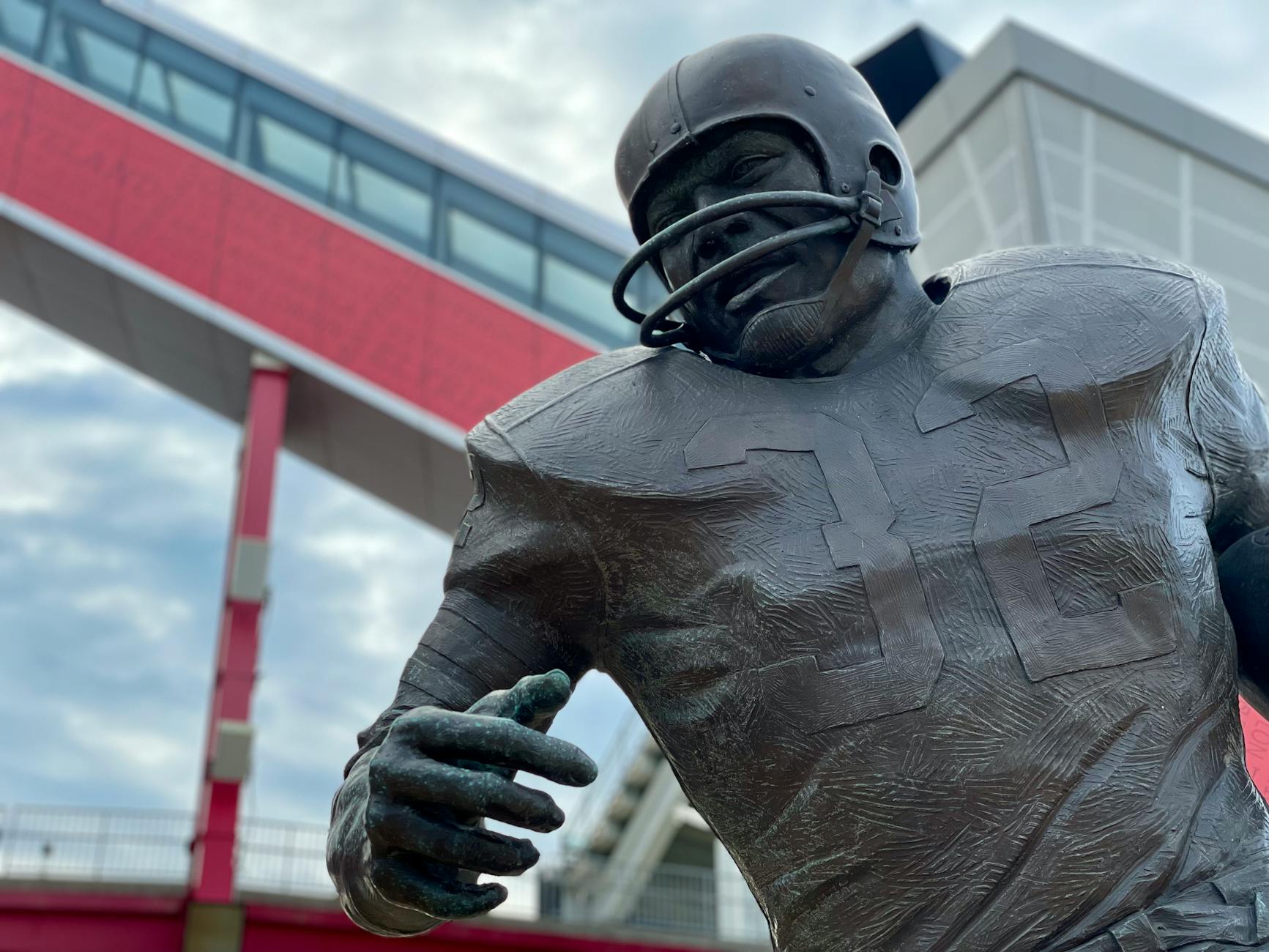
United Trinity (Best, Law, Charlton)
The United Trinity statue by Philip Jackson, unveiled 29 May 2008 (40 years to the day after United’s 1968 European Cup win), stands directly opposite the East Stand. It depicts George Best, Denis Law and Sir Bobby Charlton — the three Manchester United Ballon d’Or winners of the 1960s, who scored 665 goals between them for the club. Most-photographed spot outside any UK football stadium.
Sir Matt Busby statue
The bronze of Sir Matt Busby by Philip Jackson, erected in 1996, stands on the exterior of the East Stand overlooking Sir Matt Busby Way. Busby (1909–1994) was United manager from 1945 to 1969 and again briefly in 1970–71; survived the Munich air disaster (gravely injured); led the rebuilt side to the 1968 European Cup at Wembley.
Sir Alex Ferguson statue
A nine-foot (2.7 metre) bronze, also by Philip Jackson, unveiled on 23 November 2012 outside the Sir Alex Ferguson Stand. Ferguson managed United from 6 November 1986 to 8 May 2013 — 26 years and 194 days, the longest serving manager in the club’s history.
Munich Clock and Tunnel
The Munich Clock on the East Stand exterior has been frozen at the time of the air disaster since 1960. The Munich Tunnel inside the stadium contains a memorial honouring all 23 victims of the 6 February 1958 disaster. Solemn, properly handled, not theatrical.
How to get to Old Trafford
By Metrolink (the best option)
The Wharfside Metrolink stop (Trafford Park line) is the closest — about 5 minutes’ walk to the East Stand. The historic Old Trafford stop (Altrincham line) is about 10 minutes’ walk. Exchange Quay is another option, about 12 minutes’ walk. From central Manchester (St Peter’s Square or Deansgate–Castlefield) it’s a 15–20 minute tram ride.
By train
The historic Manchester United Football Ground railway station (adjacent to the South Stand) has been suspended indefinitely at the club’s request for safety reasons — it is not a current option for tour visitors. Use Manchester Piccadilly or Manchester Oxford Road and connect via tram or bus.
By bus and walking
Bus 250 runs from Manchester Piccadilly Gardens to Sir Matt Busby Way. Walking from Manchester city centre takes about 35–40 minutes via Deansgate Locks and the canal towpath — pleasant on a sunny day. From Salford Quays / MediaCityUK it’s a 10-minute walk across the Detroit Swing Bridge.
Where to park
Non-match days: the club’s free E2 car park (sat-nav M16 0SZ via Wharfside Way West) is the best option. Match days: parking is severely restricted and resident-permit only on surrounding streets; use Park & Ride at Sale Water Park or Trafford Park stations. Q-Park Trafford and the multi-storey at Salford Quays are paid alternatives.
Best time to visit and how long to allow
Tours run every 10–15 minutes from 9.30am to mid-afternoon, Sunday–Thursday, and to 5pm Friday–Saturday. Book a morning slot for the quietest experience; afternoons fill up. Allow 2.5–3 hours total: 70 minutes for the guided tour, plus an hour or so for the museum (which you can do before or after).
If your tour is at 3pm or later, you must visit the museum first — it closes during your tour. The tour starts at the Sir Alex Ferguson Stand reception; arrive 20 minutes early to collect tickets, use lockers (free) and find the start point.
Match day vs non-match day: what to know
Tours don’t run on home match days — full stop. If United are playing at home, the museum is also closed during the match-day window (usually 3 hours before kick-off until 1 hour after). Check the United fixture list at manutd.com before booking your tour date.
If you want to actually attend a match, that’s a separate process — see our Manchester football match tickets guide and match day guide.

Accessibility, family tips and practical FAQs
Accessibility
The standard tour route has 177 steps. A flat-route accessible alternative is available on request — please request when booking, or call the accessible ticketing line on 0161 868 8001. BSL-guided tours are offered periodically. Wheelchair users can access all parts of the tour via the accessible route. Accessible toilets throughout.
Family tips
Under-3s go free. Children should bring favourite shirts to wear (encouraged, photographs essential). Family ticket (£75) is the best value. The museum includes interactive games suitable for ages 5+ (foosball, ball control, virtual penalty shootouts). The Red Café next to the museum entrance serves child-friendly meals.
Photography
Allowed everywhere except the press conference room. No live streaming. No flash photography on certain museum exhibits (the Munich Room asks for respectful behaviour).
Megastore and Red Café: food, drink and souvenirs
The Manchester United Megastore at the East Stand is the largest dedicated football retail space in Europe — open Monday–Saturday 10am–6pm, Sunday 11am–5pm. Replica shirts (with optional shirt printing of any name/number; £15–20 extra), training gear, scarves, souvenirs, books, kids’ kits. The shop is open whether you’re doing a tour or not.
The Red Café next to the museum entrance on the Sir Alex Ferguson Stand serves food and drinks daily 9am–4pm (closed home match days). Burgers, pies, fish & chips, kids’ menus. Family-friendly.
Pair your visit: Salford Quays, IWM North and Emirates Old Trafford
Old Trafford sits at the western edge of the Manchester Ship Canal complex. Within 10–15 minutes’ walk or one tram stop:
- Salford Quays and MediaCityUK — 10 minutes east across the Detroit Swing Bridge. BBC, ITV, Coronation Street Experience, The Lowry.
- Imperial War Museum North — 5 minutes’ walk across the Trafford Wharf footbridge. Free, Libeskind-designed, brilliant.
- Emirates Old Trafford (Lancashire County Cricket Club) — literally next door on Talbot Road (different “Old Trafford” — cricket ground, not the football). Stadium tours of the second-oldest Test ground in England available.
- Etihad Stadium tour — the rival pilgrimage 24–27 minutes away by Metrolink (change at the city centre). Many tourists do both in one day.
FAQ — Old Trafford Stadium Tour
How much is the Old Trafford tour in 2026?
Standard Stadium Tour + Museum: Adult £28 / Child £18 / Family £75. Members get up to 50% off. Take to the Pitch and Legends Tours are premium options at £99+ per person.
How long is the Old Trafford stadium tour?
About 70 minutes guided; allow 2.5–3 hours total with the self-guided museum.
Is the museum included in the Old Trafford tour ticket?
Yes — the standard Stadium Tour + Museum ticket includes both. Some tour times require you to do the museum before the guided tour (it closes during your tour slot).
Can you see the dressing rooms on the Old Trafford tour?
Yes — both the home and away dressing rooms are on the standard tour, kit out as for a match.
What is the Take to the Pitch experience at Old Trafford?
A premium experience that includes the standard tour, then putting boots on, running out the tunnel, a 15-minute coaching session on the actual pitch, and a shot at goal at the Stretford End. Returned for 2026 after a successful 2025 debut.
Is the Old Trafford tour worth it?
Yes — particularly given the new stadium plans. The Theatre of Dreams as we know it is being demolished and rebuilt by 2030–31. If you want to walk the actual 1910 Old Trafford, visit before then.
Where can I park at Old Trafford for a tour?
The club’s free E2 car park (sat-nav M16 0SZ via Wharfside Way West) is the best option for non-match days. Match days: use Park & Ride at Sale Water Park or Trafford Park stations.
What is the best time to do the Old Trafford tour?
Morning slots (9.30–11am) are the quietest. Tours don’t run on home match days. Avoid late-afternoon slots if you want to do the museum before the tour.
Do Old Trafford tours run on match days?
No — tours and museum access are suspended on home match days.
How do I get to Old Trafford by tram?
Metrolink to Wharfside (Trafford Park line, closest at 5 minutes’ walk) or Old Trafford (Altrincham line, 10 minutes’ walk). 15–20 minutes from central Manchester.
Can children go on the Old Trafford tour?
Yes — all ages welcome. Under-3s free. The standard tour is fine for all but the very youngest; family tickets (£75) cover 2 adults + 2 children.
Is Old Trafford being demolished or replaced?
The club announced plans in March 2025 to build a new 100,000-seat stadium (“New Trafford”) adjacent to the current ground, designed by Foster + Partners, targeting opening for the 2030–31 season. The current Old Trafford continues operating through the rest of the decade.
What is the capacity of Old Trafford in 2026?
Approximately 74,244 — the largest club stadium in the United Kingdom, third-largest stadium overall behind Wembley and Twickenham.
Where is the United Trinity statue at Old Trafford?
Directly opposite the East Stand, on Sir Matt Busby Way. Philip Jackson bronze of George Best, Denis Law and Sir Bobby Charlton, unveiled 29 May 2008.
Can I see the trophy room and Munich memorial?
Yes — both are in the Manchester United Museum (Level 3). The Trophy Room contains all the silverware including the 1999 Treble cabinet; the Munich Room is the memorial to the eight Busby Babes who died at Munich in 1958.
Booking your tour: step by step
- Check the United fixture list at manutd.com (tours don’t run on home match days).
- Book at manutd.com/visit-old-trafford/museum-stadium-tours or by phone (0161 676 7770).
- Members log in first for the 50% member discount.
- Choose your tour slot — morning slots are quietest.
- If booking 3pm or later, plan to do the museum before the guided tour.
- Arrive 20 minutes before your tour at the Sir Alex Ferguson Stand reception.
- Use free lockers if needed; allow 2.5–3 hours total.
Plan more of your Manchester visit
The Old Trafford tour pairs naturally with the wider Manchester football and sports cluster. Our Etihad Stadium tour guide covers the rival pilgrimage; our United vs City tour comparison helps you choose between them; our National Football Museum guide covers the city-centre football collection; our match tickets guide covers how to attend an actual game; our match day guide covers everything before, during and after kick-off. For everything, see our Manchester football and sports pillar.