This article contains advertising. Our booking links are routed through a partner that adds commission tracking automatically, so if you book through one we earn a commission from the provider, at no extra cost to you. It never affects what we recommend. Affiliate disclosure
About 200 metres from the front door of the People’s History Museum, on a patch of land now occupied by the Manchester Central convention centre, the British cavalry charged a peaceful crowd of around 60,000 people demanding parliamentary reform. Eighteen died; somewhere between 400 and 700 were injured. The date was 16 August 1819. The event became known as the Peterloo Massacre. It is the single most important moment in the long British argument about who gets to vote, who gets to speak, and what democracy actually means in practice — and Manchester is where it happened. Two centuries later, the museum that tells this story is a converted Edwardian hydraulic pumping station on the River Irwell, free to enter (suggested £10 donation), and holds the world’s largest collection of trade union banners.
This is the 2026 visitor guide to the People’s History Museum: the building, the banners, the Peterloo connection, the radical galleries, the 1926 General Strike centenary exhibition currently running, and how it fits into a wider Manchester museum day. For wider cultural context see our museums and culture pillar.
People’s History Museum at a glance
- Address: Left Bank, Spinningfields, Manchester M3 3ER
- Phone: 0161 838 9190
- Hours: Wednesday–Monday 10am–5pm. Closed Tuesdays.
- Admission: Free; suggested donation £10
- How long: 2–3 hours typical
- Café: Gather café, same hours, card only
- Nearest transport: Manchester Deansgate train station (5 min walk); Manchester Victoria (10 min walk); St Peter’s Square tram (10 min walk)
Manchester’s radical museum — and why it’s the UK’s national museum of democracy
The People’s History Museum was officially designated the UK’s national museum of democracy in 2010. It tells the 200-year story of working people, suffrage, trade unionism, the cooperative movement, the welfare state, and contemporary protest in Britain. It is the only national museum dedicated to this subject, and it is in Manchester because Manchester is where most of this history happened: the world’s first industrial city; the birthplace of the suffragette movement (Emmeline Pankhurst founded the WSPU at her Nelson Street house in 1903); the site of Peterloo; the city where Marx and Engels did the research that produced The Communist Manifesto; the city that hosted the Fifth Pan-African Congress in 1945; the home of the cooperative movement (the Rochdale Pioneers); the city that gave birth to the Manchester Guardian, the Trades Union Congress, and the modern trade union movement.
The museum is funded by Arts Council England and the Greater Manchester Combined Authority, with substantial visitor donations supporting its programming. Its tagline: “We are all together in the fight for a fairer world.”
Where it is and how to visit
The museum sits on Left Bank, on the corner of Bridge Street and Water Street in Spinningfields — the modern legal and financial quarter on the western edge of the city centre. It is directly opposite the Civil Justice Centre (the wedge-shaped glass building). The River Irwell runs along the back of the museum; cross the footbridge for Salford.
Walking: 5 minutes from Deansgate train station; 10 minutes from Manchester Victoria; 10 minutes from St Peter’s Square tram stop. Bus: Multiple Bee Network routes along Deansgate. Driving: No on-site parking; nearest car parks are Q-Park Spinningfields (3 minutes’ walk) and the Great Northern Warehouse car park (8 minutes).
Opening times: Wednesday to Monday 10am–5pm. Closed all day Tuesday. Admission free; the museum suggests a £10 donation (updated upwards from the previous £5 — donations are crucial to keeping the museum free).
The Pump House — the building’s own radical backstory
The museum lives in two connected buildings — an Edwardian hydraulic pumping station built by the Manchester Corporation Hydraulic Power Company in 1909, and a striking modern extension wrapping around it. The Pump House was originally one of three Edwardian hydraulic power stations in Manchester that powered the city’s lifts, cranes and presses with high-pressure water. It is the only one of the three to survive. Grade II listed. Designed by Manchester Corporation’s city architect Henry Price.
The Pump House became a museum in the early 1990s. The dramatic five-storey Cor-ten clad extension by Austin-Smith:Lord opened on 13 February 2010 — the first public building in the UK to be clad in Cor-ten weathering steel. The rusted-orange surface deepens with age. The two buildings together feel right for the subject — Victorian industry and contemporary protest in the same architectural space.
Main Gallery One — radicalism to 1945
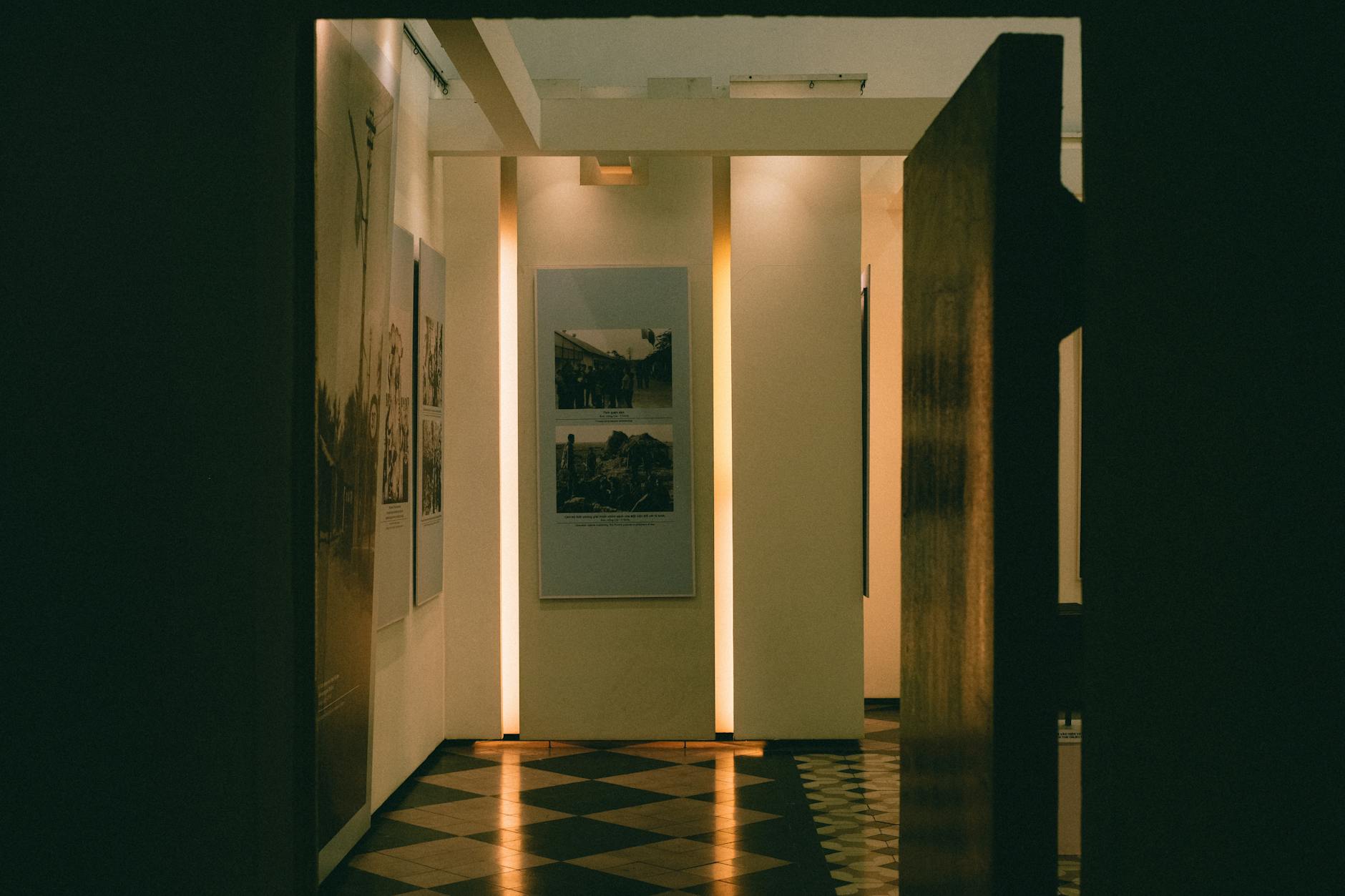
The first floor of the museum tells the story from the late 18th century to the end of WWII. The narrative threads through:
The Peterloo Massacre
St Peter’s Field, 16 August 1819 — about 60,000 people had gathered to hear Henry “Orator” Hunt speak in favour of parliamentary reform. The Manchester magistrates, panicked, sent in the Manchester and Salford Yeomanry (a part-time cavalry regiment) to arrest Hunt. The crowd’s response was misread as resistance; the Yeomanry charged with sabres drawn; reinforcements arrived. 18 dead (including a two-year-old child); estimates of injured range from 400 to 700. The name “Peterloo” was coined by the Manchester Observer days later, fusing “St Peter’s Field” with “Waterloo” four years earlier.
The museum holds documents, prints, and personal items from the massacre — including campaign banners, the famous “Reform” engraving, and witness depositions. The story is told without sentiment but with proper weight. 200 metres from where you’re standing, on the site now occupied by Manchester Central convention centre, the massacre happened. Look for the Jeremy Deller and Caruso St John memorial outside Manchester Central — 11 concentric stone steps with the victims’ names engraved, unveiled in 2019 for the 200th anniversary.
The Chartists
The 1838 People’s Charter laid out the six demands that became the framework for British democratic reform: universal male suffrage, secret ballots, no property requirement for MPs, payment of MPs, equal-sized constituencies, annual general elections. Five of the six were eventually achieved; the sixth (annual elections) has never been. The Chartist petitions and banners are central to the gallery.
The Suffragettes
Manchester’s most iconic political movement. Emmeline Pankhurst founded the Women’s Social and Political Union (WSPU) at her family home on Nelson Street on 10 October 1903. The museum holds Manchester suffragette banners (one major banner was acquired in 2017), Pankhurst documents, hunger-strike memorabilia, and material from the broader suffrage movement. The Pankhurst Centre on Nelson Street (separate institution, free, limited opening; see our free museums guide) is the companion site.
Trade unionism, the cooperative movement, 1945
The 19th-century rise of trade unionism is the connective tissue running through this gallery. The Rochdale Pioneers founded the modern cooperative movement in 1844, ten miles north of here. The post-WWII chapter culminates in the founding of the NHS in 1948 — with original documents on display, including the architectural drawings of Aneurin Bevan’s plan.
Main Gallery Two — 1945 to now
The upper floor takes the story from 1945 to the present. Threads include:
- The post-war welfare state — NHS founding documents, council-housing campaigns, public-services ephemera.
- Women’s liberation — the 1970 Equal Pay Act, abortion rights, the 1979 Ford Dagenham strike, contemporary feminist protest.
- LGBT+ rights — Section 28, AIDS activism, Pride campaigns, marriage equality.
- Anti-racism — Rock Against Racism, the Stephen Lawrence campaign, Black Lives Matter Manchester (a 2020 photograph by Jake Hardy is currently in the Collection Spotlight case).
- Industrial disputes — the 1972 miners’ strike, the 1984–85 miners’ strike, the 1986 Wapping printing dispute.
- Contemporary protest — Extinction Rebellion leaflets, climate-strike placards, anti-austerity campaign material.
- Michael Foot’s donkey jacket — the heavy navy donkey jacket Foot wore to the Remembrance Day ceremony at the Cenotaph in 1981, which prompted a Conservative pile-on for “inappropriate dress” and became a touchstone of British class politics. Catalogue number NMLH.2004.8. On permanent display.
The banner collection — world’s largest
The museum holds the world’s largest collection of trade union and political banners — over 400 in the collection, with around 70 on display at any time on rotation. The collection ranges from the 1821 Tin Plate Workers Society banner (the oldest surviving trade union banner anywhere in the world) to contemporary 2020s climate-strike banners. The banners are extraordinary objects in their own right — hand-painted on silk and cotton, often double-sided, often massive (some are 4 metres tall), with the iconography of mid-19th-century radical politics: clasped hands, beehives (a symbol of cooperative labour), allegorical figures, factory chimneys, breaking chains.
The collection also includes 2,000+ election and political posters, 300+ political cartoons, 7,000+ trade union badges and tokens, and 95,000+ photographs. Roughly 1,500 objects are on display across four floors at any time.
The Textile Conservation Studio — watch the work happen
One of the most distinctive features of the museum is the Textile Conservation Studio visible from Main Gallery Two. It is a working conservation lab where the museum’s banner collection is cleaned, stabilised, and prepared for display. You can watch conservators at work through a glass wall — properly absorbing if you catch them mid-conservation. The studio is one of only a handful of specialist banner-conservation operations in the world.
Current and rotating exhibitions in 2026
The museum runs two or three substantial temporary exhibitions at any time, almost always free, in dedicated galleries on the ground floor and the top floor.
On The Line: 100 years of strikes & solidarity
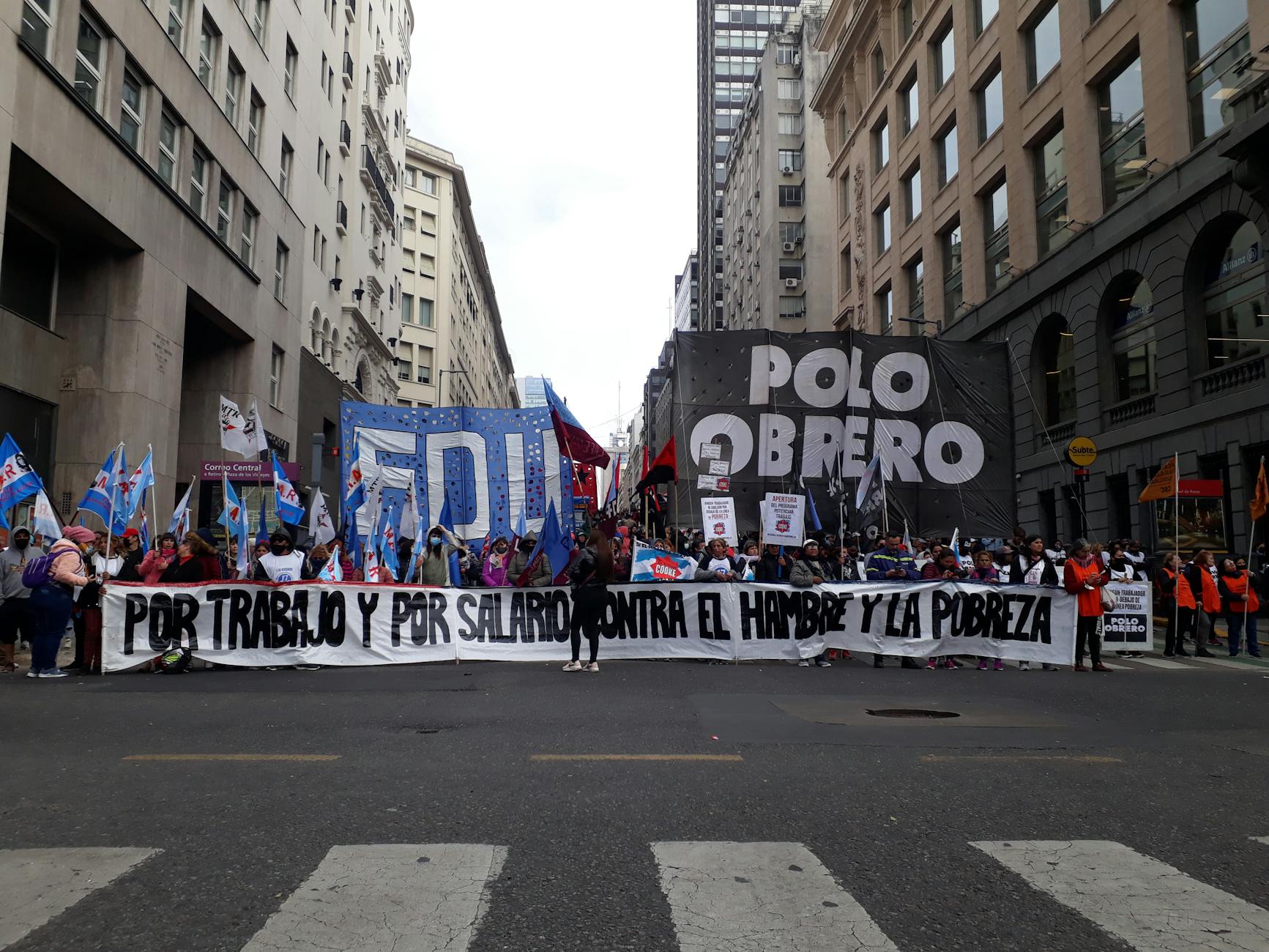
21 March – 2 November 2026. The centenary of the 1926 General Strike, the nine-day national strike in May 1926 in support of the miners that involved an estimated 1.7 million workers. The exhibition pairs 1926 material with the major strikes of the past century — 1972 and 1984 miners, the 1978–79 Winter of Discontent, Wapping 1986, the junior doctors’ strikes of 2016 and 2023–24, the RMT rail strikes 2022–24. Free entry.
Re/Assemble
17 January 2026 – 3 January 2027. Inspired by the 1988 anti-Section 28 protests in Manchester (which saw 25,000 march through the city centre — at the time the largest LGBT-rights protest the UK had ever seen), this exhibition explores LGBTQ+ activism in Manchester from Section 28 to the present.
2026 Banner Exhibition
17 January 2026 – 3 January 2027. The annual rotation of banners on display, with newly conserved pieces from the collection.
Radical Lates and Radical Roam
The museum runs Radical Lates (monthly evening events with talks, music, performances) and Radical Roam (after-hours self-guided tours). Check phm.org.uk/whats-on for current dates.
Peterloo deep-dive — and the walk you can do
Peterloo took place at St Peter’s Field, which is now the site of the Manchester Central convention centre on Windmill Street, a 10-minute walk south of the museum. There is a blue plaque on the Manchester Central building marking the spot.
The Peterloo Memorial by Jeremy Deller with architects Caruso St John, unveiled on 16 August 2019 for the 200th anniversary, stands directly outside Manchester Central on Windmill Street. It takes the form of 11 concentric stone steps rising to a small platform, with the names of the 18 confirmed dead engraved at intervals. Deller’s idea: a non-monumental monument — visitors stand on the names rather than looking up at them, the deaths physically underfoot rather than abstracted.
The walk: leave the museum, head south down Quay Street and onto Mosley Street, turn right at St Peter’s Square, walk past the Town Hall and the Central Library, and you’ll find the memorial on Windmill Street outside Manchester Central. 10–12 minutes; properly worth doing.
Gather café and the PHM shop
The Gather café on the ground floor is named for the connotation of “assembly” — gathering, meeting, organising. Same opening hours as the museum (Wednesday–Monday 10am–5pm). Brunch, lunch and snack menus; coffee; cake. Card payment only — no cash. Reservations not required.
The PHM Shop is one of the best museum shops in Manchester — politically curated, with independent books on labour history and contemporary politics, lefty t-shirts, postcards, suffragette and trade-union themed gifts, and fair-trade clothing under the museum’s “Fairly made, fairly paid” tagline. The PHM shop also has its own URL — shop.phm.org.uk — for mail order.
Combine with nearby
The museum sits 5–10 minutes from most central Manchester cultural sites:
- Science and Industry Museum — 7 minutes south in Castlefield, free.
- John Rylands Library — 7 minutes east on Deansgate, free.
- Manchester Cathedral and Chetham’s Library — 15 minutes north.
- Manchester Art Gallery — 10 minutes east on Mosley Street, free.
- Peterloo Memorial — 10 minutes south on Windmill Street.
- Spinningfields — directly outside; restaurants, bars, the Avenue.
Visitor numbers and significance
The museum welcomes more than 100,000 visitors a year. It punches well above its size in terms of cultural and political conversation — the museum’s exhibitions are frequently covered nationally (the Section 28 anniversary exhibition; the General Strike centenary; the contemporary response to the rise of populism); the banner collection is studied internationally by labour historians; the museum is a regular host venue for academic conferences on democratic history.
FAQ — People’s History Museum
Is the People’s History Museum free?
Yes — free entry, suggested donation £10. Donations are crucial to keeping the museum free; please contribute what you can.
What is the People’s History Museum?
The UK’s national museum of democracy. Tells the story of working people, suffrage, trade unionism, the cooperative movement, the welfare state, and contemporary protest in Britain over 200+ years.
What are the opening times?
Wednesday to Monday 10am–5pm. Closed Tuesdays. Museum, shop and Gather café all share these hours.
Where is the People’s History Museum?
Left Bank, Spinningfields, Manchester M3 3ER. On the corner of Bridge Street and Water Street, opposite the Civil Justice Centre, on the River Irwell.
What is there to see?
400+ trade union and political banners (world’s largest collection), Peterloo material, Chartist artefacts, suffragette banners, NHS founding documents, Michael Foot’s donkey jacket, contemporary protest material, the Textile Conservation Studio visible through a glass wall.
What was the Peterloo Massacre?
On 16 August 1819, British cavalry charged a peaceful crowd of around 60,000 people gathered at St Peter’s Field, Manchester, to demand parliamentary reform. 18 died; 400–700 were injured. The event was a turning point in the long British argument about democracy.
Where is the Peterloo memorial?
Outside Manchester Central convention centre on Windmill Street — the site of the former St Peter’s Field. The memorial is by Jeremy Deller and Caruso St John, unveiled in 2019: 11 concentric stone steps with the names of the 18 dead.
How long do you need?
2–3 hours typical. Half a day if you visit the temporary exhibitions and add the Peterloo Memorial walk.
Is there a café?
Yes — Gather café, ground floor, same hours as the museum. Card payment only, no cash.
Can you see the banners being conserved?
Yes — the Textile Conservation Studio is visible through a glass wall in Main Gallery Two. You can watch conservators at work on the banner collection.
Is the museum suitable for children?
Yes — families welcome. The museum runs regular family activities including Strike Den, Banner Bingo, Look For A Book, and Fabric of Protest workshops. Some content (graphic protest imagery, contemporary political material) may be more suitable for older children.
Why is it called the People’s History Museum?
Because the subject is the history of ordinary working people, not the history of monarchs and generals. The framing is deliberate — it tells history “from below”, through the perspectives of those who organised, protested, voted and worked for change.
Plan more of your Manchester visit
The People’s History Museum combines naturally with a wider Manchester museum day. Our free museums in Manchester guide covers the full free list; our Science and Industry Museum guide covers the Castlefield neighbour; our art galleries guide covers Manchester Art Gallery and the Whitworth; our Chetham’s Library guide covers the medieval library Marx and Engels worked in. For everything, see our museums and culture pillar.