
This article contains advertising. Our booking links are routed through a partner that adds commission tracking automatically, so if you book through one we earn a commission from the provider, at no extra cost to you. It never affects what we recommend. Affiliate disclosure
London to Manchester is one of the busiest domestic journeys in Britain, and also one of the easiest to get badly wrong — the difference between a booking made six weeks out and one made on the morning of travel can be over a hundred pounds for exactly the same seat on exactly the same train. This guide compares every way of making the trip, with realistic 2026 costs and times, and says plainly which option suits which traveller.
The headline: the train is right for almost everybody, it takes a little over two hours, and the only question that really matters is when you book it. Everything else in this guide is about the cases where the train is not the answer.
The Short Answer
| Method | Time | Typical cost | Best for |
|---|---|---|---|
| Train (Avanti West Coast) | 2hr 06–2hr 45 | £25–£90 advance | Almost everyone |
| Train (slower operators) | 3hr 15–4hr | £20–£45 | Flexible travellers on a budget |
| Coach | 4hr 30–6hr | £10–£25 | The cheapest option, by a distance |
| Car | 4hr–5hr | £45–£70 in fuel and tolls | Groups of three or more, or luggage-heavy trips |
| Plane | 1hr 10 in the air, 4hr+ door to door | £40–£150 | Almost nobody |
Manchester is 200 miles north-west of London. That is the number to hold in your head, because it explains everything below — it is far enough that the coach is a genuine commitment of a day, and close enough that flying makes no sense at all.
By Train: The Default Choice
The West Coast Main Line runs from London Euston to Manchester Piccadilly, and it is the reason most people never consider anything else.
Times and frequency
Fast Avanti West Coast services take a little over two hours, with the quickest scheduled at around 2 hours 6 minutes and most running between 2 hours 10 and 2 hours 30. Some services take up to about 2 hours 45 depending on stops. There are typically around three fast trains an hour through the day, with the first departures from about 06:00 and the last back to London leaving Manchester in the evening — check the specific date, as Sunday engineering work regularly extends journeys and occasionally reroutes them.
Slower and cheaper services also run, generally via Crewe or Stoke, and take three and a quarter to four hours. They exist for a reason: the fare difference can be substantial and the trains are often much emptier.

Which station
Manchester Piccadilly is where the London trains arrive, and it is the right station for almost everything — a ten-minute walk to the Northern Quarter, twelve to Piccadilly Gardens, fifteen to the Gay Village, with the Metrolink running from the undercroft to Deansgate, Salford Quays, Old Trafford, the Etihad Campus and the airport.
Manchester Victoria serves the north and east and is where you want to be for the AO Arena and the cathedral quarter, but London trains do not go there. Oxford Road and Deansgate are small city-centre stations useful for local hops.
Fares, and how to pay a lot less
This is the part worth reading twice, because the spread on this route is extraordinary. A walk-up Anytime single can run well past £150. An Advance single on the same train booked in good time can be a fraction of that. Off-peak returns sit in the middle.
- Book as early as you can. Advance tickets are released roughly twelve weeks ahead and the cheapest allocations go first. Six weeks out is good; the day before is not.
- Travel off-peak. Mid-morning, early afternoon and later evening departures are consistently cheaper than the 07:00–09:00 and 16:00–19:00 windows.
- Get a Railcard if you qualify. A third off, for £30 a year — 16–25, 26–30, Two Together, Family & Friends, Senior and Veterans cards all apply. On this route a single return can pay for the card.
- Consider split ticketing. Splitting at Crewe, Stoke or Stafford is often cheaper than a through ticket for the identical journey on the identical train. Several apps do this automatically.
- Two singles, not a return. On most journeys now this is either the same price or cheaper, and it gives you more flexibility.
- GroupSave gives roughly a third off for three to nine people travelling together off-peak, which is worth checking before four of you book separately.
- Advance tickets are train-specific. Miss it and the ticket is void — you buy a new one at the walk-up rate. Build in a margin at Euston, which is a stressful station at the best of times.
Standard, Standard Premium or First?
First Class on this route usually includes a seat with more space and, on many services, food and drink. On a Friday evening at full price it is hard to justify; booked in advance, the gap is sometimes twenty or thirty pounds, and for a two-hour journey with work to do it can be reasonable value. The honest verdict: if you are travelling for pleasure with a bag, Standard is entirely comfortable and the money is better spent on dinner when you arrive.
Reserve a seat whichever class you pick. This route runs full on Friday evenings and Sunday afternoons, and standing from Euston to Stoke is a genuinely poor start to a weekend.
By Coach: The Cheap Option
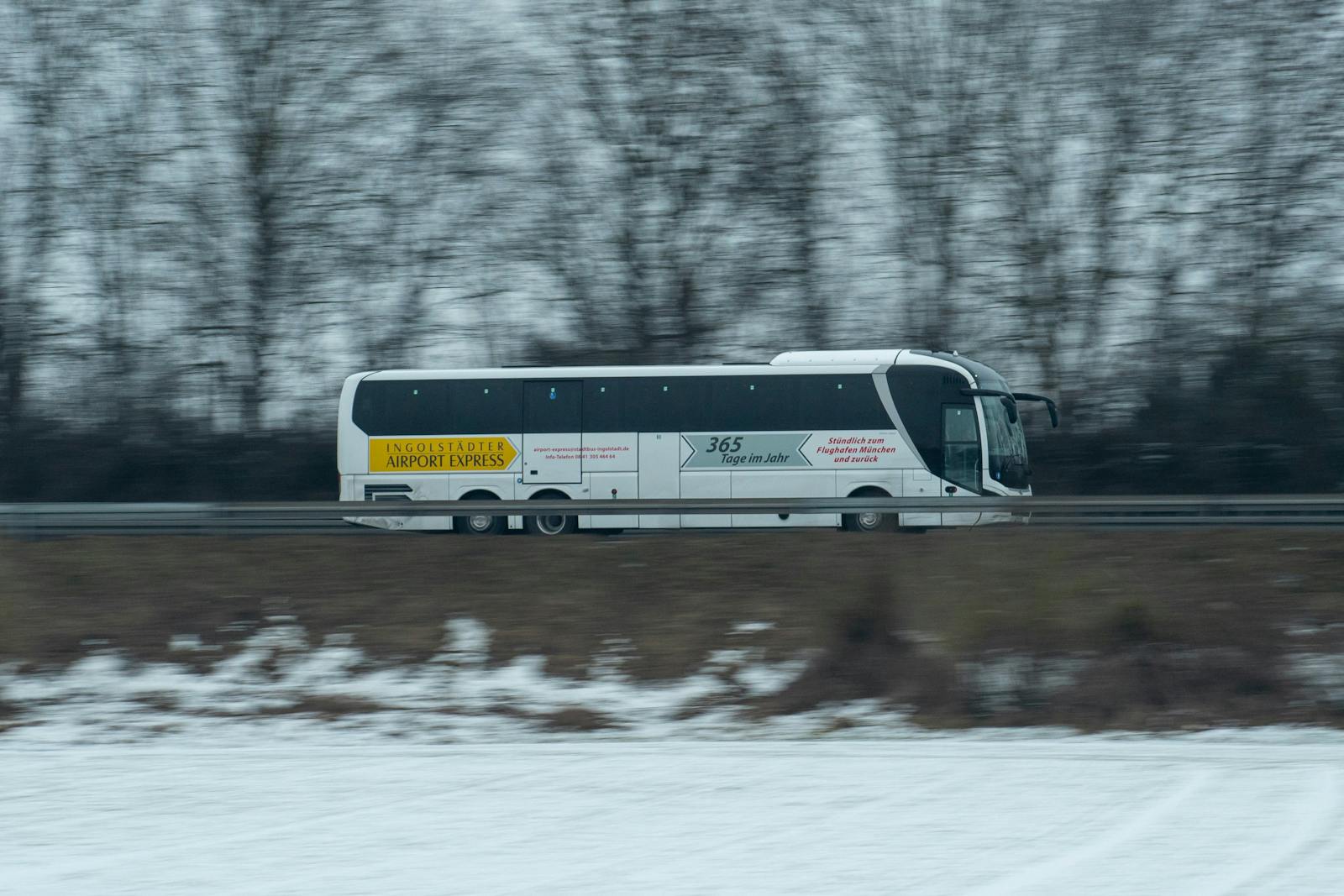
National Express and Megabus both run the route frequently — National Express offers well over twenty services a day, from early morning through to late evening. Fares start around £10 one way and can be found lower still on Megabus if you book far enough ahead; realistic booked-in-advance prices are £10–£25.
Journey times are the trade-off: roughly four and a half hours at best, five to six hours on most services, and longer when the M6 misbehaves — which it does. Coaches arrive at Chorlton Street Coach Station, which is centrally located a few minutes from Piccadilly.
The honest verdict: for a student, a solo traveller on a tight budget, or an overnight service that saves you a hotel night, the coach is genuinely good value and the modern vehicles are more comfortable than their reputation. For anyone whose time has a meaningful value, saving £30 by spending an extra three hours each way is a poor trade — that is six hours of your weekend for the price of two rounds of drinks.
By Car

The standard route is the M1 to the M6, or the M40 and M6 from west London, at around 200 miles and a scheduled four hours. Add an hour for a Friday afternoon, and be aware that the M6 around Birmingham is one of the least reliable stretches of motorway in the country. The M6 Toll bypasses the worst of it for a fee and is usually worth it northbound on a busy day.
The arithmetic changes with the number of people. Fuel and tolls come to roughly £45–£70 each way in a normal car. For one person, that is worse than an advance train ticket. For three or four people travelling together it is comfortably the cheapest option, and for a family with a car full of luggage it is the only sane one.
The catch is what happens when you arrive. Manchester city centre is not a place you want a car — parking runs to £15–£30 a day, the one-way system is unforgiving, and everything worth doing is walkable. If you drive, factor the parking into the comparison and read our driving and parking guide before you book a hotel without a car park.
By Plane: Don’t

Flights operate from Heathrow to Manchester and the flying time is a little over an hour. The door-to-door reality is different: getting to the airport, being there ninety minutes early, an hour in the air, then twenty minutes from Manchester Airport to Piccadilly by train. Four hours at best, with more moving parts and more ways to go wrong, usually for more money than the train and considerably more carbon.
There is exactly one case where it makes sense: you are connecting from a long-haul flight arriving at Heathrow and staying airside, in which case a connecting flight is genuinely simpler than dragging luggage across London to Euston. Otherwise, take the train. Our airport to city centre guide covers that last leg if you do fly.
What Happened to HS2?
The northern leg of HS2, which would have run to Manchester, was cancelled in October 2023. What remains under construction runs from London to Birmingham. There is no high-speed line to Manchester, there is no date for one, and any article promising you a one-hour journey is describing a plan that no longer exists.
The practical effect for a visitor is simply that the West Coast Main Line remains what it is — a good, busy, occasionally disrupted Victorian route with modern trains on it. Two hours and a bit is the number, and it is not going to change soon.
Breaking the Journey
Because the West Coast Main Line threads through the middle of England, London to Manchester passes within reach of a lot of places worth an afternoon, and an Advance ticket that includes a break of journey is often barely more expensive than the direct one.
| Stop | From Euston | On to Manchester | Worth it for |
|---|---|---|---|
| Milton Keynes | 35 mins | 1hr 45 | Bletchley Park, if you time it |
| Rugby | 50 mins | 1hr 30 | Very little, honestly |
| Stoke-on-Trent | 1hr 25 | 40 mins | The Potteries and Wedgwood |
| Crewe | 1hr 35 | 35 mins | Changing trains, and not much else |
| Stafford | 1hr 20 | 50 mins | A split-ticketing point |
The honest verdict: this is a good idea in theory and rarely a good one in practice on a short trip. Two hours is short enough that breaking it costs you more time than the stop is worth, unless you have a genuine reason to be in one of those places. Where it does earn its keep is the reverse — using Manchester as the base and taking day trips out from it, which the city is unusually well placed for. See day trips from Manchester.
Cost Comparison, Realistically
For one adult, one way, in 2026.
| Booked 6+ weeks out | Booked a week out | Booked on the day | |
|---|---|---|---|
| Fast train | £25–£45 | £50–£90 | £150+ |
| Slower train | £20–£35 | £35–£60 | £90+ |
| Coach | £10–£15 | £15–£25 | £25–£45 |
| Car (fuel and tolls, one car) | £45–£70 | £45–£70 | £45–£70 |
| Flight | £40–£90 | £90–£150 | £150+ |
The pattern is the point. Only the car costs the same whenever you book it; everything else punishes lateness, and the train punishes it hardest. If your dates are fixed, book the train the moment you know them.
Which Should You Take?
- Travelling alone, dates known in advance: fast train, booked early. Nothing else comes close on time-versus-cost.
- Travelling alone on a genuine budget: coach, or a slower train if you can find an Advance fare. The slower train is the better of the two if the price is within about a tenner.
- A couple: train, and check GroupSave and Two Together Railcard before booking.
- Three or four people: run the numbers on driving. It usually wins on cost, and loses on the parking and the stress once you arrive.
- Family with children and luggage: car if you have one, train if you do not — the walk from Piccadilly into the centre is short and mostly flat.
- Arriving from a long-haul flight into Heathrow: a connecting flight, or the train from Euston if you have the energy.
- Same-day return for a meeting: the first fast train up and an evening one back is a comfortable day, and the walk from Piccadilly puts most of the business district within fifteen minutes.
Arriving, and What to Do First

Piccadilly puts you at the eastern edge of the city centre. The Metrolink runs from the station’s own stop, buses leave from outside, and the free city-centre bus service loops the main streets. Nothing in the centre is more than about twenty-five minutes’ walk away.
If it is your first visit, our first-time visitor guide is the place to start, and the one-day itinerary or weekend itinerary will structure a short trip. For the transport network once you are here, see getting around Manchester and transport passes and tickets — Bee Network contactless capping means you rarely need to buy a paper ticket at all.
For where to sleep, where to stay in Manchester breaks the centre down by neighbourhood, and city centre hotels covers the walkable options near Piccadilly.
Practicalities: Luggage, Bikes, Dogs and Access
- Luggage. There is no weight limit on the train and no check-in. Racks at the carriage ends fill quickly on busy services, so board early with a large case or be prepared to keep it with you. The coach has a hold, usually with a two-bag limit — check before you travel with more.
- Bikes. Full-size bikes need a free reservation on Avanti services and spaces are genuinely limited, often only a handful per train. Book it at the same time as the ticket, not afterwards. Folding bikes travel free with no reservation.
- Dogs. Travel free on trains, up to two per passenger, and are welcome on the Metrolink once you arrive. Coaches take assistance dogs only.
- Accessibility. Passenger Assist should be booked at least two hours ahead, though more notice is better; both Euston and Piccadilly are step-free with staffed assistance. Piccadilly’s platforms are level-access and the Metrolink stop within the station is step-free.
- Wi-Fi and power. Standard on the fast trains, patchy through the Trent Valley. Do not plan a video call for the middle of the journey.
- Food. There is a shop on board, and it is expensive. Euston’s concourse has better and cheaper options, and you have time to use them if you arrive twenty minutes early rather than five.
Going the Other Way
Manchester to London works identically in reverse, with two differences worth knowing.
The first is that the peak restriction bites at a different time. Morning departures from Manchester between roughly 06:00 and 09:00 carry the commuter premium; if you are heading south for an afternoon meeting, a mid-morning train is dramatically cheaper than an 07:30 one. The second is that Sunday evening southbound is the single busiest window of the week on this line, and it is the one time reserving a seat moves from advisable to essential.
Piccadilly is an easier station to depart from than Euston is: fewer people, a clearer concourse, and platforms announced with more notice. Twenty minutes is comfortable. At Euston, allow thirty.
Can You Do It as a Day Trip?
From London, yes — comfortably, if you are efficient about it. The first fast trains leave Euston from around 06:00 and put you in Manchester before 09:00; the last services back leave in the evening, giving you a working day of roughly ten hours in the city. That is enough for a stadium tour and a museum, or a full day of meetings, or a matinee and dinner.
It is not enough to see Manchester properly, and it is an expensive way to travel — day-return fares on peak trains are the worst value on the whole route. If the trip is discretionary rather than a fixed appointment, one night in the city costs less than the fare difference between a peak day return and two off-peak singles, and turns a rushed day into an actual visit. Our one-day itinerary is built for exactly this, and the trip cost guide has the arithmetic.

Frequently Asked Questions
How long does the train from London to Manchester take?
The fastest scheduled services run around 2 hours 6 minutes, with most between 2 hours 10 and 2 hours 45 depending on stops. Slower routes via Crewe or Stoke take three and a quarter to four hours.
How far is Manchester from London?
About 200 miles by road, north-west of London, and roughly the same by rail on the West Coast Main Line.
What is the cheapest way to get from London to Manchester?
The coach, at £10–£25 booked ahead, for a journey of four and a half to six hours. If you can book six weeks out, a slower train at £20–£35 is better value for the time saved.
Which London station do trains to Manchester leave from?
London Euston, for the fast Avanti West Coast services to Manchester Piccadilly. Some slower services also run from Euston via Crewe.
Is it worth flying from London to Manchester?
Almost never. An hour in the air becomes four hours door to door, usually costs more than the train and produces far more carbon. The one exception is connecting airside from a long-haul arrival at Heathrow.
Can I use a Railcard on this route?
Yes. Most national Railcards give a third off, including on Advance fares, and on a route this expensive a single return often covers the £30 cost of the card.
Do I need to book a seat?
Strongly recommended, and usually free. Friday evenings and Sunday afternoons run full in both directions.
Is the train ever disrupted?
The West Coast Main Line has regular weekend engineering work, particularly on Sundays, which can add an hour or reroute services. Check your specific date before booking anything time-critical at the other end.
Planning the Rest of Your Trip
- Getting to Manchester by Train — every route into the city, not just London.
- Manchester Travel Guide — the complete overview.
- First-Time Visitor Guide — what to know before you arrive.
- Getting Around Manchester — trams, buses and walking.
- Where to Stay in Manchester — neighbourhood by neighbourhood.
- Manchester Weekend Itinerary — a ready-made two-day plan.
- Manchester Trip Cost Guide — what the whole trip comes to.
- Driving & Parking in Manchester — if you decide to bring the car.
- Best Time to Visit Manchester — when to book for.