This article contains advertising. Our booking links are routed through a partner that adds commission tracking automatically, so if you book through one we earn a commission from the provider, at no extra cost to you. It never affects what we recommend. Affiliate disclosure
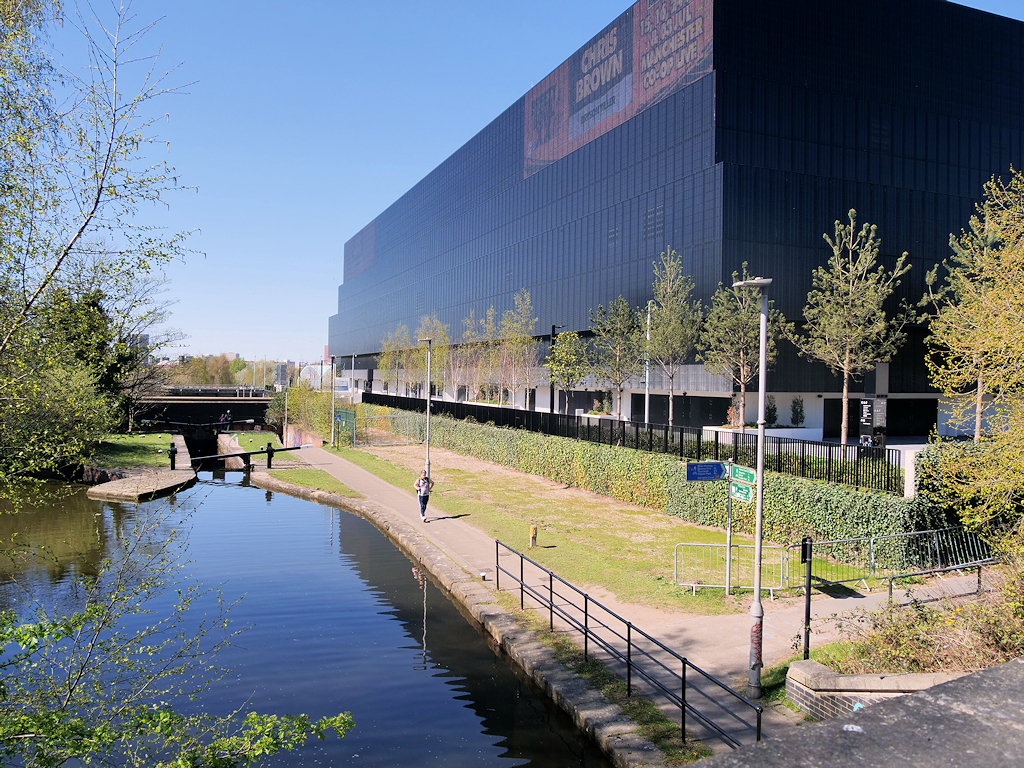
Co-op Live is the biggest indoor arena in the United Kingdom, it holds 23,500 people, and it is not where you probably think it is. This guide covers the seating plan and which blocks are actually worth paying for, how to get to the Etihad Campus and — more importantly — how to get home afterwards, the bag and cashless rules that catch people out at the door, and where to eat and drink before a show in a part of Manchester that has very little of either.
If you have been to a gig in Manchester before, almost certainly you went to the AO Arena by Victoria Station in the city centre. Co-op Live is a different venue in a different place, roughly two and a half miles east, and the habits you have built up over years of arriving twenty minutes before doors and walking home afterwards do not transfer. Read the transport section before you book anything else.
What Co-op Live Actually Is
Co-op Live opened in 2024 after one of the most publicly troubled arena launches in recent British history, with a string of postponed opening shows and a great deal of coverage that was not about the music. That is worth mentioning because people still ask, and worth putting behind us because it has been operating normally for a long time now — it took the bulk of the biggest touring shows coming to the north of England through 2025 and 2026.
It is run by Oak View Group in partnership with City Football Group, which is why it sits on the Etihad Campus rather than in the city centre. The design brief was intimacy at scale: a steep bowl that pulls the lower tier in close, with the front rows around 23 metres from the stage, rather than the wide shallow bowl of an older arena. In practice this works. The sound is markedly better than the AO Arena and the sightlines from the lower tier are among the best of any large venue in the country.

Where It Is, and Why That Matters
The address is 1 Sportcity Way, Etihad Campus, Manchester M11 3DL — east Manchester, next door to Manchester City’s stadium, about two and a half miles from Piccadilly. It is not walkable from the city centre in any sense you would enjoy at 11pm in November, and the immediate area is a sports campus rather than a neighbourhood: there are no pubs across the road, no row of restaurants, and very little shelter.
This is the single biggest practical difference from the AO Arena, where you can leave the venue and be in a bar within four minutes. At Co-op Live, the plan for before and after the show has to be made deliberately.

The Seating Plan Explained
The bowl is arranged in the standard three-part way, and the block numbering is logical once you know the pattern.
| Area | What it is | Best for |
|---|---|---|
| Floor / standing | Flat floor in front of the stage | Being close; not for short people or anyone who wants to sit |
| Floor seated | Tiered rows on the floor for seated shows | Comedy, theatre-style shows, anyone who wants a guaranteed view |
| Lower tier | First raised ring around the bowl | The best all-round seats in the building |
| Upper tier | The top ring | Budget tickets and a full view of the production |
| Boxes and premium | Suites and club seats around the sides | Comfort and a bar; not the best sightlines |
Where to sit: the honest verdict
- Lower tier, side-on to the stage, first ten rows. The best seats in the arena and usually not the most expensive. You are elevated enough to see over the floor crowd, close enough to see faces, and you have a seat.
- Standing, if you want to be in it. The floor is the whole point for a rock or pop show. Be aware that a flat floor means that if you are under about 5’6″ and arrive late, you will spend the evening watching a screen.
- Upper tier, central. Genuinely fine. The bowl is steep, the screens are large, and the sound at the back is better here than in most arenas. If the choice is upper-tier central or lower-tier behind the stage, take the upper tier every time.
- Avoid: anything sold as restricted view or behind the stage. For a big production with a rear screen this can be tolerable; for most shows you are looking at the back of the stage rig and it is not worth the saving.
- Avoid: the very front row of the floor for a tall-stage show. Counterintuitive, but at a venue this size the front row often means looking almost straight up.

One caution that applies to every arena and to this one especially: the layout changes per show. An end-stage rock gig, a centre-stage boxing bill and a theatre-in-the-round set use different configurations, and a block that is excellent for one is poor for another. Always look at the seating map for your specific event rather than a generic one.
Getting There
| Method | Time from city centre | Cost | Verdict |
|---|---|---|---|
| Metrolink to Etihad Campus | 12–15 mins from Piccadilly | Tram fare, capped | The right answer for almost everyone |
| Walk from Piccadilly | 45–50 mins | Free | Fine in daylight, grim after a show |
| Bus | 25–35 mins | £2.00 single | Workable; slower than the tram |
| Taxi or ride-hail | 15 mins in, 45+ out | £10–£15 in, surge out | Good inbound, poor outbound |
| Drive and park | — | £25–£35 pre-booked | Only if you pre-book |
| Park & Ride on the Ashton line | — | Tram fare | The smart driver’s option |
Tram — the default
The Metrolink Ashton-under-Lyne line stops at Etihad Campus, directly adjacent to the arena, with trams roughly every six or seven minutes. From Piccadilly it is a short hop. Contactless capping means a night of tram travel will not run away from you — all-zones caps at around £7.10 anytime or £4.90 off-peak, on the same card in both directions. Our Metrolink guide explains the zones and the tap-in rules, and transport passes and tickets covers the caps in detail.

Some events include tram travel within the city zone in the ticket price for a window before and after the show. This is not universal, so check your booking confirmation rather than assuming it.
Driving and parking
Official parking must be pre-booked through the venue and runs roughly £25 for standard and £35 for express, with the car parks opening about four hours before the show and sitting within a couple of minutes’ walk of the entrance. Turning up on spec is not a plan — the campus goes to permit-holders and residents’ schemes on event nights, and the surrounding streets are heavily restricted.
The better move for anyone driving in from outside the city is Park & Ride on the Ashton line — Ashton Moss, Ashton West and Ladywell all have sizeable car parks and put you on a direct tram to the door. You avoid both the parking fee and the post-show queue to get out of a car park with twenty thousand other people.
Getting Home Afterwards
This is the part that determines whether you enjoy the night, and it deserves its own section.
Twenty-three thousand people leave a building at the same moment onto a tram platform. It works — Metrolink runs extra trams and the queue moves — but the honest expectation is twenty to forty minutes from leaving your seat to being on a tram, longer for a sell-out.
- Leave three songs early and you will be home before the encore finishes. Whether that trade is worth it is a personal matter, but it genuinely works.
- Or wait twenty minutes deliberately. Stay in your seat, let the crush go, and walk out into a much shorter queue. This is the better option.
- Ride-hailing after a show is expensive and slow. Surge pricing on the Etihad Campus after a sell-out is severe, and the pick-up points are congested. Our taxis and ride-hailing guide has the realistic picture.
- Walking to the city centre takes about 45 minutes along the Ashton Canal or the main road. In a group in summer it is not unpleasant. Alone in January it is not the plan.
- Check the last tram if you are staying outside the centre. Shows finishing at 22:45 are fine; anything running late is worth planning around.
Before You Go: The Rules
Co-op Live enforces its entry policies more strictly than older venues, and being turned back at the door with a rucksack is a miserable way to start an evening.
- One bag per person, no larger than A4. Backpacks, travel cases, laptop bags and large totes are refused. This is the rule people fall foul of most.
- Bag storage exists but costs money — from around £15, in the Official Orange Car Park on the campus. Fine as a fallback, not as a plan.
- The venue is cashless. Contactless card, Apple Pay or Google Pay. There is nowhere to spend notes and no cash machine that will save you.
- Doors typically open 90 to 120 minutes before the advertised start time. The advertised time is when the doors open, not when the headliner appears — support acts usually put the main set somewhere between 21:00 and 21:30.
- Tickets are usually mobile-only and tied to the purchasing account. Screenshots frequently do not work. Charge your phone.
- Accessible bookings go through the venue’s own access team rather than the general on-sale, and should be arranged well ahead.
Accessibility
Co-op Live was designed considerably later than most British arenas and it shows in the access provision: step-free routes throughout, wheelchair and easy-access seating on multiple levels rather than only at the back of the floor, accessible toilets on every concourse, a Changing Places facility, and a sensory space and multi-faith prayer room that stewards can direct you to.
Two practical points. Accessible tickets are sold through the venue’s access team rather than the general on-sale, so register in advance of the ticket release rather than after it — this is the difference between getting a suitable seat and not going. And the Etihad Campus tram stop is level-access with a short flat approach to the entrance, which makes the tram genuinely the best option for wheelchair users as well as everyone else.
What Actually Plays Here
Co-op Live is a general-purpose arena rather than a music-only room, and the programme reflects that. Across a typical year it takes major touring pop, rock and hip-hop acts, arena comedy, boxing and MMA, live podcast and talk shows, family and light-entertainment tours, and a growing amount of esports and one-off broadcast events.
What that means for you as a ticket-buyer: the configuration and the atmosphere vary enormously between show types, and reviews of the venue are not transferable. A boxing bill in a centre-stage configuration is a completely different building from an end-stage pop show. If you are choosing seats on the strength of somebody else’s advice, check what kind of event they were at.
It is also worth understanding where Co-op Live sits in the ecosystem. Manchester now has an unusual amount of large-scale capacity for a city of its size — two arenas, plus stadium shows at the Etihad and Old Trafford in summer, plus Castlefield Bowl and the parks. The effect is that far more tours stop here than used to, and the city has some claim to being the best place in Britain outside London to see live music. Our music scene guide takes the longer view.
A first-timer’s timeline
- Two and a half hours before the show time: eat in Ancoats or the Northern Quarter.
- Ninety minutes before: tram from Piccadilly. It takes a quarter of an hour, and the trams get busy from about an hour out.
- Sixty minutes before: through the door, bag checked, drink bought, seat found. This is comfortable rather than rushed.
- Support act: usually one, sometimes two. Headliners typically land between 21:00 and 21:30.
- The last two songs: decide whether you are a leave-early person or a wait-it-out person, and commit. The worst outcome is standing up at the exact moment everybody else does.
- Twenty minutes after: on a tram, back in the centre for a drink or late food by about half past eleven.
Food and Drink
Inside, expect arena pricing: £7–£8 for a pint, similar for a large soft drink, and £10–£15 for hot food. The concourse offering is broader and better than the AO Arena’s, with a reasonable spread of street-food style outlets rather than only burgers, but it is still an arena and you are still paying arena prices for it.
Outside is the problem. There is very little around the Etihad Campus — this is not a district with a pub on the corner. The three sensible approaches:
- Eat in the city centre and tram out. The best option by a distance. Have dinner in the Northern Quarter or Ancoats, which is on the same side of town, then take the tram from Piccadilly.
- Ancoats and New Islington specifically. Ten minutes from the venue by tram, genuinely excellent restaurants and taprooms, and far calmer than Deansgate on a gig night.
- Eat inside and accept the price. Reasonable if you are coming straight from work and want the evening simple.
Our best restaurants guide and the pubs guide cover the city-centre options. For afterwards, late night food in Manchester is the page you will want at midnight.
Where to Stay for a Show
Stay in the city centre, not near the arena. The campus has almost no accommodation and the tram makes the distance irrelevant. Piccadilly and the Northern Quarter put you a few minutes from the tram at both ends of the evening, and give you somewhere to go afterwards.
Be aware that hotel prices in Manchester respond sharply to arena nights, particularly when a Co-op Live sell-out coincides with a home fixture at the Etihad or Old Trafford. Booking a hotel for a gig weekend three months out rather than three weeks out is worth real money. See city centre hotels, where to stay in Manchester and hotel deals and booking tips.
Co-op Live or the AO Arena?
You do not usually get to choose — the artist does — but it is worth knowing what you are getting.
| Co-op Live | AO Arena | |
|---|---|---|
| Capacity | 23,500 | ~21,000 |
| Location | Etihad Campus, east Manchester | City centre, by Victoria |
| Getting there | Tram, 12–15 mins | Walk from most of the centre |
| Sound | Noticeably better | Adequate, variable at the back |
| Sightlines | Steeper bowl, closer lower tier | Wider, flatter |
| Before and after | Nothing nearby — plan it | Bars and food within minutes |
| Getting home | 20–40 min tram queue | Walk |
The honest summary: Co-op Live is the better room and the AO Arena is the better night out, and which matters more depends entirely on whether you are there for the show or for the evening around it. Our AO Arena guide covers the other one in the same detail.

Frequently Asked Questions
Where is Co-op Live?
1 Sportcity Way, Etihad Campus, Manchester M11 3DL, next to the Etihad Stadium in east Manchester — about two and a half miles from the city centre, and served by the Etihad Campus Metrolink stop.
What is the capacity of Co-op Live?
23,500, which makes it the largest indoor arena in the UK.
What bags can I take in?
One bag per person, no bigger than A4. Backpacks, suitcases, laptop bags and large totes are refused at the door. Paid storage is available on the campus from around £15, but it is easier to travel light.
Can I pay cash?
No. The venue is entirely cashless — contactless card, Apple Pay or Google Pay only.
What time does the main act come on?
Doors are usually 90 to 120 minutes before the advertised show time, and headline sets typically start between 21:00 and 21:30 on a standard weeknight bill. The venue and promoter usually publish stage times a day or two ahead.
Is parking available?
Yes, but it must be pre-booked through the venue — roughly £25 standard and £35 express, opening about four hours before the show. Do not drive over on the assumption you will find something; the surrounding streets are restricted on event nights.
How long does it take to get out after a show?
Realistically twenty to forty minutes to board a tram after a sell-out. Waiting in your seat for fifteen minutes rather than joining the initial rush makes a genuine difference.
Which are the best seats?
Lower tier, side-on, in the first ten rows. Elevated enough to see over the floor, close enough to see the stage properly, and cheaper than the front floor blocks.
Is it worth staying near the arena?
No. Stay in the city centre and use the tram — there is very little around the Etihad Campus, and the journey takes a quarter of an hour.
Planning the Rest of Your Trip
- Manchester Music Scene — the whole picture, from arenas to basements.
- AO Arena Guide — the city-centre alternative, compared.
- Best Live Music Venues — where to go when there is no arena show on.
- Small Music Venues — the other end of the scale, and often the better night.
- Metrolink Tram Guide — lines, zones and fare caps.
- Etihad Stadium Tour — the neighbour, if you are on the campus in daylight.
- Where to Stay in Manchester — the areas that work for a gig night.
- Late Night Food — for afterwards.
- Manchester Events — what else is on while you are here.
There is no hotel on the Etihad Campus, and the listings that claim to be next door rarely are. Our guide to hotels near Co-op Live explains why a room near Piccadilly station, under ten minutes away by tram, is usually the smarter booking.